
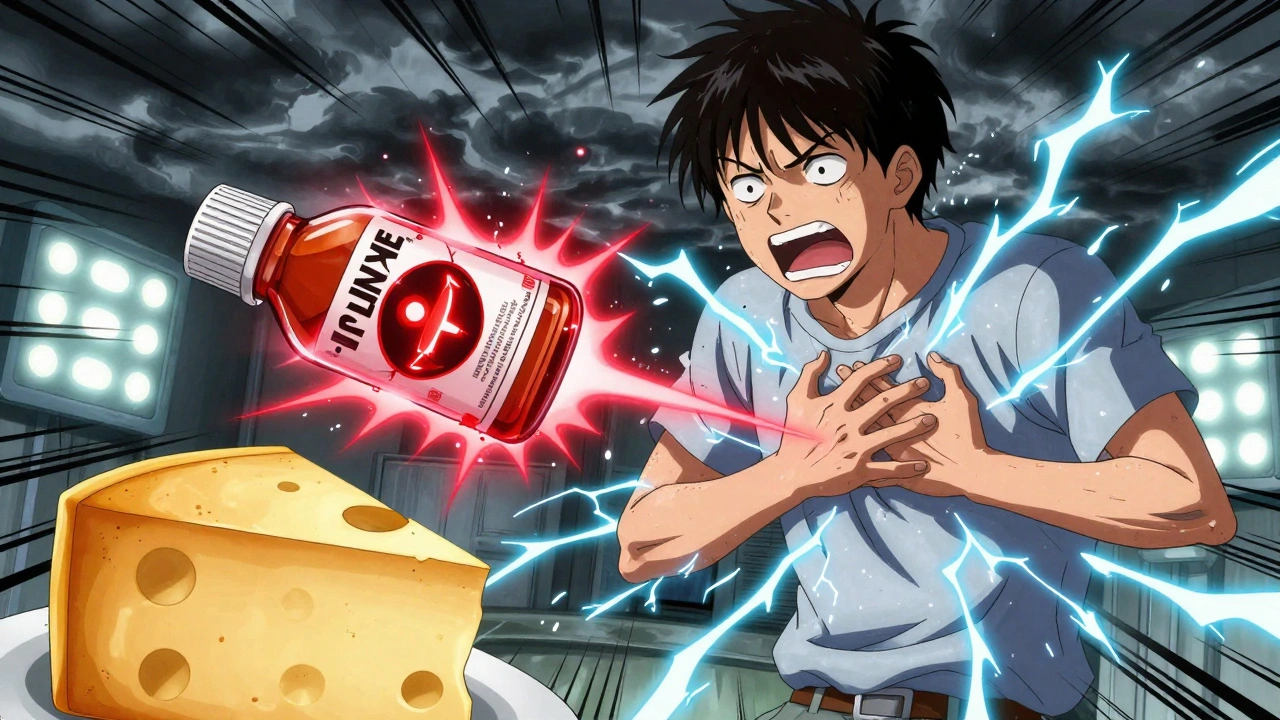
MAO inhibitors are one of the oldest classes of antidepressants, but they’re also among the most dangerous if not used with extreme caution. Unlike newer antidepressants like SSRIs, MAOIs don’t just tweak brain chemistry-they fundamentally change how your body handles key neurotransmitters. This power comes with serious risks. A single over-the-counter cold pill, a slice of aged cheese, or even a herbal supplement can trigger a life-threatening reaction. If you’re taking an MAOI-or considering it-knowing what to avoid isn’t optional. It’s a matter of survival.
How MAO Inhibitors Work (and Why They’re So Risky)
MAOIs block an enzyme called monoamine oxidase, which normally breaks down neurotransmitters like serotonin, norepinephrine, and dopamine. By stopping this breakdown, these drugs increase the levels of these chemicals in the brain, which can lift mood in people with treatment-resistant depression. But this same mechanism affects the rest of your body, too. When MAOIs are active, your body can’t process certain substances the way it normally would. That’s where things go wrong.
Two major dangers arise from this: hypertensive crisis and serotonin syndrome. Both can develop within minutes to hours after exposure to a triggering substance. Neither is rare. Between 1998 and 2003, the FDA recorded 19 deaths directly linked to MAOI interactions. Even today, with better warnings and electronic health record alerts, mistakes still happen.
The Deadly Combo: MAOIs and Serotonergic Drugs
Serotonin syndrome occurs when too much serotonin builds up in your nervous system. Symptoms start mild-shivering, sweating, diarrhea-but can quickly spiral into high fever, seizures, irregular heartbeat, and even death. The mortality rate for severe cases ranges from 2% to 12%.
Many common medications push serotonin levels higher. When combined with an MAOI, the result is explosive. The most dangerous include:
- SSRIs like fluoxetine (Prozac), sertraline (Zoloft), and citalopram (Celexa). Switching from an SSRI to an MAOI requires at least a 14-day gap. For fluoxetine, that window stretches to five weeks because it lingers in your system far longer than other SSRIs.
- Dextromethorphan, found in over 100 cough syrups and cold medicines. A single 30mg dose-less than half a typical cough syrup dose-has triggered hospitalization in people on MAOIs. The FDA issued a warning about this in 1992, and it’s still relevant today.
- Tramadol, meperidine, and methadone. These painkillers are absolute no-gos. A 32-year-old man was intubated after taking tramadol while on selegiline. He survived, but only because he got to the ER fast.
- Linezolid, an antibiotic used for stubborn infections. It’s also an MAOI. Taking it with an MAOI antidepressant can cause serotonin syndrome within hours. Doctors now avoid prescribing linezolid to anyone on an MAOI.
Even supplements are risky. St. John’s Wort, 5-HTP, and SAMe are marketed as natural mood boosters-but they’re just as dangerous as prescription drugs when mixed with MAOIs. One patient on phenelzine developed a fever of 40.5°C and blood pressure of 220/110 after taking 200mg of 5-HTP. That’s not a side effect. That’s a medical emergency.
Food That Can Kill: Tyramine and Hypertensive Crisis
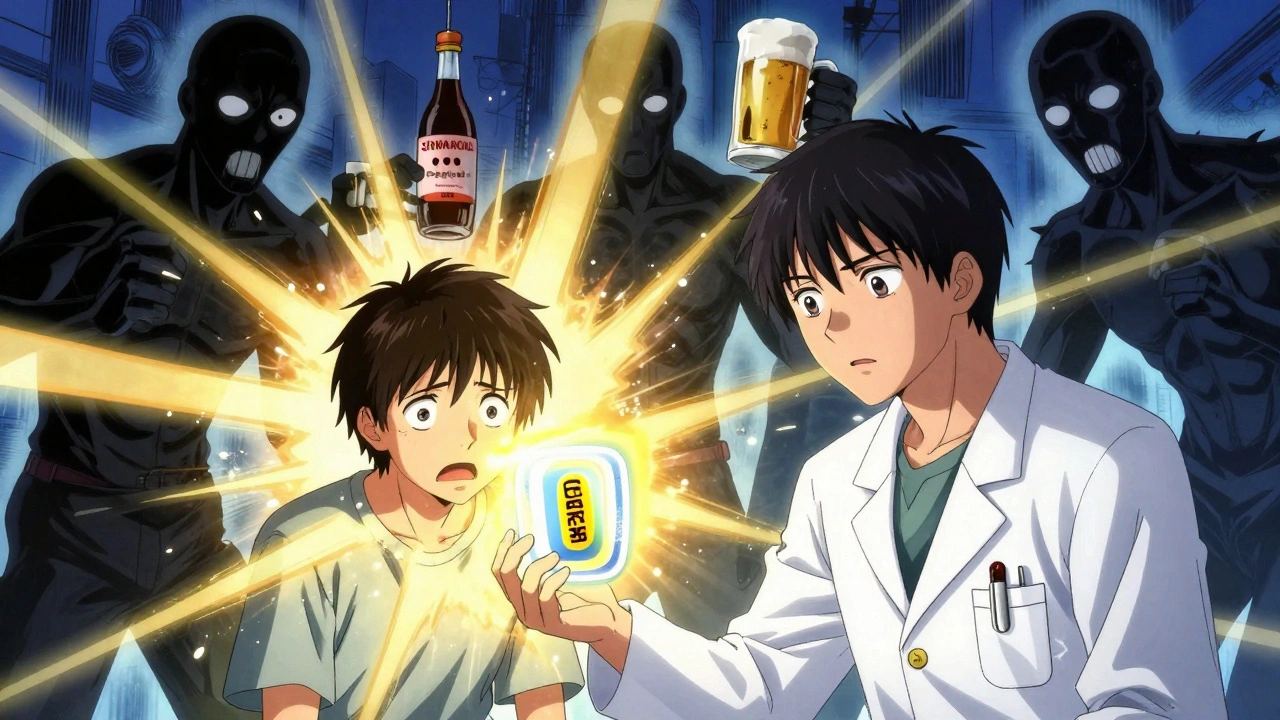
While serotonin syndrome grabs headlines, hypertensive crisis is just as deadly-and more common. It happens when tyramine, a compound found in aged and fermented foods, builds up in your blood. Normally, your body breaks down tyramine with the help of monoamine oxidase. But if you’re on an MAOI, that enzyme is blocked. Tyramine then triggers a massive release of norepinephrine, causing your blood pressure to spike.
Here’s what you must avoid:
- Aged cheeses-cheddar, blue, parmesan, gouda. Any cheese aged six months or more can contain over 6mg of tyramine per serving. Just one ounce of strong cheddar can push systolic pressure up by 60-100 mmHg.
- Tap beer and draft beer. Bottled beer is usually safe, but draft and unpasteurized beers contain 8-20mg of tyramine per 12oz. A single glass can trigger a crisis.
- Cured meats like pepperoni, salami, and summer sausage. They can contain 5-100mg of tyramine per ounce.
- Fermented soy products-soy sauce, miso, tempeh. One tablespoon of soy sauce can have up to 30mg of tyramine.
- Red wine, especially Chianti. A 5oz glass contains about 8mg of tyramine.
The threshold for a crisis? As little as 10-25mg of tyramine. That’s not much. A slice of aged cheese, a splash of soy sauce, and a glass of beer could easily cross it.
The One Exception: The Emsam Patch
Not all MAOIs are created equal. The selegiline patch (Emsam), approved in 2006, delivers the drug through the skin. At the lowest dose (6mg/24 hours), it doesn’t block MAO in the gut the way oral MAOIs do. That means you can eat tyramine-containing foods without risk-at least at this dose.
Studies show that at 6mg/24hr, patients can consume moderate amounts of cheese, wine, or cured meats without a spike in blood pressure. This is why the Emsam patch now makes up 68% of all MAOI prescriptions in the U.S. It’s safer, easier to manage, and less likely to cause accidental overdose.
But here’s the catch: if you switch to a higher dose (9mg or 12mg), the dietary restrictions return. You’re back to square one. Always check your dose with your doctor.
What About Other Medications?
It’s not just prescription drugs and food. Over-the-counter meds are the most dangerous because people don’t think they’re risky.
Phenylephrine, found in Sudafed PE and many cold remedies, is a direct stimulant. Combined with an MAOI, it can cause a sudden, violent rise in blood pressure. Even pseudoephedrine (Sudafed) is risky. So is ephedra-even though the FDA banned it in 2004, some supplements still contain it under different names.
Ginseng? There’s a case from 1985 where a patient on phenelzine went into mania after taking ginseng. Researchers suspected caffeine contamination, but the risk remains. Same with yohimbine, L-tryptophan, and even some weight-loss supplements.
And don’t assume your pharmacist knows. A 2021 study found that 34% of primary care doctors didn’t know dextromethorphan was dangerous with MAOIs. That’s not a minor oversight. That’s a potential death sentence.

What You Need to Do Right Now
If you’re on an MAOI:
- Carry a wallet card listing all contraindicated drugs and foods. Most psychiatrists provide these. If yours doesn’t, ask for one.
- Never take any new medication-prescription, OTC, or supplement-without checking with your prescriber.
- Read every label. Look for dextromethorphan, phenylephrine, pseudoephedrine, and tryptophan.
- Keep a list of all your medications and supplements and review it with your doctor every 3 months.
- If you feel sudden headache, chest pain, rapid heartbeat, confusion, or high fever-go to the ER immediately. Don’t wait.
If you’re thinking about starting an MAOI:
- Ask if the Emsam patch is an option. It’s safer and easier to manage.
- Make sure your doctor has experience with MAOIs. They’re not for every psychiatrist, let alone every primary care provider.
- Be honest about what you take. That includes herbal teas, protein powders, and energy drinks.
Why MAOIs Are Still Prescribed
They’re not the first choice anymore. SSRIs and SNRIs are safer and easier. But for some people-those who’ve tried four or five other antidepressants with no success-MAOIs can be life-changing. That’s why they’re still used, even though they make up less than 1% of all antidepressant prescriptions.
Most prescriptions come from psychiatrists. Only 8% are written by primary care doctors. That’s because managing MAOIs isn’t just about writing a script. It’s about education, monitoring, and constant vigilance.
The bottom line? MAOIs are not for casual use. They’re not for people who forget to read labels. They’re not for those who want a quick fix. But for the right person, with the right support, they can be the only thing that works.
Can I take Tylenol with an MAOI?
Yes, acetaminophen (Tylenol) is generally safe to use with MAOIs. It does not affect serotonin or norepinephrine levels and doesn’t interact with the monoamine oxidase enzyme. However, always check with your doctor before taking any new medication, even common pain relievers.
Is coffee safe with MAOIs?
Moderate caffeine intake is usually okay, but large amounts can raise blood pressure and increase anxiety-both of which are already risks with MAOIs. Stick to one or two cups a day. Avoid energy drinks and highly concentrated caffeine supplements.
How long do I have to wait after stopping an MAOI before taking an SSRI?
You must wait at least 14 days after stopping a standard MAOI before starting an SSRI. For fluoxetine (Prozac), wait five weeks because it and its active metabolite, norfluoxetine, stay in your system much longer. Skipping this waiting period can cause serotonin syndrome.
Can I drink alcohol while on an MAOI?
Alcohol is not recommended. It can increase dizziness, lower blood pressure, and interact unpredictably with MAOIs. Red wine and beer are especially risky due to tyramine content. Even small amounts can trigger a reaction. If you drink, do so only after discussing it with your doctor.
Are there any newer MAOIs with fewer interactions?
Moclobemide is a reversible MAO-A inhibitor used in Europe and Canada. It has a much lower risk of food and drug interactions and doesn’t require strict dietary restrictions. However, it was never approved by the FDA because clinical trials showed only modest benefits compared to existing antidepressants.
What should I do if I accidentally take a dangerous medication?
If you take a contraindicated drug-like dextromethorphan, tramadol, or phenylephrine-seek emergency care immediately. Don’t wait for symptoms. Call 911 or go to the nearest ER. Bring your medication list and tell them you’re on an MAOI. Time is critical.
MAOIs aren’t the answer for everyone. But for those who’ve run out of options, they can be a lifeline-if you treat them with the respect they demand. Know the risks. Know the rules. And never, ever assume a medication is safe just because it’s sold over the counter.
Ollie Newland
December 5 2025Man, I was on phenelzine for like 8 months back in '21. Forgot about the cheese thing and had a slice of stilton with my whiskey after a long shift. Thought I was just getting a headache. Ended up in the ER with BP at 210/120. Docs said I was lucky not to have a stroke. Don't mess with this shit. Read the damn labels.
Rebecca Braatz
December 5 2025THIS IS WHY WE NEED BETTER PATIENT EDUCATION. I'm a nurse and I've seen too many people get admitted because they took NyQuil thinking it was 'just a cold med'. MAOIs aren't outdated-they're misunderstood. If your doc prescribes one, they owe you a printed cheat sheet. No excuses. Share this post. Save a life.
Ben Choy
December 7 2025Just wanted to say thanks for writing this. My cousin’s on Emsam and it’s literally the first thing that’s helped her depression in 12 years. She still avoids aged cheese and tap beer, but she can have a glass of wine now and then without panicking. It’s a game-changer. I wish more people knew about the patch-it’s way less scary than the pills.
Also, tyramine levels in soy sauce? Wild. One tbsp = 30mg? That’s like 3 slices of pepperoni. Who even eats that much soy sauce? 😅
Augusta Barlow
December 8 2025Let me guess-Big Pharma pushed MAOIs out because they’re too dangerous to patent properly. But now they’re quietly bringing them back as patches because they can charge $1,200 a month for Emsam. Meanwhile, your $3 bottle of dextromethorphan is the real killer. They don’t want you to know that the same drug that cures your cough can kill you if you’re on an MAOI. And they don’t want you to know that the FDA knew this since 1992. They just buried it under ‘warning labels’ so they can keep selling. Wake up.
Rachel Bonaparte
December 8 2025Okay but have you considered that MAOIs are just the tip of the iceberg? What if the real issue is that antidepressants in general are designed to keep people dependent? Think about it-SSRIs take 6 weeks to work, MAOIs require dietary restrictions, and now we have patches that cost more than a MacBook. It’s all a cycle. You’re not depressed-you’re being manipulated by a system that profits from your suffering. And don’t get me started on how they market ‘natural’ supplements like St. John’s Wort to lure you in before you even start the meds. It’s psychological warfare.
Also, I once took 5-HTP and felt like my brain was vibrating. Coincidence? I think not.
Scott van Haastrecht
December 10 2025Someone needs to sue the FDA. 19 deaths between 1998-2003 and they still let these things be prescribed? And now they’re pushing Emsam like it’s a miracle? Bro, it’s the same damn drug. Just delivered through skin so you don’t have to swallow a pill. That’s not innovation-that’s repackaging. And don’t even get me started on how doctors don’t even know what dextromethorphan is. I’m not even mad-I’m just disappointed. We’re all just lab rats in a corporate experiment.
Michael Feldstein
December 12 2025For anyone considering MAOIs: talk to a psychopharmacologist, not your PCP. Seriously. I was on tranylcypromine for a year and my psychiatrist sat with me for 45 minutes going over every single OTC med, supplement, and food item. He gave me a laminated card. I still carry it. It saved me when I accidentally grabbed a cold med with phenylephrine. I checked it before taking it. That’s the difference between good care and bad care. Don’t settle for less.
jagdish kumar
December 13 2025Life is a paradox. We seek freedom from pain, yet fear the tools that free us. MAOIs are mirrors-they reflect our willingness to surrender control. To eat cheese, to take a pill, to trust science. Or to die slowly in silence. The choice is always yours.
Alex Piddington
December 13 2025Thank you for this comprehensive overview. I’ve shared it with my support group. Many members are on MAOIs and didn’t realize the risks associated with herbal teas and energy drinks. The section on Emsam is particularly helpful-it’s a great example of how pharmacology can evolve to improve safety. Always consult your provider before making changes. Stay informed. Stay safe.
Libby Rees
December 13 2025Just a quick note: acetaminophen is safe. Coffee in moderation is fine. Alcohol? Avoid unless cleared by your doctor. And yes, the Emsam patch at 6mg is the only MAOI I’d consider. Simple rules. Clear boundaries. No drama. Just science.
Rudy Van den Boogaert
December 14 2025My dad’s on selegiline and he’s been fine for 3 years. He eats cheese, drinks wine, and takes Tylenol like it’s nothing. But he’s also 72, sees his psych every month, and has his meds reviewed by a clinical pharmacist. He’s lucky. Most people don’t have that support. This post should be required reading for anyone starting an MAOI. Seriously.
Jordan Wall
December 15 2025MAOIs are the ultimate power move. You’re not just treating depression-you’re rewriting your neurochemistry like a goddamn alchemist. But here’s the kicker: if you’re dumb enough to eat blue cheese or take a cough drop without checking, you don’t deserve to live. 🧠💀 The fact that people still die from this in 2025? Pathetic. Read the damn label. Or don’t. I’m not your mom.