
More people are using cannabis or CBD for pain, anxiety, or sleep-but few realize how deeply it can affect their other medications. If you’re on blood thinners, seizure meds, or even antidepressants, mixing them with cannabis isn’t just a gray area-it’s a potential health risk. The science is clear: cannabis doesn’t just sit beside your pills. It changes how your body handles them.
How Cannabis Changes How Your Body Processes Medications
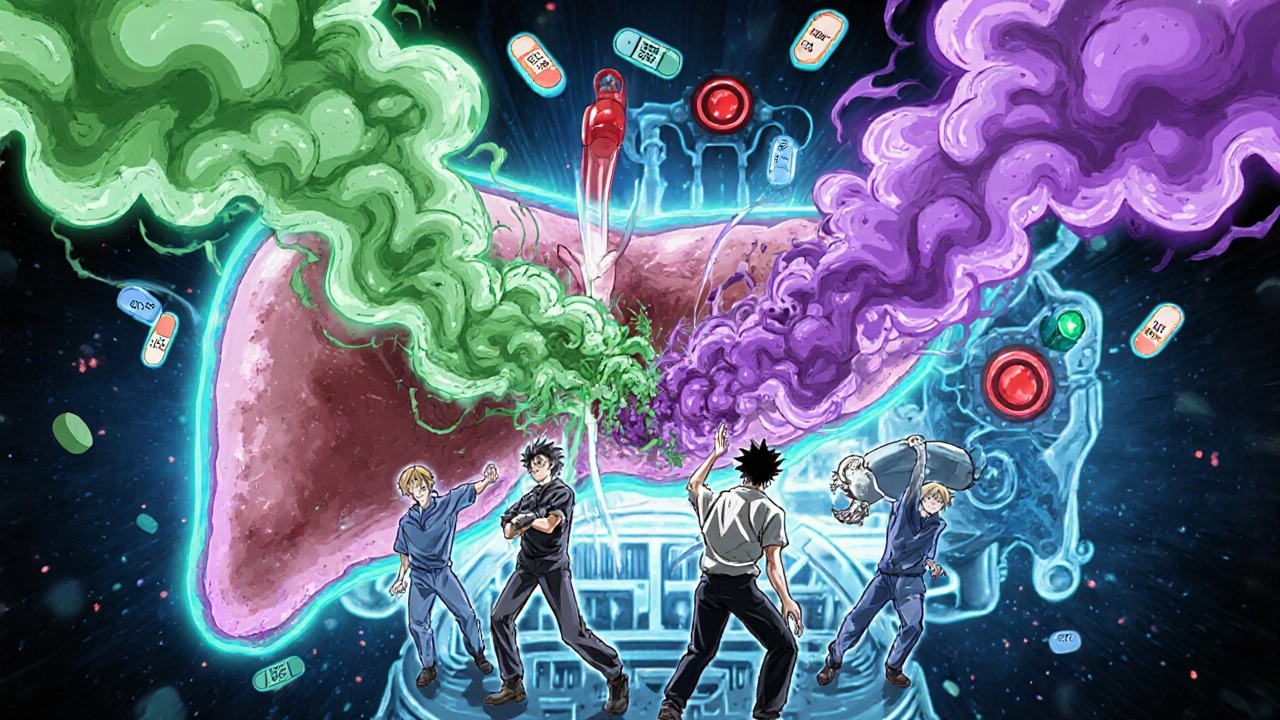
Cannabis, especially CBD and THC, doesn’t just work on its own. It interferes with your liver’s ability to break down many common drugs. This happens through the cytochrome P450 system-a group of enzymes that metabolize about 60% of all prescription medications. Think of these enzymes like factory workers cleaning up waste. CBD and THC show up and clog the machinery.
CBD is a strong inhibitor of CYP3A4 and CYP2C19. THC hits CYP1A2, CYP2C9, and CYP3A4. When these enzymes slow down, drugs stick around longer in your bloodstream. That means higher concentrations. And for some drugs, even a small increase can be dangerous.
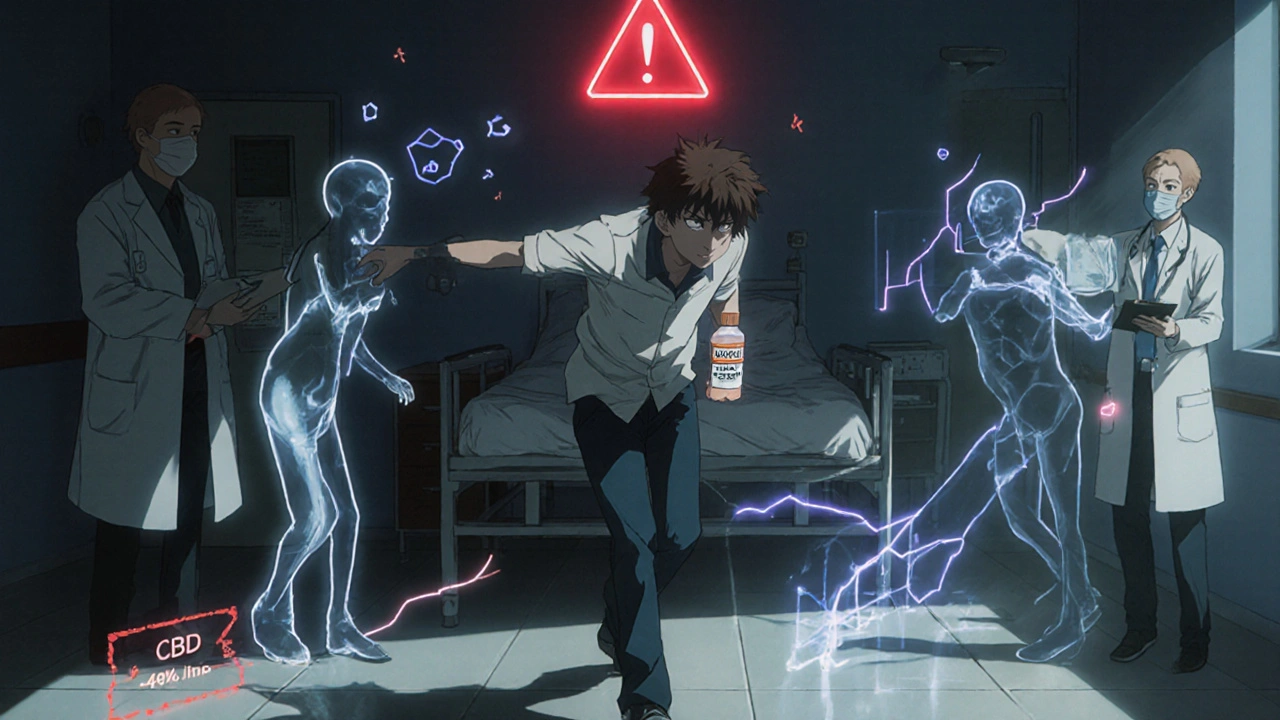
For example, if you’re taking clobazam for epilepsy, adding CBD can spike its levels by 60% to 500%. That’s not a minor bump-it’s enough to make you dizzy, drowsy, or even unable to walk. One patient on Reddit described it perfectly: “CBD increased my clobazam levels so much I couldn’t walk straight.” Their neurologist cut the dose by 40% immediately.
High-Risk Interactions: When Mixing Could Be Life-Threatening
Not all interactions are the same. Some are mild. Others can land you in the hospital.
Warfarin (blood thinner): This is one of the most dangerous combinations. CBD and THC inhibit CYP2C9, the enzyme that breaks down warfarin. Studies show INR levels-measuring blood clotting-can jump 29% to 48% within 72 hours of using cannabis. That means your blood doesn’t clot properly. In 17 documented cases, this led to serious bleeding, including gastrointestinal hemorrhage. The American College of Clinical Pharmacy warns that INR can spike by 2.0 to 4.5 units in just 48 hours. The American Society of Health-System Pharmacists now recommends checking INR every 3-5 days if you’re using cannabis, not weekly.
Tacrolimus (transplant drug): Used by organ transplant patients to prevent rejection, tacrolimus has a very narrow safety window. Cannabis can push its blood levels up by 300% to 500% in just three days. That’s not a typo. One case report described a kidney transplant patient who developed kidney failure after starting CBD oil. His tacrolimus levels were off the charts.
Protease inhibitors (HIV meds): A 2024 report from the Cannabis Clinicians Society found THC can reduce the effectiveness of antiretroviral drugs by 30% to 40%. That’s not just inconvenient-it can lead to treatment failure and drug-resistant HIV. This interaction is rarely discussed, but it’s real.
Moderate-Risk Interactions: Watch for Side Effects
These combinations won’t kill you overnight, but they can seriously mess with your daily life.
- Benzodiazepines (alprazolam, lorazepam): Both cannabis and these drugs calm the central nervous system. Together, they amplify sedation by 35% to 60%. Elderly patients are especially vulnerable-Pennsylvania Pharmacists Association found a 47% increase in fall risk.
- Opioids (oxycodone, morphine): Cannabis slows down how quickly your body clears morphine. That means more pain relief, yes-but also more drowsiness, slower breathing, and higher overdose risk.
- Calcium channel blockers (amlodipine): These lower blood pressure. Cannabis can raise their levels by 30% to 40%. That leads to dizziness, fainting, or dangerously low blood pressure in 15% to 25% of users.
One patient on Reddit reported using 50mg of CBD daily with oxycodone for eight months with no issues. Another, on the same meds, ended up in the ER after adding a new CBD tincture. Why the difference? Dose, timing, and individual metabolism. There’s no universal answer.
Low-Risk Interactions: Probably Safe, But Still Monitor
Some interactions are so small they rarely cause problems.
- SSRIs (sertraline, fluoxetine): CBD may raise sertraline levels by 10% to 15%. Most people feel nothing. A 2023 Epilepsy Foundation survey of 872 users found 41% reported no change in mood or side effects.
- Statins (atorvastatin): Levels may rise 20% to 25%. But no cases of rhabdomyolysis (muscle damage) have been linked to this combo in clinical reports.
Still, if you’re starting CBD and notice new fatigue, muscle soreness, or mood shifts, talk to your doctor. It might not be the drug itself-it might be the combo.
Formulation Matters: Full-Spectrum vs. Isolate
Not all CBD products are created equal. A 2023 study in the Journals of Cannabis Research found full-spectrum CBD (which contains trace THC and other cannabinoids) inhibits CYP3A4 by 22% to 37% more than pure CBD isolate-even at the same dose.
That’s the “entourage effect” in action: other compounds in the plant make the interaction stronger. So if you’re on a high-risk med like warfarin, a “natural” full-spectrum product might be riskier than a lab-made isolate. Labels don’t always make this clear. Check third-party lab reports for THC content and cannabinoid profile.
Route of Use Changes the Risk
How you take cannabis changes how fast and how long it affects your meds.
- Inhalation (smoking/vaping): THC hits your bloodstream in 6-10 minutes. Peak effects in 30 minutes. This creates a sharp, short-term spike in interaction risk-especially dangerous if you’re taking a sedative or blood pressure med.
- Oral (oils, edibles): Takes 2-4 hours to peak. Effects last 6-8 hours. This creates a longer, slower interaction window. Warfarin users are especially at risk here because the drug builds up over time.
- Cannabis tea: Surprisingly, studies show it doesn’t affect certain chemo drugs like docetaxel. But that doesn’t mean it’s safe with everything.
What You Should Do: A Practical 5-Step Plan
If you’re using cannabis and take prescription meds, don’t guess. Follow this:
- Be honest with your doctor. Say exactly what you’re using: CBD oil? Edible? Vape? How much? How often? Don’t say “I just use a little.” Specify milligrams and frequency.
- Check your meds. Use tools like the University of Washington’s Cannabis Drug Interactions database. Look up your specific medication and CBD/THC. Many pharmacists don’t know this exists-so bring it yourself.
- Get baseline tests. If you’re on warfarin, tacrolimus, or clobazam, get your levels checked before starting cannabis. Then recheck 48-72 hours after you begin.
- Monitor for signs. Unusual bruising? Extreme drowsiness? Dizziness? Confusion? These aren’t “just side effects.” They’re warning signs.
- Adjust slowly. If you need to lower a med dose, do it in small steps-10% to 25%. Never cut a dose on your own.
The Mayo Clinic suggests taking CBD at least two hours apart from other meds to reduce interaction risk. But there’s no strong evidence this works. Still, it’s a low-risk habit to try.

The Bigger Picture: Why This Is Getting Worse
In 2022, over 58 million Americans used cannabis. Nearly half of them were also on prescription drugs. The FDA has received over 1,300 reports of possible interactions since 2018. But experts say less than 10% of cases are ever reported.
Pharmacists are caught in the middle. Seventy-six percent say they’re not trained to advise on cannabis interactions-even though 68% see these cases every month. Only 12 states require pharmacists to counsel patients on this. The rest? They’re flying blind.
And the products are changing fast. New gummies, sprays, patches, and topicals hit the market every week. Most have no safety data. The FDA’s Cannabis Clinical Trials Network is working on answers, but results won’t be ready until late 2025.
Meanwhile, the gap grows. We know how cannabis affects warfarin. We know less about its effect on newer diabetes drugs like semaglutide. Only 12 studies have looked at cannabis and diabetes meds-despite 28% of cannabis users having diabetes.
Bottom Line: Don’t Assume It’s Safe
Cannabis isn’t a harmless supplement. It’s a powerful biological agent that interacts with your body’s chemistry in measurable, sometimes dangerous ways. If you’re on any medication-especially blood thinners, seizure drugs, transplant meds, or CNS depressants-assume there’s a risk until proven otherwise.
There’s no universal rule. One person can use CBD with oxycodone for years without issue. Another gets hospitalized after one new bottle of oil. The difference? Awareness. Monitoring. Communication.
Don’t wait for a crisis. Talk to your doctor. Get tested. Know your meds. Your life might depend on it.
Can I take CBD with my blood thinner like warfarin?
It’s not recommended without close medical supervision. CBD and THC can increase warfarin levels by 29% to 48%, raising your INR and bleeding risk. If you use both, your doctor should check your INR every 3-5 days instead of weekly. Never start or stop CBD without consulting your provider.
Does THC interact with medications the same way as CBD?
Not exactly. CBD mainly blocks CYP3A4 and CYP2C19, while THC affects CYP1A2 and CYP2C9. Both can interfere with warfarin and seizure meds, but THC is more likely to impact antidepressants and HIV drugs. Full-spectrum products (with THC) often cause stronger interactions than CBD isolates.
Is it safe to use cannabis with antidepressants like sertraline?
Most people don’t notice effects, but CBD can slightly raise sertraline levels by 10%-15%. If you’re new to CBD and feel unusually tired, anxious, or nauseous, it could be the combo. Monitor yourself, but don’t assume it’s harmless. Talk to your prescriber if you’re unsure.
What’s the safest way to take CBD if I’m on other meds?
Start low and go slow. Use CBD isolate instead of full-spectrum. Take it at least 2 hours apart from your other medications. Avoid high doses (above 20 mg/day) unless supervised. Always check for interaction databases and get baseline lab tests for high-risk drugs like warfarin or tacrolimus.
Can I use cannabis if I’ve had an organ transplant?
No, unless under strict medical supervision. Cannabis can cause tacrolimus and cyclosporine levels to spike by 300%-500%, leading to kidney or liver damage. Transplant centers in the U.S. routinely advise against cannabis use for this reason. The risk of rejection or toxicity is too high.
Why don’t pharmacists warn me about cannabis interactions?
Most pharmacists aren’t trained on it. Only 12 states require counseling on cannabis-drug interactions. Many community pharmacies don’t have updated databases. You need to bring the information to them. Print out a drug interaction report or use the University of Washington’s tool and ask, “Does this interact with my warfarin?”
Next Steps: What to Do Today
If you’re using cannabis and take any prescription meds:
- Write down every medication and supplement you take-including dosage and frequency.
- Write down what cannabis product you use: type (oil, vape, edible), brand, CBD/THC content, and daily dose.
- Call your doctor or pharmacist and say: “I’m using CBD or cannabis. Can you check if it interacts with my meds?”
- If you’re on warfarin, tacrolimus, or clobazam, ask for a blood test before and 72 hours after starting or changing your cannabis use.
- Don’t stop your meds. Don’t guess. Get the facts.
The science is still catching up. But your safety doesn’t have to wait.
Shawn Daughhetee
November 23 2025Man I just started CBD for my back and didn’t think twice about my blood pressure med until now
Michael Fitzpatrick
November 24 2025So much of this makes sense now. I’ve been on clobazam for seizures since I was 12 and started CBD oil last year for anxiety. I thought the dizziness was just stress but turns out my levels were spiking. My neurologist was shocked I didn’t tell him sooner. I cut my CBD dose in half and switched to isolate and now I’m back to normal. The key is just talking to someone who knows what they’re doing. Most docs don’t ask because they don’t know. But you gotta push. Your body doesn’t care if it’s ‘natural’-it just cares if it’s safe.
Mark Williams
November 25 2025From a pharmacokinetics standpoint, the CYP450 inhibition profile of cannabinoids is well-documented but grossly undercommunicated in clinical practice. The primary metabolic interference occurs via competitive inhibition of CYP3A4 and CYP2C9 isoforms, which are responsible for the phase I metabolism of over 50% of clinically prescribed agents. This results in elevated plasma concentrations, prolonged half-lives, and increased AUC values for concomitant medications. Particularly concerning are narrow-therapeutic-index drugs like warfarin and tacrolimus, where even a 20% increase in exposure can precipitate toxicity. The entourage effect exacerbates this by introducing additional modulatory cannabinoids and terpenes that may synergistically inhibit enzyme activity beyond CBD alone. Current regulatory frameworks fail to mandate labeling of these interactions, placing the burden of risk assessment on the patient-a deeply flawed paradigm.
Daniel Jean-Baptiste
November 27 2025i read this and thought about my uncle who had a kidney transplant and started using cbd gummies because he heard it helped with nausea. he ended up in the hospital with high tacrolimus levels. no one told him it could be dangerous. i think people need to know this stuff before they try it. its not just about being cool or natural. its about staying alive. also sorry for the typos im on my phone
luke young
November 28 2025Thanks for writing this. I’ve been using CBD for sleep and just started a new antidepressant. I was worried but didn’t know what to ask my doctor. Now I’m gonna bring this to my next appointment. You made it easy to understand without scaring me. That’s a win.
james lucas
November 29 2025so i’ve been taking 15mg of cbd daily with my oxycodone for like 18 months and never had an issue but then i switched brands and added 5mg more and ended up passed out on the couch for 6 hours. my wife freaked out. turns out the new batch had way more thc than i thought. i didnt even know it had thc in it. now i only use isolate and check the lab reports. dont trust the label. check the qr code. its not that hard. just be smart. also i dont tell my doctor because he rolls his eyes when i bring it up so i just monitor myself now. if i feel weird i stop. simple.
Jessica Correa
November 30 2025i used to take cbd with my sertraline and thought it was helping my mood until i started feeling really nauseous and tired all the time. i cut it out and the fog lifted. i never thought the two could do that to each other. i just assumed since its plant based it was harmless. turns out plants are powerful. who knew
manish chaturvedi
December 1 2025In India, cannabis is traditionally used in Ayurvedic formulations for pain and anxiety, but always under the guidance of a trained practitioner. The concept of drug interaction is not new to our medical systems, but modern pharmaceuticals are unfamiliar territory. Many patients here self-medicate with cannabis products imported from the West without understanding their chemical composition. This article is a necessary wake-up call. We must bridge traditional knowledge with scientific rigor. Education must reach rural clinics, not just urban pharmacies.
Nikhil Chaurasia
December 1 2025Let me tell you something. I lost my brother to a brain bleed. He was on warfarin. He started using CBD because his doctor said ‘it’s fine.’ No one told him about the INR. He didn’t know what INR meant. He thought ‘natural’ meant safe. He was 42. I’m not mad at him. I’m mad at the system. Why isn’t this on every CBD bottle? Why aren’t pharmacists required to explain this? I’m not asking for a ban. I’m asking for honesty. Just put a warning on the damn label.
Miruna Alexandru
December 2 2025The real issue isn’t the science-it’s the commodification of wellness. Cannabis is sold as a lifestyle product, not a pharmacologically active substance. The industry thrives on ambiguity. ‘Full-spectrum’ sounds holistic. ‘Isolate’ sounds clinical. But the truth is, neither is regulated, tested, or standardized. You’re gambling with your liver, your kidneys, your blood. And the people profiting from this don’t care if you end up in the ER. They care about your subscription renewal. This isn’t medicine. It’s capitalism with a hemp leaf sticker.
Melvina Zelee
December 3 2025i think about how we treat medicine like it’s a puzzle you solve by yourself. like if you just read enough blogs you can outsmart your own biology. but the body isn’t a reddit thread. it’s this fragile, weird machine that doesn’t care if you believe in ‘natural healing.’ it just reacts. and when you mix things without knowing how they interact, you’re not being brave-you’re being careless. i used to think i was smart for using cbd with my meds. now i just feel lucky i didn’t hurt myself. maybe the real wisdom is just asking someone who’s trained to look at the whole picture. not just the part you like.
steve o'connor
December 5 2025Just wanted to say this is one of the clearest, most useful posts I’ve read on this topic. I’m a pharmacist in Ireland and we get asked about cannabis interactions daily. Most of us have to Google it on the spot because our training skipped it. I’ve started printing out this article and handing it to patients. If more people wrote like this, we’d have fewer ER visits. Thanks for taking the time to lay it all out. Seriously.