
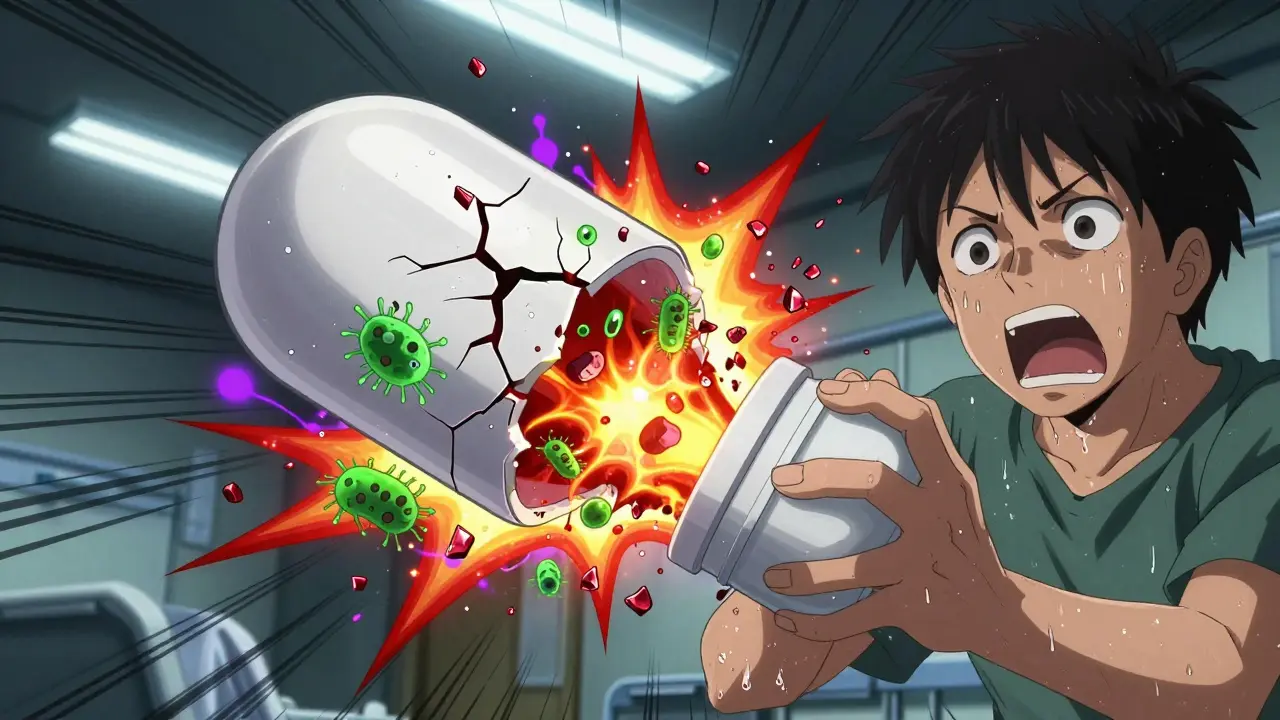
Every year, millions of people in the U.S. take generic drugs. They’re cheaper, widely available, and legally required to work the same as brand-name versions. But behind the scenes, a quiet danger exists: contamination. Not every generic drug is safe. Some contain hidden chemicals, microbes, or even metal particles that shouldn’t be there. And when that happens, it’s not just a quality issue-it’s a health risk.
What Exactly Is Generic Drug Contamination?
Contamination means unwanted substances end up in your medicine. These aren’t just dirt or dust. They can be leftover chemicals from other drugs made on the same machines, bacteria from dirty air, or even toxic impurities like nitrosamines. The FDA defines it as the unintended introduction of impurities during manufacturing, handling, or packaging. The problem isn’t new, but it’s getting worse. In 2022, 22% of all drug recalls in the U.S. were due to contamination-and nearly 4 out of 10 of those were generic drugs. Why? Because the system is stretched thin. About 80% of the active ingredients in American medicines come from just two countries: India and China. Factories there often produce hundreds of different drugs on the same lines, with minimal cleaning between batches. One wrong step, and your blood pressure pill could have traces of an antibiotic, a cancer drug, or worse.How Contamination Happens: The Real-World Pathways
It’s not magic. Contamination follows clear, avoidable paths:- Cross-contamination: When one drug’s residue sticks to equipment and mixes with the next batch. For example, a machine that made a powerful cancer drug might not be cleaned well enough before making a common pain reliever. Even tiny amounts can be dangerous for people with allergies or sensitive conditions.
- Personnel errors: Workers shed 40,000 skin cells per minute. Each one carries bacteria and particles. In cleanrooms where sterile drugs are made, staff are the #1 source of contamination. Poor gowning, rushed movements, or skipping handwashing can introduce microbes into vials or tablets.
- Improper handling: Pharmacists and nurses sometimes pierce vial caps with needles, withdraw them slowly, or break glass ampules. These actions release particles and microbes into the air-and into the medicine. OSHA found these steps caused over 60% of hazardous drug contamination incidents in hospitals.
- Dirty environments: Many generic manufacturers still operate in older facilities built before 2000. These buildings weren’t designed for modern standards. Air filters are outdated, humidity control is weak, and cleaning protocols are outdated. The result? Higher microbial counts. For oral drugs, the legal limit is 1,000 colony-forming units per gram. Some contaminated batches hit 10 times that.
Why Generics Are More at Risk Than Brand-Name Drugs
Legally, generics must meet the same standards as brand-name drugs. But in practice, the pressure is different. Brand-name companies often spend billions developing a drug and protect their reputation fiercely. Generic makers compete on price. Their profit margins average just 20-25%, compared to 60-70% for brands. That leaves less money for:- Upgrading equipment
- Hiring trained staff
- Running frequent contamination tests
- Investing in closed manufacturing systems
What’s Being Done to Prevent Contamination
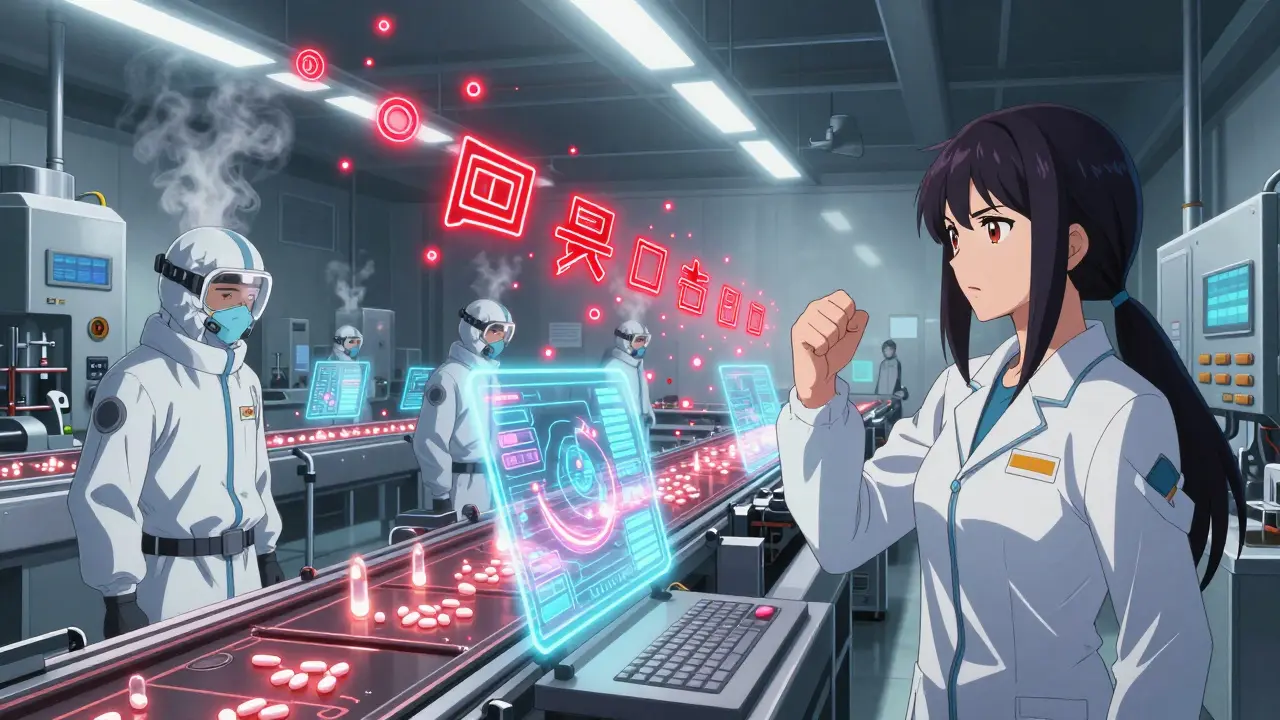
The FDA and industry are fighting back-with real tools:- Strict cleaning validation: Manufacturers must prove they can remove 10 parts per million (ppm) of any previous drug residue. That’s not guesswork. They swab machines, test samples, and repeat the process three times in a row before approving a batch.
- Rapid testing: Old methods took 7 days to detect bacteria. Now, 63% of top generic makers use new tech that gives results in 4 hours. That means contaminated batches are caught before they leave the factory.
- AI-powered monitoring: Starting in 2024, the FDA will roll out AI systems that track 15,000+ data points per facility-temperature, airflow, humidity, worker movement-to predict where contamination is likely to happen. It’s like a weather forecast for drug safety.
- Higher standards for high-risk drugs: After the 2019 valsartan recall (which involved cancer-causing nitrosamines), the FDA now requires all sartan-class blood pressure drugs to be tested for these impurities. That rule started January 1, 2023.
What Happens When Contamination Is Found
If a contaminated batch slips through, the system has two main responses:- Recalls: The manufacturer must pull the product. The FDA tracks these. In 2022, contamination-related recalls cost companies an average of $18.7 million each-not just in lost product, but in lawsuits, lost trust, and retesting.
- MedWatch reporting: Anyone-patients, pharmacists, doctors-can report suspected contamination to the FDA. Between 2020 and 2022, over 1,200 reports came in. One Reddit user described blue specks in metronidazole pills. Lab tests confirmed copper contamination. Another patient developed severe skin burns from a contaminated hydrocortisone cream. These aren’t rare.
What You Can Do: Protect Yourself and Others
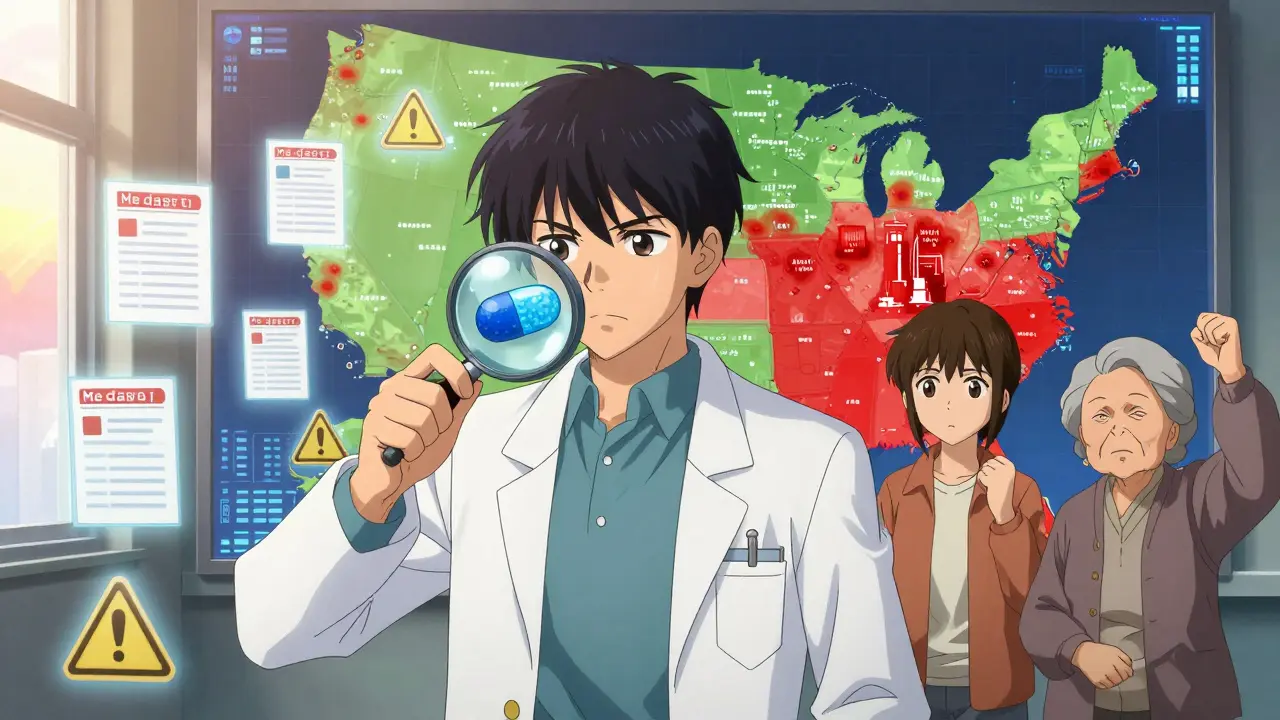
You can’t test your pills at home. But you can be alert:- Check for unusual changes: If your generic pill looks different-new color, odd smell, strange texture-don’t take it. Call your pharmacist. They’ve seen thousands of pills. If something’s off, they’ll know.
- Report anything suspicious: If you or someone you know has an unexpected reaction after starting a new generic drug, report it to MedWatch. Your report helps the FDA find patterns.
- Ask your pharmacist about the maker: Not all generics are equal. Some brands have better track records. Ask: “Who makes this?” and “Has this batch been recalled?” Most pharmacists can tell you.
- Stick with trusted pharmacies: Chain pharmacies and hospitals usually buy from suppliers with stronger quality controls. Independent pharmacies might get cheaper stock from less reliable sources.
The Bigger Picture: Why This Matters
Generic drugs save the U.S. healthcare system over $300 billion a year. That’s huge. But if we cut corners on safety to save a few dollars, we pay in other ways: hospital visits, lawsuits, lost trust, and worse-deaths. The system isn’t broken. It’s overwhelmed. Factories are global. Regulations are outdated. Inspectors can’t check every facility. But change is happening. New tech, stricter rules, and more transparency are slowly improving things. The goal isn’t to scare you away from generics. It’s to make you aware. You have a right to safe medicine. And you’re not powerless. Stay informed. Speak up. Ask questions. Your health depends on it.Are generic drugs more likely to be contaminated than brand-name drugs?
Legally, no-both must meet the same FDA quality standards. But in practice, yes. Generic manufacturers often operate on thinner profit margins, which can lead to less investment in modern equipment, staff training, and cleaning protocols. FDA inspection data shows generic facilities receive contamination-related warnings at nearly twice the rate of brand-name facilities.
How can I tell if my generic medication is contaminated?
You can’t test it yourself. But look for changes: unusual color, smell, texture, or particles. If your pill looks different from previous batches, or if you experience new side effects after switching to a generic, contact your pharmacist. They can check if there’s been a recall or quality issue with that batch.
What should I do if I think my medicine is contaminated?
Stop taking it immediately. Contact your pharmacist or doctor. Then file a report with the FDA’s MedWatch program. You can do this online or by phone. Your report helps regulators spot patterns and trigger investigations. Don’t wait-many contamination cases are only caught because someone spoke up.
Are all generic drugs made in India or China dangerous?
No. Many safe, high-quality generics come from India and China. But facilities in those countries face higher inspection failure rates due to volume, cost pressure, and outdated infrastructure. Look for manufacturers with a history of FDA compliance. Companies like Teva, Mylan, and Sandoz have invested heavily in quality systems and consistently pass inspections.
Is there a way to know which company made my generic drug?
Yes. The label on your prescription bottle should list the manufacturer’s name. If it doesn’t, ask your pharmacist. You can also check the FDA’s Drug Shortage database or use the National Library of Medicine’s DailyMed website to look up the drug’s active ingredient and see which companies produce it.
Kipper Pickens
January 27 2026Let’s be real-cross-contamination in pharma manufacturing isn’t some edge case, it’s systemic. When you’ve got a single line producing 800+ APIs with zero dedicated cleaning protocols, you’re not manufacturing drugs, you’re running a chemical roulette wheel. The FDA’s 10 ppm residue standard sounds scientific, but in practice, it’s a heuristic guess based on outdated toxicology models. We’re talking about bioaccumulative nitrosamines in antihypertensives and endocrine disruptors in OTC analgesics. The real issue? Regulatory capture. The same agencies that certify these plants are staffed by ex-industry consultants who’ve never set foot in a GMP facility. The system is designed to look compliant, not to be safe.
Joanna Domżalska
January 28 2026So generics are bad because they’re cheap? Wow. So brand name drugs are perfect? Tell me, does your $300 pill not have the same active ingredient? Maybe the problem isn’t the generic-it’s that you think medicine should be a luxury.
bella nash
January 30 2026It is a matter of profound ethical consideration that the commodification of pharmaceuticals has led to the normalization of risk in the production of life-sustaining substances. The reduction of manufacturing standards to a function of profit margin represents a fundamental failure of moral governance in public health infrastructure.
Sally Dalton
January 31 2026omg i just checked my blood pressure med and it looks a lil different from last time 😳 i thought it was just my eyes but now im so scared… i called my pharmacist and they said it’s a different batch but same maker and to keep taking it?? i dont know what to do anymore. pls help. i just want to feel safe taking my pills. 💔
Shawn Raja
February 2 2026Oh wow, so the solution to unsafe drugs is… more regulation? How about we just stop pretending that a 12-hour inspection of a factory in Hyderabad is meaningful. The FDA doesn’t inspect 1% of the facilities that make our meds. The real innovation? Stop importing from countries where corruption is cheaper than compliance. Or better yet-make pharma pay for American-made generics. We’ve got the tech. We’ve got the workers. We’ve got the will. We just don’t have the guts.
Ryan W
February 3 2026India and China are dumping toxic crap into our medicine because we let them. This isn’t a quality control issue-it’s a national security threat. Our entire supply chain is compromised. We’re not just risking health-we’re risking sovereignty. The FDA’s ‘AI monitoring’ is a PR stunt. Real solution: ban all foreign-sourced APIs. Build domestic capacity. Or keep dying quietly.
Allie Lehto
February 3 2026how can you even sleep at night knowing your pill might have cancer chemicals in it?? 🤢 i mean, i just take mine and hope for the best but like… what if it’s not just me? what if my grandma dies because some factory in bangalore didn’t wash a machine?? we’re all just guinea pigs for corporate greed. #medsafety #donttrustthefda
Jessica Knuteson
February 5 2026Contamination is inevitable in mass production. The question isn’t whether it happens-it’s whether the risk is acceptable. The FDA’s thresholds are based on statistical models, not moral absolutes. A 0.001% chance of harm is mathematically tolerable. But emotionally? That’s not a calculation. It’s a fear. And fear drives policy, not science.
Robin Van Emous
February 6 2026I just want to say thank you for writing this. I’ve been a pharmacist for 18 years, and I’ve seen this happen. I’ve held pills in my hand and thought, ‘This isn’t right.’ But I didn’t know how to explain it to patients. You’ve given me the words. I’m going to start asking every patient: ‘Who made this?’ And I’m going to keep pushing for transparency. You’re not alone.
Angie Thompson
February 7 2026so like… i just found out my metformin was made in a factory that had a rat infestation last year?? 😱 i’m not even mad, i’m just… wow. but then i checked the batch number and it’s from teva’s italy plant?? so like, not all generics are trash?? i feel like i need a cheat sheet. maybe someone should make a ‘safe generic’ leaderboard?? 🤔💊 #pharmachat
rasna saha
February 7 2026As someone from India, I want to say this isn’t about where it’s made-it’s about who’s watching. Many of our factories are world-class. I work with one that exports to the EU and US and has better audits than some American labs. The problem is the race to the bottom. But change is coming. More young engineers are pushing for quality. Don’t write off an entire country because of bad actors.
Skye Kooyman
February 8 2026My dad’s generic statin had a weird smell last month. He threw it out. Didn’t say anything. Just switched to brand. I didn’t even know until now. Maybe we’re all just quietly doing that.
James Nicoll
February 8 2026So the answer is to pay more for drugs? Brilliant. Let’s just make healthcare unaffordable again. The real scandal isn’t contamination-it’s that we’ve outsourced our health to a global race to the bottom and now we’re surprised when it collapses. Wake up. We built this.