
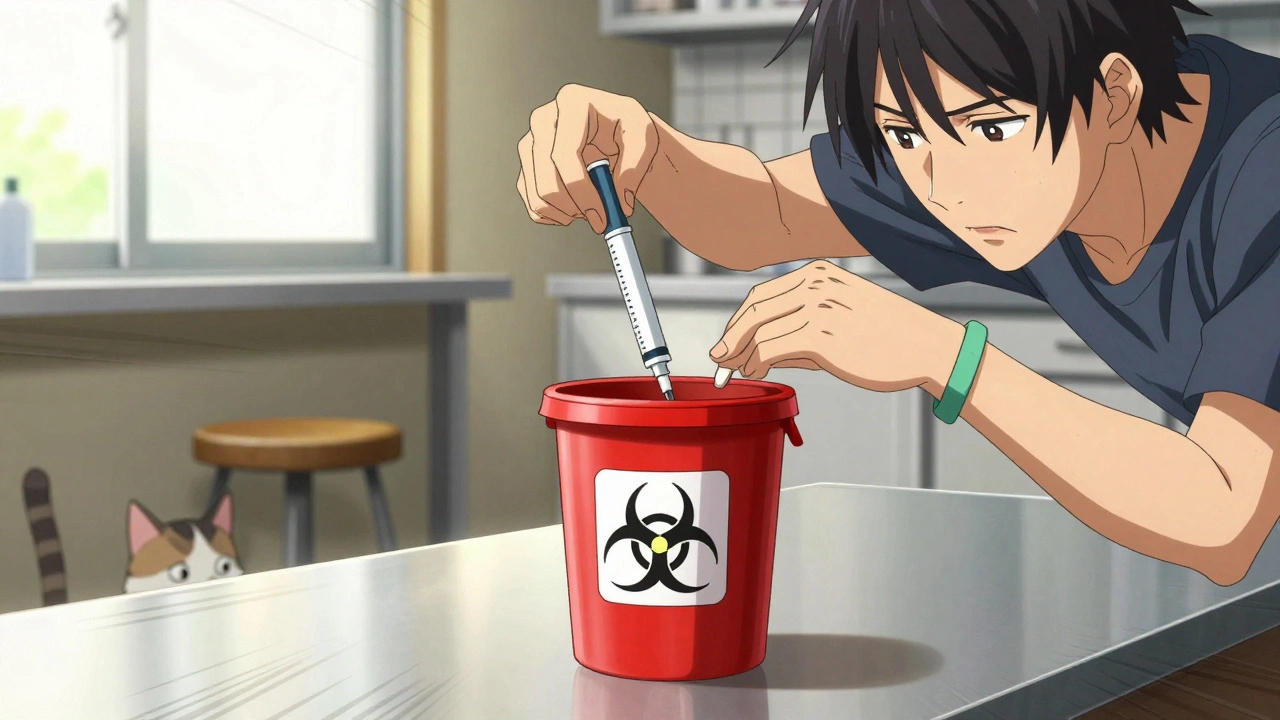
Every year, millions of people in the UK and around the world use injectable medications - insulin, blood thinners, biologics, and more. But what happens after the needle is used? If you toss it in the trash, flush it down the toilet, or stick it in an old soda bottle, you’re putting yourself, your family, and your community at risk. Sharps - needles, syringes, lancets, auto-injectors - aren’t just trash. They’re potential carriers of deadly viruses like hepatitis B, hepatitis C, and HIV. The good news? Safe disposal is simple, legal, and widely available. You just need to know how.
Why Proper Sharps Disposal Matters
- Needlestick injuries happen more often than you think. In healthcare settings, over 385,000 occur each year in the US alone - and many more go unreported.
- At home, improper disposal is the leading cause of accidental injuries. The FDA reports that 68% of sharps injuries in households happen because needles were thrown into regular trash.
- One accidental stick can cost thousands. Post-exposure treatment for a needlestick injury averages over £2,600. Preventing it costs less than £10 a month.
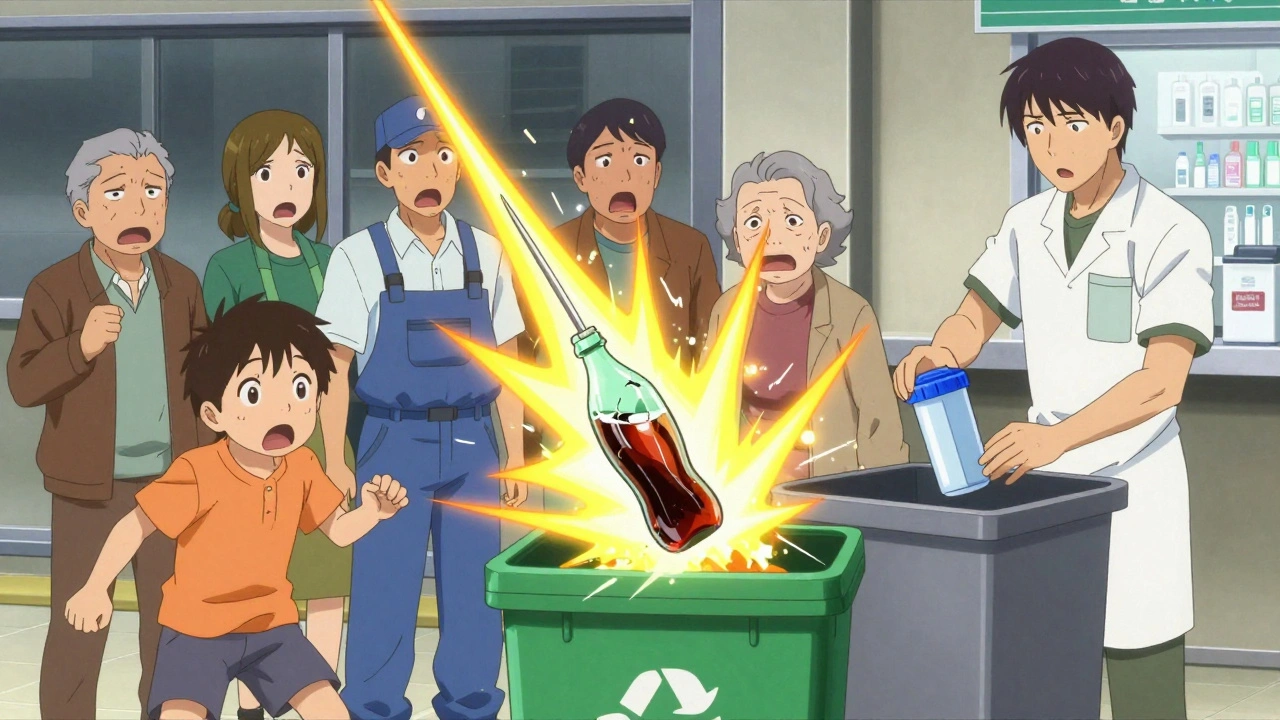
- Improperly discarded sharps end up in landfills, recycling trucks, and even public parks. Children, sanitation workers, and pets are all at risk.
It’s not just about following rules - it’s about protecting people you care about. A single needle in the wrong place can change someone’s life forever.
What Counts as a Sharp?
You might think only needles are dangerous. But sharps include anything that can puncture or cut:
- Insulin syringes and pen needles
- Lancets (for blood glucose testing)
- Auto-injectors (like EpiPens or injectable medications in pre-filled pens)
- IV catheters with needles
- Needles from vials or ampoules
- Disposable scalpels or blades
If it’s sharp and was used to inject or draw blood, treat it like a biohazard. Even if you don’t see blood, microscopic amounts can still carry infection. Never assume a used needle is safe.
The Only Safe Container: FDA-Cleared Sharps Containers
Don’t use old juice bottles, coffee cans, or plastic laundry detergent bottles. They’re not designed for this. Even if they seem sturdy, they can break, leak, or be pierced by other trash.
Only use containers specifically made for sharps disposal. These are called FDA-cleared sharps containers. They’re built to strict standards:
- Thick, puncture-resistant plastic (at least 1mm thick)
- Secure, one-way lid that won’t let anything in after you drop a needle in
- Leak-proof design
- Clear fill line - never go past 3/4 full
- Standard biohazard symbol in red or orange
These containers come in sizes from small (1.5 gallons) for home use to large (6 gallons) for clinics. For most people on daily injections, a small countertop container is enough. Brands like BD Redi-Sharp, Sharps Compliance, and Stericycle are widely available. You can buy them at pharmacies, medical supply stores, or online.
How to Use a Sharps Container Correctly
Using the container right is just as important as having one. Here’s how:
- Place it where you use the needle. Keep it within arm’s reach - on the counter, bedside table, or in your injection kit. Don’t wait until you’re done to find it.
- Never recap, bend, or break needles. This is the #1 cause of injuries. Just drop the whole syringe or pen into the container immediately after use.
- Fill only to the line. Most containers have a red or black line. Stop when you reach it. Even if it looks like there’s space, overfilling makes it dangerous to close and transport.
- Close the lid tightly after each use. Even if it’s not full, snap the lid shut. Don’t leave it open.
- Label it clearly. If you’re storing it at home before disposal, write “USED SHARPS - DO NOT OPEN” on the side.
It takes less than 10 seconds to dispose of a needle properly. Make it a habit. Don’t wait. Don’t delay. Do it right away.
Where to Drop Off Your Full Sharps Container
Once your container is full, you can’t throw it in the trash. You need to take it to a designated drop-off point. Here’s what works in the UK:
- Pharmacies: Most major chains - Boots, Lloyds Pharmacy, Superdrug - offer free sharps disposal bins. Just ask at the counter. No prescription needed.
- Hospitals and clinics: If you get your medication from a hospital or GP surgery, ask if they accept used sharps from patients.
- Local council collection points: Many towns have dedicated medical waste drop-off locations. Check your local council website under “household waste” or “medical disposal.”
- Mail-back programs: Some services let you order a prepaid return box. You fill it, seal it, and drop it in the post. This is useful if you live in a rural area with no nearby drop-off.
Never use public bins, recycling containers, or household waste. These are not designed for sharps and can lead to serious injury or environmental contamination.
What Not to Do
These common mistakes are dangerous - and surprisingly common:
- Don’t reuse containers. Even if you clean them, plastic weakens after one use. A reused bottle can crack under pressure.
- Don’t flush needles. They can clog pipes, damage sewage systems, and end up in rivers or oceans.
- Don’t put them in recycling. Recycling plants aren’t equipped to handle biohazards. Workers can get hurt.
- Don’t wait until you have a full box. If you’re using needles daily, get a new container before the old one gets too full. Waiting increases risk.
- Don’t assume you’re safe because you’re at home. Accidents happen in kitchens, bedrooms, and bathrooms. Treat every needle like it’s live.
Costs and Accessibility: What You Need to Know
Some people avoid proper disposal because they think it’s too expensive. But here’s the truth:
- A small sharps container costs between £5 and £10.
- Most pharmacies give them for free if you’re on a long-term medication.
- Drop-off services are almost always free.
- Mail-back boxes usually cost £15-£25 for a full return kit - less than the cost of one emergency doctor’s visit.
If you’re on a low income or receive government support, ask your GP or pharmacist about free disposal programs. Many local health services offer them. You’re not alone - thousands of people rely on these services every day.
What’s Changing in 2025
New rules are coming. In the UK, the NHS is rolling out expanded sharps disposal access in community pharmacies by mid-2025. More locations will offer drop-off bins, and some will even deliver containers to your door if you’re housebound.
Also, new containers are starting to appear with smart features - like fill-level sensors and QR codes that link to disposal instructions. These won’t be required yet, but they’re coming. For now, stick with the basic FDA-approved models. They work.
What to Do If Someone Gets Stuck
If you or someone else gets pricked by a used needle:
- Wash the area immediately with soap and running water.
- Don’t suck the wound or apply bleach.
- Go to your nearest A&E or call NHS 111 right away.
- Bring the container or needle if possible - it helps them assess risk.
Post-exposure treatment can prevent infection if started within hours. Don’t wait. Don’t panic. Act fast.
Final Reminder: One Action Saves Lives
Proper sharps disposal isn’t complicated. It’s not expensive. And it’s not optional.
Every time you drop a needle into a proper container, you’re protecting your family, your neighbours, and the people who collect your trash. You’re also setting a good example for others - especially children who might see you doing it.
Make it part of your routine. Like brushing your teeth. Like taking your medication. Do it without thinking. It’s that simple. And it’s that important.
Can I reuse a sharps container if I clean it?
No. Sharps containers are designed for single use. Even if you wash or disinfect them, the plastic weakens over time and can crack or puncture during handling. Reusing them increases the risk of needlestick injuries. Always use a new, FDA-cleared container.
Can I throw sharps in the regular bin if I put them in a bottle?
No. Even if you put needles in a plastic bottle, it’s not safe. Household bottles aren’t thick enough to resist punctures from other trash. Sanitation workers, children, and pets can still get injured. Only use approved sharps containers and take them to a designated drop-off point.
Where can I get a sharps container for free in the UK?
Many pharmacies - including Boots, Lloyds Pharmacy, and Superdrug - give out sharps containers for free if you’re prescribed injectable medication. Your GP or diabetes nurse may also provide them. Ask when you pick up your prescription.
What if I live in a rural area with no nearby drop-off points?
Mail-back programs are available across the UK. You can order a prepaid return box online or through your pharmacy. Fill it, seal it, and drop it in any Royal Mail postbox. These services are designed for people in remote areas and often cost less than £20 per kit.
Are there any legal penalties for improper sharps disposal?
While individuals aren’t typically fined for home disposal mistakes, businesses and care providers can face serious fines for improper handling. More importantly, improper disposal puts public health at risk. Local councils can issue warnings or require corrective action if sharps are found in public waste streams.
Can I dispose of sharps from pet injections the same way?
Yes. Needles used for pets - like insulin for diabetic dogs or cats - should be disposed of exactly like human sharps. Use an FDA-cleared container and drop it off at a pharmacy or council collection point. Never put pet sharps in regular trash.
If you’re unsure where to go next, call NHS 111 or visit your local pharmacy. They’ll point you to the nearest drop-off location. You don’t need to figure it out alone.
Ryan Brady
December 7 2025Ugh, another nanny-state article. Who cares if someone gets poked by a needle? They should've been more careful. 🤷♂️
Morgan Tait
December 9 2025You know what's really dangerous? The fact that Big Pharma pushes these injectables on folks then charges $200 for a plastic tub. Meanwhile, the same companies are lobbying to keep disposal services expensive. 🤔 It's not about safety-it's about profit. And don't get me started on the 'FDA-cleared' nonsense. That's just a fancy stamp on a plastic box they make in China.
ian septian
December 10 2025Use the container. Drop it in. Done. No drama. No excuses.
Chris Marel
December 12 2025This is actually really helpful. I’ve been using a laundry detergent bottle for my dad’s insulin needles and didn’t realize how risky that was. Thanks for the clear info. I’ll get a proper one today.
Elliot Barrett
December 13 2025Why are we even talking about this? People are just lazy. If you can’t handle a needle, don’t inject yourself. Simple.
Ajit Kumar Singh
December 15 2025In India we just put them in a tin can and bury them under the neem tree my grandmother says the roots will absorb the evil spirits from the needle and the gods will protect the village but honestly I think the government should just give free containers like they do for condoms
Maria Elisha
December 15 2025I mean... I just stick mine in a Sharpie marker and toss it in the trash. No one’s ever gotten hurt. 😴
Lisa Whitesel
December 15 2025This is performative safety. The real issue is why people need so many injections in the first place. Processed food. Pharmaceutical greed. Broken healthcare. Stop distracting us with plastic containers.
Larry Lieberman
December 16 2025I just use those little red containers from my pharmacy and drop them at the Walgreens near me 🙌 so easy and it feels good to do the right thing 💚
Sabrina Thurn
December 17 2025It's worth noting that FDA-cleared containers meet ASTM F2269 standards for puncture resistance and leak containment. Non-compliant containers, even if they seem sturdy, fail stress tests at 10-15% of the force required to rupture a certified unit. That’s not a suggestion-it’s engineering reality.
Simran Chettiar
December 17 2025The existential dilemma of modern medicine lies not in the needle, but in the alienation it represents-the ritual of self-injection as a silent testament to our fractured relationship with bodily autonomy, commodified health, and the bureaucratic scaffolding that now mediates even our most intimate acts of survival. One must ask: is the container a vessel of safety, or merely a symbol of our surrender to institutional control?
Anna Roh
December 19 2025I used to think this was overkill. Then my kid found a needle in the park last month. Now I carry a container in my purse. Just... do it.
Richard Eite
December 20 2025America is weak. Other countries don’t need this much hand-holding. Just throw it away like a man.
Katherine Chan
December 21 2025You got this! Small steps make a huge difference 🌟 Just one container at a time, you're already making the world safer 💪❤️