
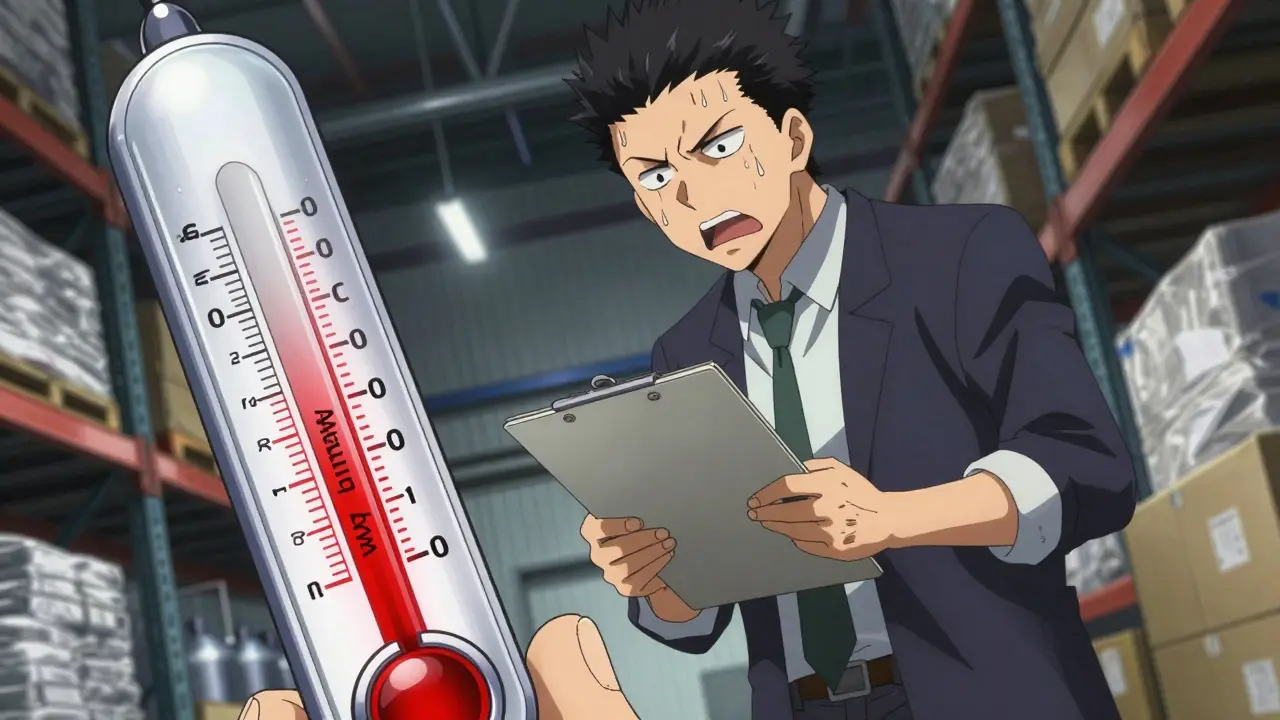
Imagine a $15 million product recall triggered by a single undocumented temperature spike during a warehouse transfer. It sounds like a nightmare, but in the world of high-stakes manufacturing, this is a reality. Documentation isn't just about filling out forms; it's the only way to prove that what you produced is safe, effective, and exactly what you claim it is. If it isn't written down, in the eyes of a regulator, it never happened.
For anyone managing production in pharma, medical devices, or food, record-keeping in manufacturing is the primary shield against regulatory disaster. Whether you're dealing with the FDA in the US or EudraLex in Europe, the goal is the same: total traceability. This guide breaks down exactly what you need to document, how to do it so you don't fail an audit, and how to move away from the "paperwork mountain" without risking your compliance status.
The Essentials of GMP Documentation
At its core, Good Manufacturing Practices is a system of regulations that ensures products are consistently produced and controlled according to quality standards. Documentation within this framework is split into two main buckets: how you should do things (procedural) and what you actually did (compliance).
Procedural documents are your roadmap. These include Standard Operating Procedures (SOPs), which should be written in a direct, active voice. Avoid vague language. Instead of saying "The mixture should be stirred," write "Stir the mixture for 10 minutes." You also need detailed material specifications. For example, if a moisture content must be 3.5% ± 0.2% w/w, that specific numerical tolerance must be documented to leave zero room for guesswork.
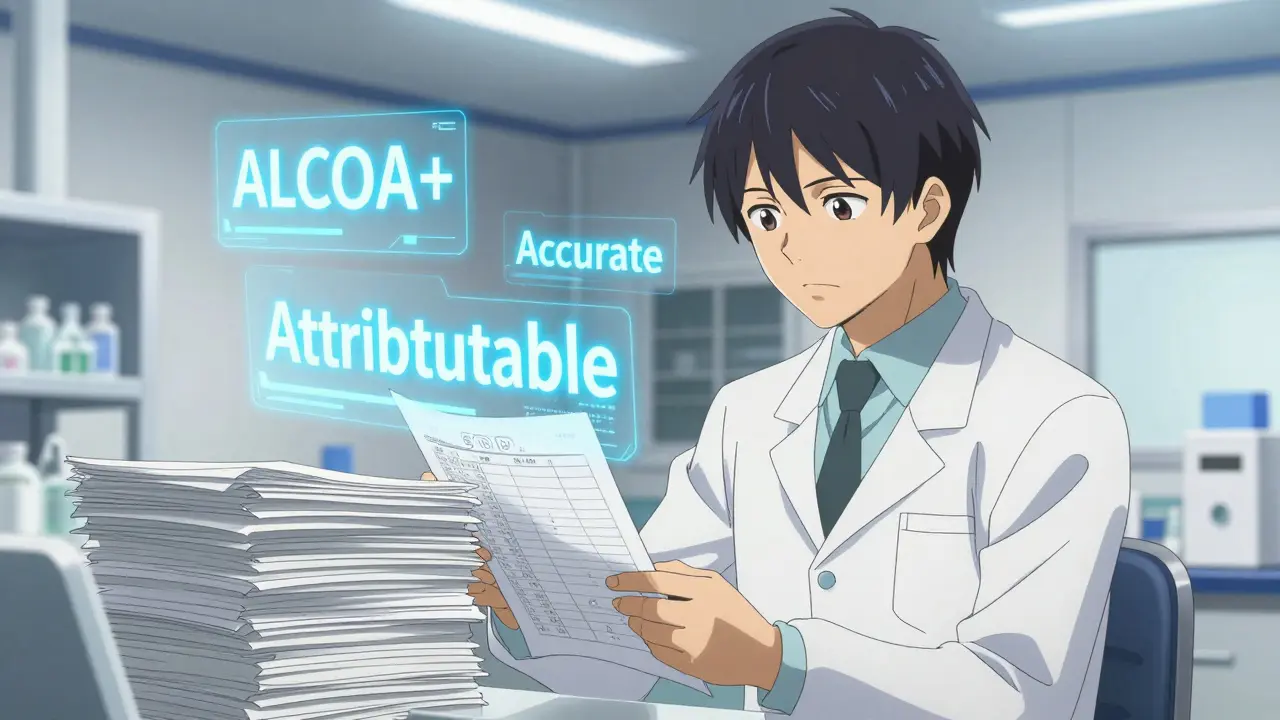
Compliance records, on the other hand, are your evidence. These are the batch records, cleaning logs, and testing results. To make these records bulletproof, regulators use the ALCOA+ principles. This means your data must be:
- Attributable: Who did the work and when?
- Legible: Can someone actually read the handwriting or the digital file?
- Contemporaneous: Was the record created at the time of the event? (Ideally within 24 hours).
- Original: Is this the first record, or a copy of a copy?
- Accurate: Does the data reflect the actual observation?
The "+" adds that records must also be complete, consistent, enduring, and available for review.
Navigating Global Regulatory Frameworks
Depending on where you sell your products, you'll answer to different masters. While there is a push for global harmony through the International Council for Harmonisation (ICH), regional differences still create headaches for multinational companies.
In the US, 21 CFR Part 211 is the gold standard for pharmaceuticals. One strict quirk here is the requirement to document every single calculation, often verified by a second qualified person. Contrast this with the EU's EudraLex Volume 4, where electronic verification systems can sometimes replace manual recalculations.
If you're in medical devices, the landscape shifts. ISO 13485:2016 emphasizes design history files and traceability matrices. Meanwhile, the EU's Medical Device Regulation (MDR 2017/745) requires clinical evaluation reports that go much deeper into literature searches than what the FDA typically asks for in its Quality System Regulations.
| Framework | Primary Focus | Key Requirement | Region |
|---|---|---|---|
| 21 CFR Part 211 | Pharmaceuticals | Detailed batch records & manual verification | USA |
| EudraLex Volume 4 | Pharmaceuticals | Risk-based approach & electronic signatures | European Union |
| ISO 13485:2016 | Medical Devices | Design history & traceability matrices | Global |
| 21 CFR Part 11 | Electronic Records | Audit trails & identity verification | USA |
The Digital Shift: Moving Beyond Paper
Let's be honest: paper logs are a liability. They get lost, coffee gets spilled on them, and "correcting" a mistake usually involves a messy strike-through and a signature. This is why electronic Quality Management Systems (eQMS) are taking over. Implementing a system like MasterControl can slash the time it takes to close Corrective and Preventive Actions (CAPA) from 45 days down to 22.
However, you can't just upload a spreadsheet and call it "digital." Electronic records must be validated according to GAMP 5 guidelines. This means proving that your software does what it says it does. You'll need a validation protocol with a high number of test cases covering data integrity and security. If you use electronic signatures, they must comply with 21 CFR Part 11, which requires a secure audit trail-basically a digital footprint that shows every change made to a record, who made it, and why.
A common pitfall occurs during system migrations. Many companies lose data when moving from an old legacy system to a new one. To avoid this, you need 100% data migration validation. If you can't prove that every single record moved over accurately, you're looking at a major audit finding.
Common Pitfalls and How to Avoid Them
Regulators aren't looking for perfection, but they are looking for integrity. A surprising 87% of FDA warning letters in recent years have cited data integrity violations. The most frequent mistakes aren't usually scientific errors, but documentation failures.
The biggest red flags for auditors include:
- Untimely Record Creation: Filling out a log for the entire week on Friday afternoon. This is a classic "contemporaneous" violation.
- Inadequate Investigations: When something goes wrong, simply writing "operator error" isn't enough. You need a deep dive into the root cause.
- Missing Original Data: Transcribing data from a scrap piece of paper onto a formal log. The scrap paper is the original record and must be kept.
- Improper Amendments: Using white-out or scribbling over an error. All changes must be a single line through the error, the correct value, and the initials/date of the person making the change.
To fight this, adopt the "5C" principle: your documentation must be Clear, Concise, Complete, Correct, and Compliant. One practical tip? Write your SOPs at an 8th-grade reading level. If your instructions are too academic or complex, your operators will make mistakes, and your documentation will suffer.
The Future of Record-Keeping
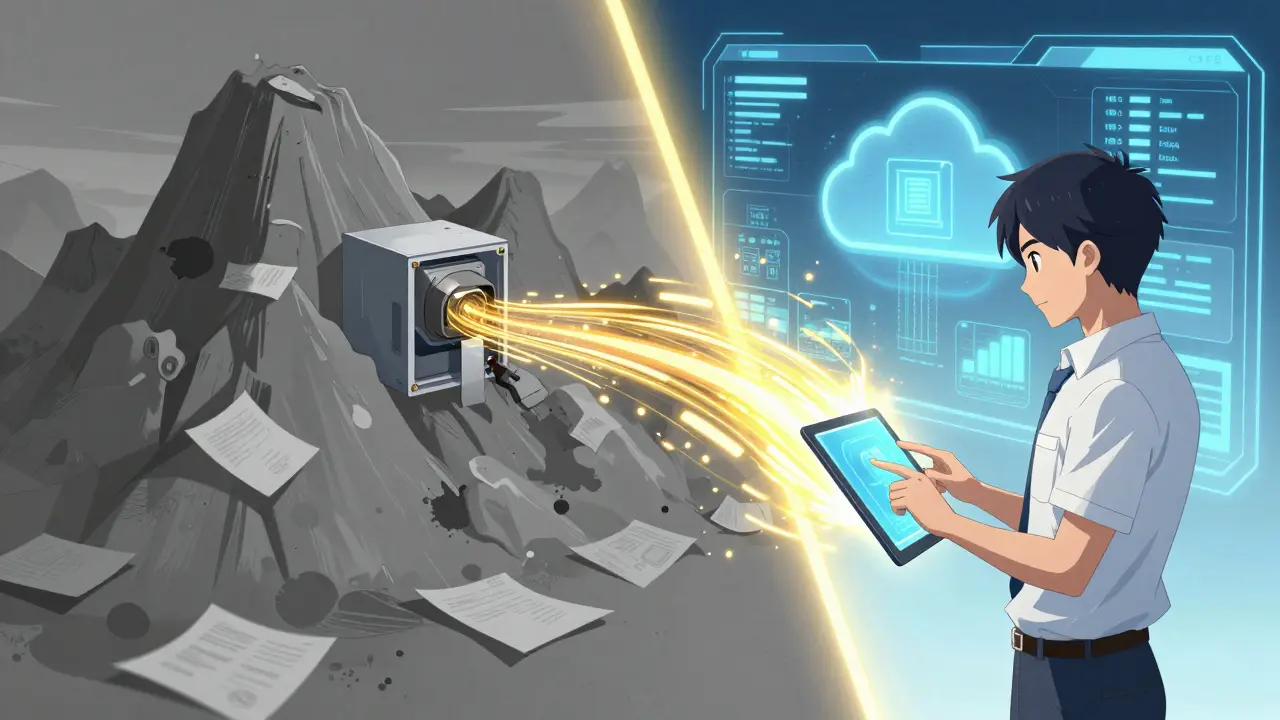
We're entering the era of AI-assisted documentation. Some forward-thinking plants are using systems that automatically pull data from Manufacturing Execution Systems (MES) to generate batch records in real-time. Early data suggests this can cut documentation time by 45%.
But don't get ahead of yourself. Regulators are still cautious about AI. The current focus is on "hybrid" systems-where some things are paper and some are electronic. The FDA now requires audit trails for all electronic data with a minimum 1,000-character capacity per entry to ensure that the reason for a change is fully explained.
How long should I keep my manufacturing records?
Generally, you should keep records for at least one year beyond the expiration date of the product. In the EU, the standard is often at least three years after the distribution of the batch is complete. Always check your specific regional regulations, as some specialized products have longer retention requirements.
What happens if I lose an original record?
Losing an original record is a serious data integrity breach. You should immediately document the loss in a formal deviation report, explain why it happened, and perform a risk assessment to determine if the missing data affects product quality. Attempting to "recreate" the record from memory is a critical violation that can lead to severe penalties.
Does every single action in the factory need to be documented?
Not every breath you take, but every critical step that affects the quality, safety, or identity of the product must be recorded. This includes equipment settings, raw material lot numbers, environmental readings (like room temperature), and the identity of the person performing the task.
What is the 'four-eyes principle' in record review?
The four-eyes principle means that every critical record must be reviewed and signed off by a second, independent qualified person. This ensures that the person who performed the work isn't the only one verifying that it was done correctly, significantly reducing the chance of errors slipping through.
How do I start transitioning from paper to electronic records?
Start by mapping your current paper workflows. Identify your most critical data points and pick a validated eQMS software that meets 21 CFR Part 11 requirements. Implement it in phases-perhaps starting with SOP management-and ensure you have a strict validation protocol (like GAMP 5) to prove the system's reliability before moving your batch records over.
Next Steps for Quality Managers
If you're currently using a paper-heavy system, your first step should be a "gap analysis." Go through your last ten batch records and look for missing signatures, date errors, or vague descriptions. If you find a pattern of errors, it's time to retrain your staff on ALCOA+ principles.
For those already digital, focus on your audit trails. Run a mock audit where you pick a random change in a record and try to trace exactly who made it and why. If you can't find the answer in under five minutes, your system is too complex or poorly configured, and you need to streamline your electronic workflows before the actual inspectors arrive.
william wang
April 17 2026The emphasis on the ALCOA+ principles is spot on here. In my experience, most people struggle with the 'contemporaneous' part because the pace of the floor is just insane and they try to catch up at the end of the shift, which is a disaster waiting to happen during an audit.
Joshua Nicholson
April 18 2026Too many words, but yeah, paper sucks.
Tama Weinman
April 18 2026Funny how they push these 'electronic systems' so hard. It just makes it easier for the higher-ups to scrub the data remotely without anyone noticing. Digital footprints can be erased if you have the right permissions, which is exactly why the 'paperwork mountain' was safer in the first place. They want total control over the narrative of the batch.
Agatha Deo
April 18 2026Oh, please. As if a simple "gap analysis" is going to save a company from a culture of incompetence. Most of these managers barely understand the basics of GAMP 5, yet they're playing with AI-assisted documentation like it's a toy. It's absolutely precious that we think a software patch can fix a fundamental lack of integrity in the workforce. Truly adorable.
Adele Shaw
April 18 2026The US standards like 21 CFR Part 211 are the only ones that actually mean anything! European regulations are just a joke compared to the rigors of the FDA. If you want a product that actually works and doesn't kill people, you follow the American way or you get out of the way!
Randall Barker
April 18 2026The real failure here isn't the missing signature on a log, but the moral bankruptcy of a system that values a checkbox over the actual spirit of quality. We've traded craftsmanship for compliance. We are no longer scientists; we are merely clerks of the industrial complex, terrified of a regulator's pen while the actual essence of the product is ignored in favor of a perfectly formatted spreadsheet. It is a tragedy of the modern age.
Anmol Garg
April 20 2026It's interesting how we all stress about the rules, but the heart of the matter is just helping people do their jobs without fear. Maybe if we focused more on the 'why' instead of just the 'how', the operators wouldn't feel the need to fake logs on Friday afternoons. Just a thought on how we can be more human in these sterile environments.
Dana Chichirita Nicoleta
April 20 2026Oh my goodness, the sheer brilliance of suggesting an 8th-grade reading level for SOPs is absolutely revolutionary! I cannot even begin to express how much of a game-changer this is for the frontline workers who are often overwhelmed by academic jargon that serves no purpose other than to confuse! It is such a wonderful, compassionate way to ensure that safety and quality are accessible to everyone, regardless of their educational background, and it truly warms my heart to see such practical advice being shared for the benefit of all!
Autumn Bridwell
April 22 2026I literally cannot believe people are still using white-out in 2024! Like, seriously? Who does that? I once saw a guy try to scratch out a temperature reading with a razor blade and I almost fainted right there in the cleanroom! The drama of a potential audit failure just because someone can't follow a simple strike-through rule is honestly too much for me to handle!
Kim Hyunsoo
April 23 2026The whole eQMS transition sounds like a kaleidoscope of chaos 🌀. I wonder if the audit trails actually catch the 'creative' interpretations of data or if they just create a new kind of digital maze maze... 😵💫
Jon lee
April 24 2026For those starting the transition to digital, don't be too hard on your teams. It's a big shift in mindset. I've found that pairing a tech-savvy operator with a veteran who knows the paper trails helps bridge the gap and makes everyone feel more included in the process.
Sophia Rice
April 26 2026I totaly agree that the gap analysis is a grate start. We did this last year and found so many tiny errors we didnt even know existed lol. its kind of scary but better to find it now than during the actual audit!
Theresa Griffin MEP
April 27 2026Compliance is non-negotiable. Implement GAMP 5 immediately. Precision saves lives.
Nikki Grote
April 27 2026If you're struggling with the migration, look into a phased ETL approach to ensure data integrity. Validating the checksums between the legacy DB and the new eQMS is the only way to truly satisfy a rigorous audit trail requirement. It's all about mitigating the risk of data truncation during the mapping phase.
Ben Ferguson
April 28 2026It is just so incredibly dramatic to think about a fifteen million dollar disaster happening because of one little temperature spike, but that is the absolute reality of our industry! I remember a time when we had a similar scare and the tension in the office was so thick you could cut it with a knife, and it really just goes to show that the meticulous nature of these records is the only thing standing between us and total operational collapse! It's like a high-wire act without a net, where every single ink stroke on a piece of paper is a vital safety line for the entire company's future, and when you think about the scale of the risk, it's almost Shakespearean in its tragedy if something goes wrong!