

Managing multiple prescriptions can feel like juggling too many balls at once. You’ve got pills for your blood pressure, diabetes, cholesterol, maybe even a painkiller or two. And every time you run out of one, you’re back at the pharmacy - paying another copay, waiting in line, and hoping you didn’t forget to bring the right insurance card. If this sounds familiar, you’re not alone. Millions of people in the UK and beyond are stuck in this cycle, paying more than they should just because their meds don’t line up.
What Is Medication Synchronization?
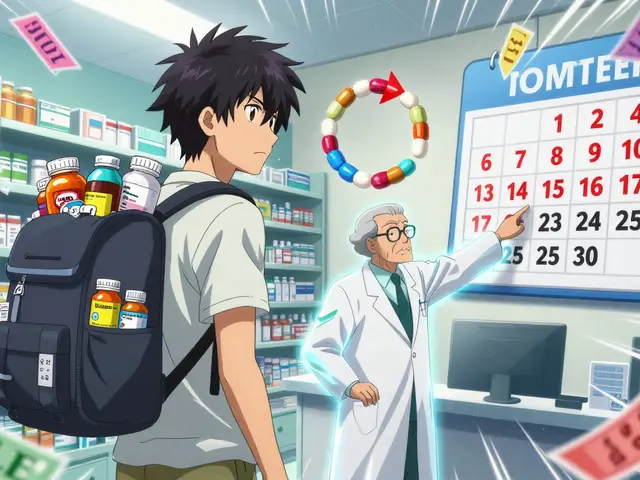
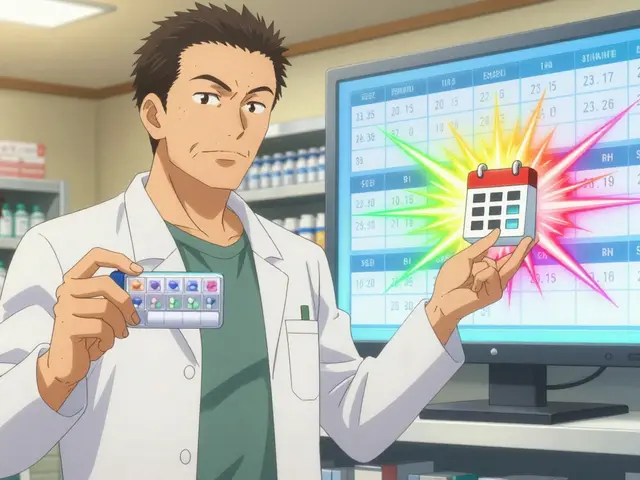
Medication synchronization - often called med sync - is a simple pharmacy service that makes all your regular prescriptions due on the same day each month. Instead of getting your blood pressure pill on the 5th, your diabetes med on the 12th, and your statin on the 20th, everything gets aligned. You walk in once a month, pick up all your meds at once, and pay just one copay instead of three or four. This isn’t magic. It’s a system pharmacies have been using since the early 2010s to help people with chronic conditions stay on track. The goal? Fewer missed doses, fewer pharmacy trips, and lower out-of-pocket costs. A study from the NIH found that when patients pay more per prescription, they take less of their medicine. For every 10% increase in what you pay out of pocket, you’re 2.3% less likely to fill your script. That’s not just inconvenient - it’s dangerous.How It Works: A Step-by-Step Process
Getting started with med sync is easier than you think. Here’s how it actually works:- Ask your pharmacist. You don’t need a doctor’s note. Just say, “Can you sync my prescriptions?” Most pharmacies offer this for free. CVS, Walgreens, Boots, and independent pharmacies all have programs.
- They review your full list. The pharmacist will look at every prescription you’re taking - even over-the-counter stuff like ibuprofen or vitamins. They’ll check for duplicates, interactions, and refill dates.
- They adjust your refills. If your blood pressure med runs out on the 15th and your cholesterol pill runs out on the 25th, they’ll give you a small “short fill” of the one that lasts longer. This gets everything aligned. It might mean you get an extra week’s supply of one med, or you wait a few days for another. It’s temporary.
- You pick up everything on one day. After 1-3 months, everything lines up. Say your sync day is the 10th. Every month on the 10th, your blood pressure pill, your diabetes med, your thyroid tablet - all ready. One trip. One copay.
Why This Saves You Money
Let’s say you take six maintenance medications. If they’re on different refill cycles, you’re making six trips a month. That’s 72 trips a year. Each trip might cost you £10-£25 in copays, depending on your plan. That’s £720-£1,800 a year just in copays. With med sync, you make 12 trips a year. Same meds. Same coverage. But now you’re paying only £120-£300 in copays. That’s a savings of £600-£1,500 annually - just by syncing your refills. And it’s not just about the money. Fewer trips mean less time off work, less fuel or bus fare, less stress. One patient on Reddit shared that after syncing her eight prescriptions, her monthly pharmacy visits dropped from 12 to 4. She saved £120 a year on transport alone - and her adherence jumped 40%.What Doesn’t Work With Med Sync
Not every medication can be synced. Here’s where it gets tricky:- Acute meds: Antibiotics, painkillers for flare-ups, or short-term prescriptions won’t sync. They’re meant to be used as needed.
- 90-day vs. 30-day supplies: If your insurance lets you get a 90-day supply of your statin but your blood pressure med is only 30 days, they’ll need to adjust one. Sometimes they can’t - and you’ll need to ask for an early refill exception.
- Insurance rules: Medicare Part D won’t let you refill a prescription until 70% of your supply is used. So if you have a 30-day script, you can’t get it early before day 21. Pharmacists know how to work around this, but it adds time.
- Specialty drugs: High-cost meds for conditions like MS or rheumatoid arthritis often come with copay assistance programs. But if your insurer uses a copay accumulator, those manufacturer discounts don’t count toward your deductible. That means you pay more out of pocket even if you’re using a coupon. This is a hidden trap - and it can wipe out the savings from med sync.

Combination Pills: The Ultimate Coordination Hack
Sometimes, the best way to reduce copays is to reduce the number of pills. If you’re taking separate pills for blood pressure and cholesterol, ask your doctor if a combination medication is an option. For example, there are pills that combine a statin with a blood pressure drug. One pill instead of two. That means one copay instead of two. A 2022 study found that patients on combination meds were 27% more likely to take their pills regularly because there was less to manage. These aren’t available for every combination, but they’re becoming more common. Between 2018 and 2023, the FDA approved 127 new fixed-dose combinations. Ask your doctor: “Is there a single pill that covers both my high blood pressure and my cholesterol?”What to Do About Copay Accumulators
This is the dark side of modern insurance. Many plans now use copay accumulators - meaning if you use a manufacturer’s discount card (like a $50 coupon for a $600 drug), that discount doesn’t count toward your deductible. You still pay the full price, and the coupon just gets thrown away. If you’re on a specialty drug and using a coupon, this can turn a £50 monthly cost into £650. That’s not a typo. The Kaiser Family Foundation says these programs are making it harder for patients to afford life-saving meds. What can you do?- Ask your pharmacist: “Does my plan use copay accumulators?”
- Call your insurer directly and ask: “Do manufacturer coupons count toward my out-of-pocket maximum?”
- If the answer is no, ask your doctor about alternative funding. Some drugmakers now offer direct financial aid programs that bypass insurance entirely.
- Check if your pharmacy offers a patient assistance program. Some have grants for low-income patients.
Who Benefits Most?
Med sync isn’t for everyone. But if you’re taking three or more maintenance medications for chronic conditions - diabetes, high blood pressure, heart disease, thyroid issues, COPD - you’re the perfect candidate. The American College of Physicians says med sync should be standard for anyone managing three or more chronic meds. Why? Because patients who use it have 18.7% fewer hospital stays. That’s not just saving money - it’s saving your health. And if you’re on Medicare Part D? You’re even more likely to benefit. A 2020-2022 study showed that Medicare users on med sync had 23.6% fewer hospital admissions for medication-related problems.
How to Get Started Today
You don’t need to wait for your next doctor’s appointment. Here’s what to do right now:- Write down every prescription you take - name, dose, how often, and when you last filled it.
- Call your pharmacy. Ask: “Do you offer medication synchronization?”
- If yes, schedule a 15-minute appointment with the pharmacist. Bring your list and your insurance card.
- Ask: “Can you help me sync all my chronic meds?”
- Ask: “Do you know if my plan uses copay accumulators?”
- Ask your doctor: “Are there any combination pills I could switch to?”
What If Your Pharmacy Says No?
If your local pharmacy doesn’t offer med sync, ask them why. Most chains do. If they say “We don’t have the system,” ask to speak to the manager. If they still refuse, go to another pharmacy. CVS, Walgreens, Boots, LloydsPharmacy - they all have programs. Switching pharmacies is easier than you think. Your prescription records transfer electronically. Don’t let a pharmacy’s lack of initiative stop you. Your health and your wallet matter more.The Bigger Picture
This isn’t just about saving a few pounds. It’s about making sure you take your medicine - every day. Missed doses lead to hospitalizations. Hospitalizations lead to more bills, more stress, more time away from life. Med sync is one of the most underused tools in healthcare. It’s free. It’s simple. And it works. Over 4 million people in the US alone are enrolled in med sync programs. In the UK, uptake is growing, but many patients still don’t know it exists. You don’t need to be a medical expert to fix this. You just need to ask.Can I sync my prescriptions if I’m on Medicare?
Yes, Medicare Part D patients can absolutely use medication synchronization. In fact, Medicare beneficiaries benefit the most - studies show they have 23.6% fewer hospital visits for medication-related issues when enrolled in med sync. Pharmacies can adjust refill dates within CMS guidelines, and many Part D plans encourage the program because it reduces overall costs.
Does med sync lower my copay per prescription?
No, med sync doesn’t lower the copay amount for each individual medication. But it reduces how often you pay. Instead of paying four copays a month, you pay one. That cuts your total monthly out-of-pocket spending by 75% or more, even if each copay stays the same.
What if my meds have different refill schedules (30-day vs. 90-day)?
Pharmacists can handle this. They’ll give you a short-term supply of the longer-cycle medication so everything lines up. For example, if your statin is a 90-day script and your blood pressure pill is 30-day, they might give you 30 days of the statin first, then sync both to a 30-day cycle. You may need a one-time early refill exception, which your pharmacist can request from your insurer.
Are combination pills safe?
Yes, if prescribed by your doctor. Combination pills are FDA-approved and tested for safety. They’re especially useful for conditions like high blood pressure and cholesterol, where taking two drugs together is standard. Switching to a combo pill can reduce pill burden and improve adherence by up to 27%, according to clinical studies.
Why won’t my insurance let me use my copay card?
Your plan likely uses a copay accumulator program. These programs don’t count manufacturer discounts toward your deductible, so even if you use a coupon, you still pay the full price. This is common with specialty drugs. Ask your insurer directly if they use accumulators. If they do, ask your pharmacist about alternative funding programs that bypass insurance.
Can I do this if I don’t have insurance?
Yes. Even without insurance, syncing your prescriptions can help you buy in bulk. Many pharmacies offer discount programs for cash-paying patients. You can also ask about generic alternatives or patient assistance programs from drugmakers. Syncing still means fewer trips - and that saves time and transport costs.

Praseetha Pn
January 18 2026So let me get this straight - pharmacies are secretly running a government-backed scheme to make us take our meds on the same day so they can track our habits and sell our data to Big Pharma? 😏 I’ve been syncing my pills for months and now my Amazon recommendations are all about probiotics and adult diapers. Coincidence? I think not. They’re testing behavioral compliance before rolling out mandatory pill implants. Next thing you know, your insulin pen will ping your phone: ‘Take your dose or we’ll notify your employer.’ 🤖💊
Nishant Sonuley
January 19 2026Look, I get it - syncing prescriptions sounds like a genius hack, and honestly, it is. But let’s not pretend this isn’t just another way for the healthcare system to make us feel like we’re doing something right while they keep the real costs buried in administrative fees and insurance fine print. I’ve been doing med sync for three years now. Saved me a couple grand, sure. But here’s the kicker: my copay for my statin went up 40% last year, and the pharmacy ‘forgot’ to tell me they switched my brand to a generic that’s barely absorbed. So I’m saving money on trips, but my cholesterol’s still junk. And now I’m paranoid every time I walk in. Are they just trying to make us feel better so we don’t sue them? 🤔
Emma #########
January 20 2026This was so helpful. I’ve been juggling 5 meds and never knew sync was free. I called my local CVS today and they did it in 10 minutes. My sync day is the 15th - now I just grab everything and go. No more scrambling. I even started taking my vitamins on the same day. Feels like a small win for my mental health too. 🙌
Tyler Myers
January 21 2026Med sync? Sounds like a socialist ploy to control the chronically ill. You think they’re helping you? They’re just making it easier to monitor your compliance so insurance can deny coverage later under ‘non-adherence.’ And don’t get me started on combination pills - that’s how they slip in untested compounds. FDA approved? Yeah, right. The same agency that let Big Pharma push opioids. Wake up. This isn’t convenience - it’s control. And you’re handing them the keys.
Zoe Brooks
January 22 2026OMG YES. I did this last month and my life changed. 🥹 I used to dread pharmacy day - now I treat it like a mini self-care ritual. Bring a book, chat with the pharmacist, get all my meds at once. I even started writing little notes to myself on the pill bottles like ‘You got this, queen!’ 😊 I didn’t realize how much mental energy I was wasting just remembering when each bottle ran out. This is the quiet revolution healthcare forgot to tell you about. Thank you for posting this!
Kristin Dailey
January 24 2026Why are we even talking about this? Just take your pills. If you can’t afford them, get a job. Or move to a country that doesn’t charge for medicine. We’re not in the UK anymore, folks. Stop whining.
Wendy Claughton
January 25 2026Okay, I just cried reading this. 🥺 I’ve been on 7 meds for 8 years - I used to cry in the pharmacy parking lot because I couldn’t afford the copay for my thyroid med. I didn’t know sync existed. I called my pharmacist yesterday - she said, ‘We’ve been waiting for you to ask.’ I got everything synced to the 3rd. I’m going to buy myself a candle. And maybe a new pair of shoes. I deserve it. 💛
Jake Moore
January 25 2026Just to clarify something real quick - med sync doesn’t change your copay per pill, but it cuts your total monthly out-of-pocket costs by 70-80% because you’re paying once instead of 4-6 times. That’s not a trick. That’s math. And if your pharmacy says they don’t offer it? They’re lying. Every chain pharmacy in the US has had this system since 2015. Just ask for the ‘medication therapy management’ program. They’re required to offer it under Medicare Part D guidelines. If they still say no, call the corporate hotline. They’ll fix it in 24 hours.
Danny Gray
January 26 2026Interesting. But if you think this is about saving money, you’re missing the point. What if the real goal is to normalize dependency? To make you feel like you need the system to function - the pharmacy, the insurance, the doctor - so you never question why these drugs cost $600 a month in the first place? Syncing your pills is like syncing your thoughts. You’re not becoming more independent - you’re becoming more integrated into the machine. And that’s not empowerment. That’s assimilation. 🌐🪞