
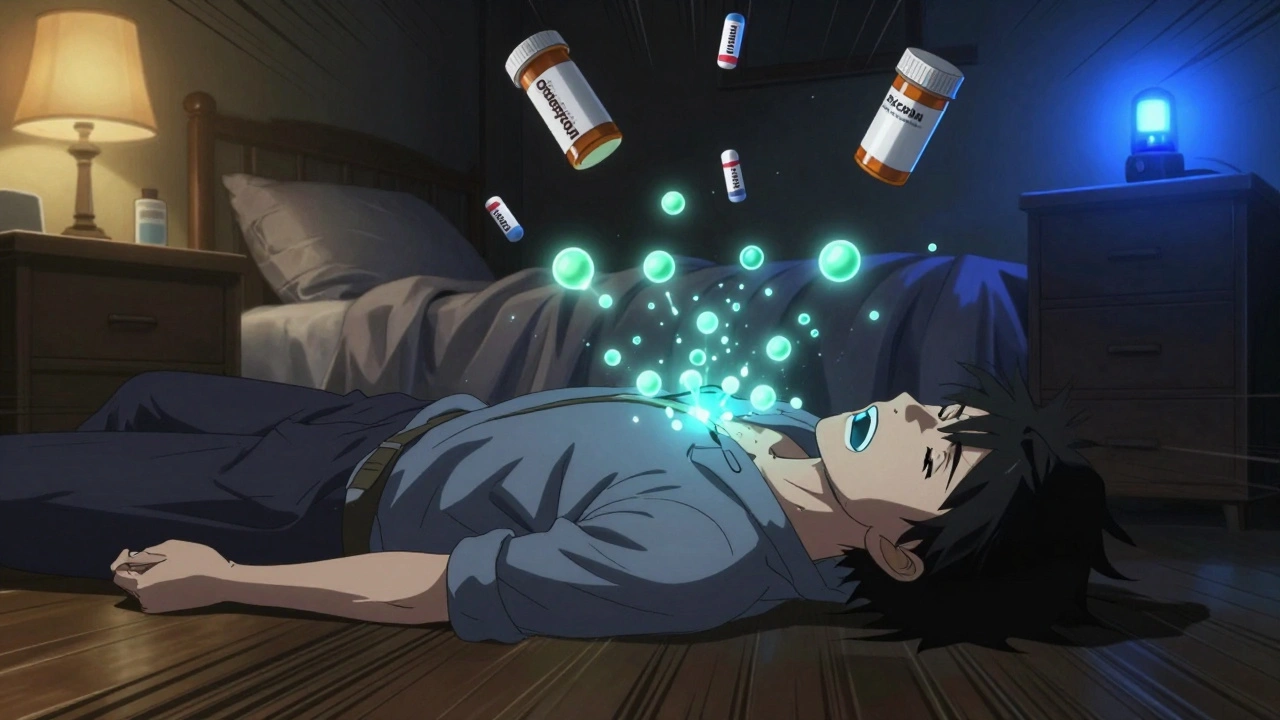
Putting together multiple sedating medications might seem like a quick fix for insomnia, anxiety, or chronic pain-but it’s one of the most dangerous things you can do without medical supervision. In the U.S., over 1.3 million emergency room visits each year are caused by bad drug interactions, and nearly 128,000 people die from prescription drug-related causes annually. The biggest danger? Combining drugs that slow down your brain and breathing. This isn’t just a theory-it’s happening every day, often without patients even realizing it.
What Happens When Sedating Drugs Mix?
Sedating medications-like opioids, benzodiazepines, sleep pills, muscle relaxants, and even some antidepressants-all work by boosting the effect of GABA, a chemical in your brain that calms nerve activity. When you take just one, your body can usually handle it. But when you stack two or more, the effect isn’t just added up-it’s multiplied. This is called synergy, and it’s what turns a manageable side effect into a life-threatening emergency.
For example, take an opioid like oxycodone and a benzodiazepine like Xanax. Alone, each can make you drowsy. Together, they shut down your brain’s ability to tell your lungs to breathe. A 2017 study in JAMA Internal Medicine found people taking both had a 154% higher risk of overdose than those taking opioids alone. The numbers don’t lie: in 2020, 16% of opioid-related overdose deaths also involved benzodiazepines.
Deadly Combinations You Need to Know
Not all drug mixes are equally dangerous-but some are far worse than others. Here are the top three combinations that send people to the ER or worse:
- Opioids + Benzodiazepines: This is the deadliest combo. It directly suppresses the brainstem, the part that controls breathing. UCLA Health estimates this pair is responsible for about 30% of all prescription drug deaths.
- Alcohol + Sleep Medications (like Ambien or Lunesta): Alcohol isn’t just a party drink-it’s a powerful CNS depressant. Mixing it with a sleep pill can slash your reaction time by 70%, compared to 40% with either alone. People report blacking out for hours, waking up with no memory of what happened, or falling and breaking bones without realizing how they got hurt.
- SSRIs + MAOIs: These are antidepressants that can cause serotonin syndrome-a dangerous spike in serotonin levels. Symptoms include high fever, rapid heart rate, confusion, and muscle rigidity. About 14-16% of cases are severe enough to require hospitalization.
Even over-the-counter meds can be risky. Cold and flu remedies often contain diphenhydramine (Benadryl), which is a sedative. Taking it with your anxiety pill? That’s adding fuel to the fire.
Who’s Most at Risk?
Older adults are especially vulnerable. As we age, our bodies process drugs slower, and we’re more likely to be on multiple prescriptions. The American Geriatrics Society’s Beers Criteria lists 19 sedating drug combinations that should be avoided in people over 65. Why? Because falls become deadly. One study found seniors on these combos have a 50% higher chance of falling-and fractures can lead to long-term disability or death.
But it’s not just older people. Young adults taking anxiety meds and drinking to “relax” are also at risk. Reddit threads from recovery communities are full of stories about people who didn’t realize their prescribed sleep pill could turn a single glass of wine into a near-fatal event. One user described waking up on the floor with no memory of falling, just a broken wrist and a terrified partner.
Another hidden danger? Doctor shopping. Recovery Village data from 2022 shows 42% of people who overdosed on combined sedatives got prescriptions from three or more doctors in just six months. Many don’t even tell their doctors about all the meds they’re taking-especially OTC drugs, supplements, or alcohol.
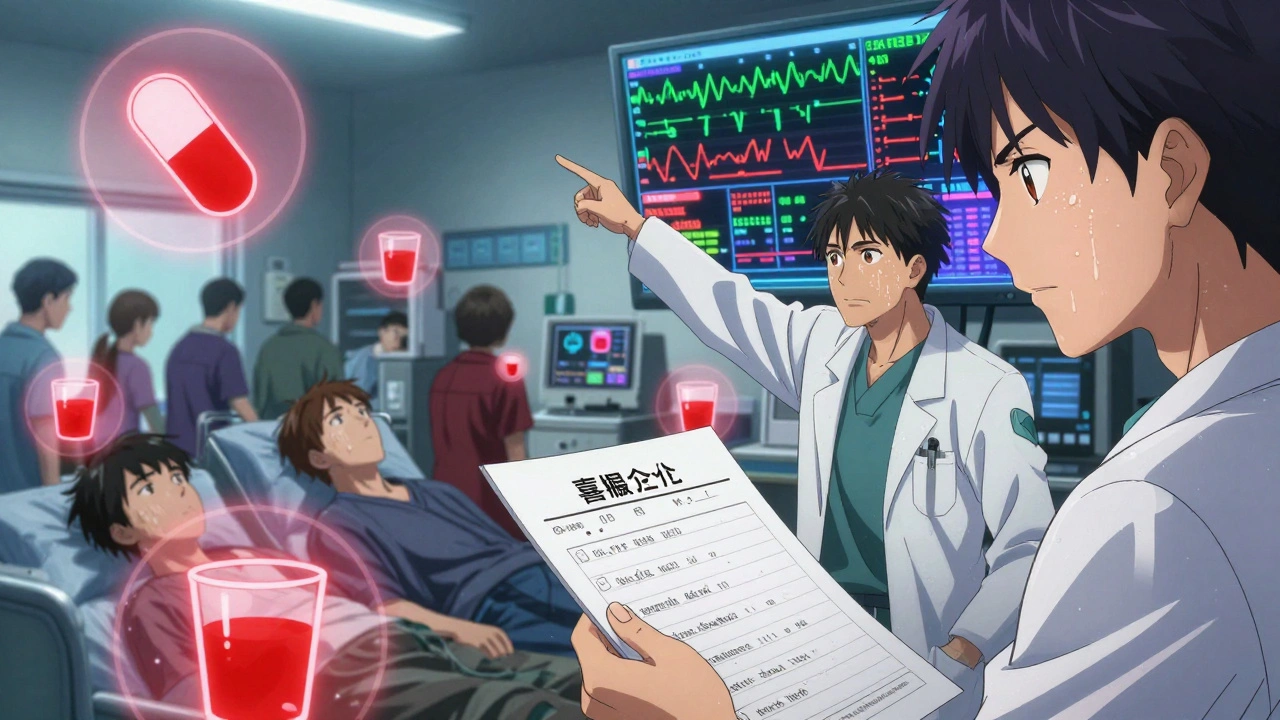
Warning Signs You Can’t Afford to Miss
Most people don’t realize something’s wrong until it’s too late. But there are clear red flags that mean you need help now:
- Breathing slower than 12 times per minute (normal is 12-20)
- Blue or gray lips, fingertips, or nails (sign of low oxygen)
- Unresponsiveness-you can’t wake the person with voice or shake
- Gurgling or snoring sounds while sleeping (sign of airway obstruction)
- Sudden confusion, extreme drowsiness, or inability to stand
If you see any of these, call 999 immediately. Don’t wait. Don’t assume they’ll “sleep it off.” This isn’t regular tiredness-it’s respiratory failure in progress.
Why Do Doctors Still Prescribe These Combos?
It’s not that doctors are careless. Many are caught in a system that makes safe prescribing hard. Electronic health records often don’t flag dangerous interactions. A 2020 study found only 17.3% of risky drug pairs triggered alerts in major systems. Even when they do, doctors may dismiss them if they think the patient “needs” the combo for pain or insomnia.
Plus, alternatives aren’t always easy to access. Non-sedating anxiety treatments like SSRIs or therapy can cost $450-$600 a month. Meanwhile, a 30-day supply of diazepam or zolpidem might cost $15. For low-income patients, the cheaper option wins-even if it’s riskier.

How to Protect Yourself
You don’t have to live in fear-but you do need to be smart. Here’s how to stay safe:
- Keep a full medication list. Write down every pill, patch, gummy, or herbal supplement you take-including what it’s for and the dose. Bring this to every appointment.
- Ask your doctor: “Is this the safest option?” If you’re on more than three sedating drugs, push for a full review. The START criteria say anyone over 65 on three or more should be reassessed within 30 days.
- Never mix alcohol with sedatives. Even one drink can double the risk. There’s no safe amount.
- Know your opioid dose. Ask for your morphine milligram equivalent (MME). If you’re above 50 MME per day and also on a benzodiazepine, your risk jumps dramatically.
- Use one pharmacy. Pharmacists can spot dangerous combos before you even leave the counter.
Some people do benefit from carefully managed combinations under strict supervision. A 2022 survey found 18% of patients on low-dose, closely monitored regimens reported better quality of life. But that’s not the norm. It’s the exception-and it requires weekly check-ins, blood tests, and constant monitoring.
What’s Changing? Hope on the Horizon
There’s progress. Since 2016, the FDA has required boxed warnings on all opioid and benzodiazepine labels. All 50 states now require electronic prescriptions for controlled substances, which include automatic checks for dangerous combos. The CDC’s 2022 guidelines strongly advise against prescribing opioids and benzodiazepines together-except in rare cases with extra safeguards.
New tools are emerging too. The FDA-approved DETERMINE platform uses AI to predict individual risk for sedative interactions with 87.4% accuracy. And the NIH is investing $127 million to study genetic testing that could tell you, before you even take a drug, whether your body is likely to overreact to it.
But technology won’t fix everything. The real fix is awareness. You need to know what you’re taking. You need to ask questions. And you need to speak up if something feels off.
What to Do If You’re Already on Multiple Sedatives
If you’re currently taking two or more sedating drugs, don’t stop suddenly. Withdrawal can be dangerous-especially with benzodiazepines or alcohol. Instead:
- Make an appointment with your doctor or pharmacist. Bring your full medication list.
- Ask: “Can we reduce or replace one of these?”
- Request a taper plan. Most safe reductions involve lowering the dose by 10-25% every 1-2 weeks.
- Consider non-drug options: cognitive behavioral therapy for insomnia (CBT-I), mindfulness, or physical therapy for pain.
The goal isn’t to eliminate all meds-it’s to eliminate unnecessary risk. You deserve to feel better without putting your life on the line.
Can I just cut back on one of my sedating meds myself?
No. Stopping sedating medications suddenly-especially benzodiazepines, sleep pills, or alcohol-can cause seizures, severe anxiety, or even death. Always work with a doctor to create a safe taper plan. Reducing your dose by 10-25% every 1-2 weeks is typically the safest approach.
Are natural supplements like melatonin or valerian root safe to mix with prescription sedatives?
Not necessarily. Melatonin is generally low-risk, but valerian root, kava, and passionflower can all enhance sedation. They’re not regulated like prescription drugs, so their strength and effects vary. Always tell your doctor about any supplement you take-even if you think it’s “natural” or “harmless.”
Why do I feel more tired after starting a new medication, even if it’s not a sedative?
Many medications have sedation as a side effect-even if they’re not meant to be sedatives. Antihistamines, some antidepressants, muscle relaxants, and even certain blood pressure drugs can make you drowsy. When added to other sedatives, the effect builds up. Always ask your pharmacist: “Could this make me sleepy?”
What should I do if I think someone I know is overdosing on sedatives?
Call 999 immediately. Do not wait. Try to keep them awake and in the recovery position (on their side). If you have naloxone (Narcan) and suspect opioids are involved, administer it. Naloxone can reverse opioid effects but won’t help with benzodiazepines or alcohol-so emergency help is still critical.
How often should I get my medications reviewed if I’m on multiple sedatives?
If you’re 65 or older and taking three or more sedating medications, the START criteria recommend a review within 30 days. For anyone on multiple sedatives, a full medication review every 3 months is wise. Bring your list to every doctor visit-even if you think nothing’s changed.

Sandridge Nelia
December 3 2025I’ve been on a low-dose benzo and tramadol for years and never realized how dangerous the combo was until my pharmacist flagged it. I was shocked-I thought since both were prescribed, they were safe together. I switched to CBT-I and now I sleep better without the fog. Seriously, talk to your pharmacist. They’re the unsung heroes of medication safety.
Also, melatonin is fine, but don’t toss in valerian root on top. I learned that the hard way-woke up at 3 a.m. heart pounding like I’d run a marathon. 😅
Mark Gallagher
December 5 2025People are dying because they’re too lazy to read the damn labels. If you can’t follow basic medical advice, don’t blame the system. You’re not special. Your ‘anxiety’ doesn’t exempt you from the laws of pharmacology. This isn’t a support group-it’s a public health bulletin. Stop self-medicating with alcohol and expect the world to accommodate your poor choices.
Gerald Nauschnegg
December 6 2025Y’all need to stop acting like this is new info. I’ve been screaming about this on Reddit since 2018. My cousin OD’d on Xanax and oxycodone. He was 29. His doctor didn’t even know he was taking both. I’m not mad-I’m just tired. Why do we only talk about this after someone’s dead?
Also, if you’re on 3+ sedatives and not getting reviewed every 90 days, you’re playing Russian roulette with your brainstem.
Adrianna Alfano
December 7 2025I’m 71 and on 4 meds that make me sleepy. My daughter made me bring my whole list to my last appointment-turns out I was taking 2 different things with diphenhydramine. I didn’t even know they were the same thing. I felt so stupid.
But my doc didn’t judge me. She just said, ‘Let’s fix this.’ Now I’m down to two, and I haven’t fallen in 6 months. To anyone scared to speak up: just do it. Your life is worth more than your pride. 🤍
Casey Lyn Keller
December 8 2025So… the government’s gonna save us with AI? Yeah right. They can’t even fix the VA’s prescription system. I’ve been waiting 11 months for a med review. Meanwhile, my doc keeps refilling the same combo. This feels like a scam to sell more apps. I’m not buying it.
Jessica Ainscough
December 10 2025Thank you for writing this. I’ve been terrified to tell my doctor I’ve been drinking wine with my sleep med. I thought I was the only one. Reading this made me feel less alone. I’m making an appointment this week. One step at a time.
May .
December 11 2025I took 3 sleep meds once and woke up on the floor with my dog licking my face. No memory. Just a bruise and a lesson.
Sara Larson
December 12 2025YOU ARE NOT ALONE. 💪
I was on 5 sedatives. Thought I needed them to survive. Turns out I just needed someone to hold my hand while I tapered. CBT-I changed my life. My anxiety didn’t vanish-but my brain finally stopped screaming. You can do this. One pill less at a time. I’m rooting for you. 🌱❤️
Josh Bilskemper
December 14 2025Studies? Data? Please. Real medicine is not about algorithms. I’ve been prescribing for 27 years. If your patient needs a benzo and an opioid, you give it. You don’t play doctor with spreadsheets. This is the FDA’s way of outsourcing responsibility. Wake up. Real people need real relief.
Storz Vonderheide
December 14 2025For anyone reading this and feeling overwhelmed-start small. Write down every pill. Even the gummies. Even the herbal tea. Bring it to your next visit. Don’t wait for a crisis. The system is broken, but you’re not powerless.
I’m a nurse in rural Maine. I’ve seen too many people die because they didn’t know their meds were fighting each other. You don’t need a PhD to save your life. Just honesty. And one printed list.
dan koz
December 16 2025Man, this is wild. In Nigeria, people just take whatever they find in the market. No prescriptions, no checks. I came to the US and was shocked people get fined for mixing meds. Here, if you feel sleepy, you just take more. No one cares. This post is eye-opening. Thanks.
Kevin Estrada
December 18 2025So let me get this straight… the government wants us to trust AI to tell us if our meds will kill us? Meanwhile, the same people who made this app also approved fentanyl-laced Xanax on the street. I’m not stupid. This is a distraction. They don’t care if we live or die. They just want us to stop asking questions.
Katey Korzenietz
December 20 2025How is this even legal? People are dying because doctors are lazy and pharmacies are profit-driven. I’ve seen my GP refill diazepam for 8 years without ever asking why. This isn’t medicine-it’s corporate negligence. And don’t give me that ‘it’s the system’ crap. Someone’s responsible. And it’s not me.
Ethan McIvor
December 21 2025There’s a quiet tragedy here: people aren’t taking these meds because they’re reckless-they’re taking them because they’re exhausted. The system didn’t give them sleep, so they took what was offered. This isn’t about willpower. It’s about access. Therapy is expensive. Pain is real. And sometimes, the only thing that lets you breathe is a pill.
We need better options, not just warnings.
Mindy Bilotta
December 21 2025Just had my first CBT-I session. It’s hard. It’s not magic. But for the first time in 10 years, I didn’t reach for a pill before bed. I read a book instead. And I slept. Not great. Not perfect. But I slept.
If you’re scared to quit-start here. One night without the pill. Just one. You’re stronger than you think. 💛