
How Generic Drug Payments Really Work - And Why It Matters to You
When you pick up a generic prescription at the pharmacy, you might assume the price you pay is straightforward. But behind the counter, a complex web of laws, contracts, and financial incentives determines exactly how much the pharmacy gets paid - and whether they can even afford to fill your prescription. The system isn’t broken by accident. It’s built that way.
Most people don’t realize that generic drugs make up 90% of all prescriptions filled in the U.S., yet they account for only 23% of total drug spending. That’s the whole point: generics save money. But how that savings gets distributed - or lost - depends on federal and state laws that control reimbursement models. And those rules are changing fast.
The Two Main Ways Pharmacies Get Paid for Generics
There are two dominant systems pharmacies use to get reimbursed for generic drugs: Average Wholesale Price (AWP) and Maximum Allowable Cost (MAC). Neither is simple, and both are shaped by law.
AWP used to be the standard. It’s a list price set by manufacturers, not what pharmacies actually pay. Pharmacies were reimbursed by subtracting a percentage from AWP - say, 15% or 20%. But AWP was always inflated. It didn’t reflect real costs, and it became a target for fraud. Today, it’s mostly gone for generics.
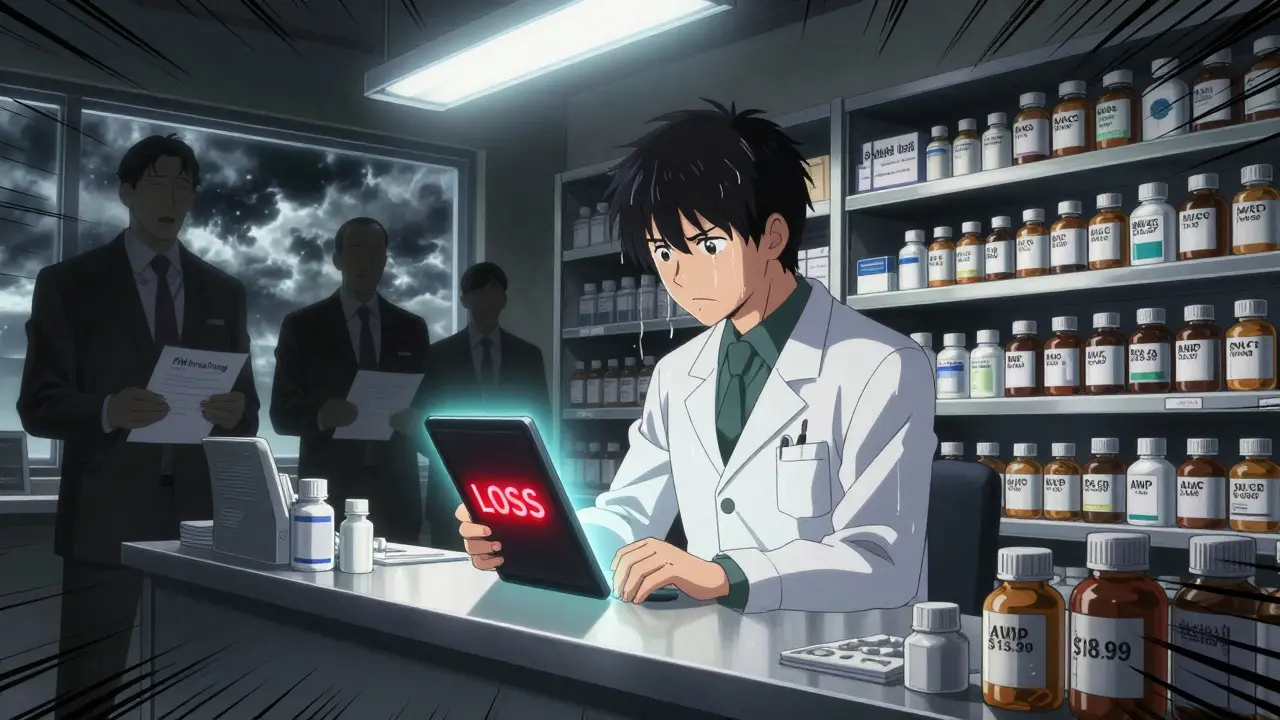
MAC is now the norm. It’s a fixed amount set by insurers or pharmacy benefit managers (PBMs) based on what generics actually cost in the wholesale market. If your generic drug’s MAC is $5, the pharmacy gets $5 - no more, no less. If the pharmacy paid $6 for the pills, they eat the $1 loss. If they paid $4, they keep the extra dollar. There’s no transparency. Pharmacies often don’t know the MAC rate until after they’ve dispensed the drug.
This system was created to control costs. But it’s put independent pharmacies in a tight spot. In 2023, the average profit margin on generic drugs was just 1.4%. That’s down from 3.2% in 2018. Many pharmacies are now operating on pennies per script.
How Medicare Part D Shapes Generic Payments
Medicare Part D covers prescription drugs for over 50 million seniors and people with disabilities. It’s a major driver of generic reimbursement rules. Part D plans must follow strict guidelines set by the Centers for Medicare & Medicaid Services (CMS).
Part D formularies - the lists of covered drugs - are divided into tiers. Generics are usually on Tier 1, meaning the lowest copay. But that doesn’t mean they’re cheap for the pharmacy. CMS allows plans to set their own reimbursement rates, and many use MAC pricing. Worse, some plans require prior authorization even for generics. In 2022, 28% of Part D plans required prior authorization for at least one generic drug.
There’s also the infamous “donut hole” - a coverage gap where beneficiaries pay more out of pocket after hitting a spending threshold. While the Inflation Reduction Act of 2022 capped out-of-pocket costs at $2,000 starting in 2025, that change won’t fix the underlying reimbursement problem. It just shifts the burden.
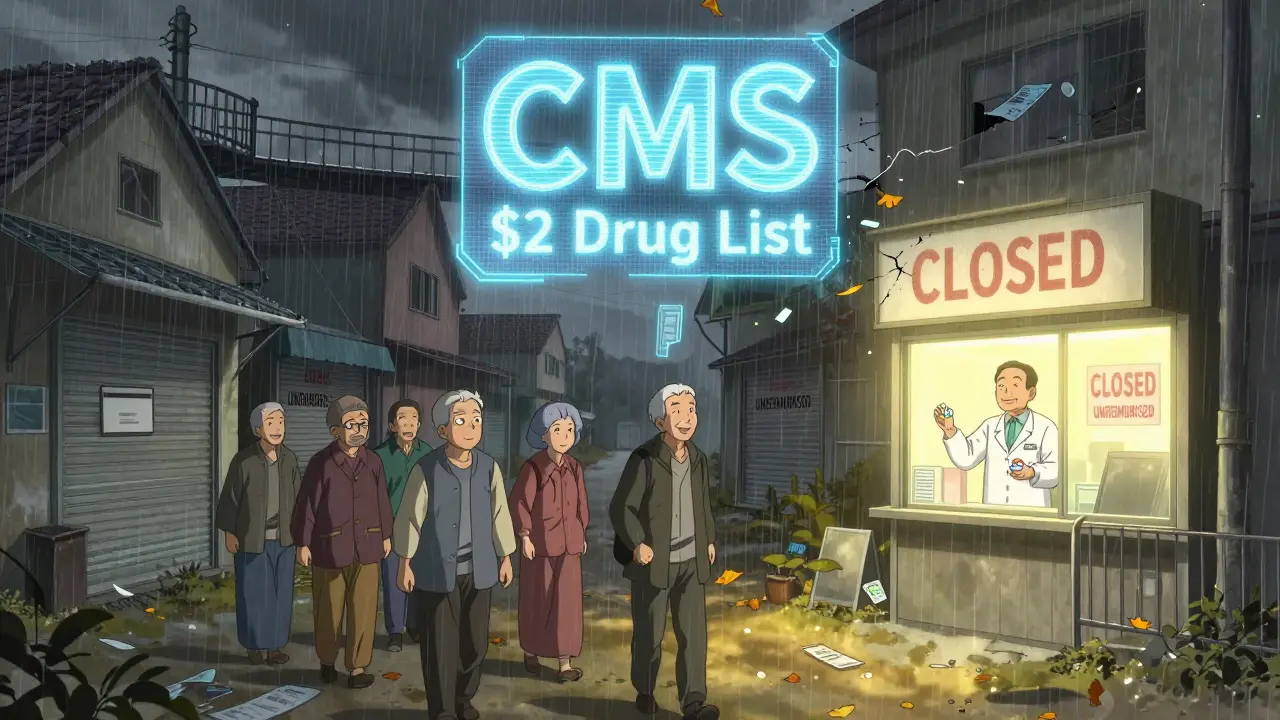
And then there’s the new Medicare $2 Drug List Model, proposed by CMS in 2025. It’s designed to simplify things: select about 100-150 low-cost, high-use generic drugs and cap the patient copay at $2. Sounds good, right? But it only applies to Part D plans that choose to join. And it doesn’t guarantee pharmacies will be paid enough to cover their costs. Many worry it will squeeze margins even further.
Pharmacy Benefit Managers (PBMs): The Middlemen Who Control the System
PBMs are the invisible power brokers. CVS Caremark, Express Scripts, and OptumRX control over 80% of all prescription claims in the U.S. They negotiate with drugmakers, set reimbursement rates, and decide which drugs get covered.
They make money in three ways:
- Rebates from drugmakers - often negotiated behind closed doors
- Spread pricing - charging insurers more than they pay pharmacies
- Ownership of pharmacies - so they steer business to their own locations
Spread pricing is the most controversial. A PBM might tell Medicare it paid $10 for a generic drug, but only reimburse the pharmacy $6. The $4 difference? That’s the PBM’s profit. And until 2018, they were allowed to use “gag clauses” - legal terms that prevented pharmacists from telling patients they could buy the same drug for less without insurance.
That’s right. Pharmacists couldn’t say, “This $5 generic costs $3 if you pay cash.” The law changed, but the practice didn’t disappear. Many pharmacies still don’t know the true cash price because PBMs don’t give them the data.
State Laws Are Trying to Fix the System - With Mixed Results
Federal rules leave a lot of room for state action. As of 2023, 44 states passed laws to regulate PBMs and protect pharmacy reimbursement.
Some states now require PBMs to disclose MAC rates before dispensing. Others ban spread pricing entirely. A few mandate that pharmacies be paid at least the amount they paid for the drug - no losses allowed.
But enforcement is weak. PBMs are powerful. They can threaten to remove a pharmacy from their network if they complain. And without a network, a pharmacy loses most of its business.
Medicaid programs use Preferred Drug Lists (PDLs) to push pharmacies toward cheaper generics. But even here, the system is flawed. If a doctor prescribes a brand-name drug, and the PDL doesn’t cover it, the patient might have to pay more - even if the generic is available. Prior authorization delays can mean patients go without meds for days.
What’s Happening With Authorized Generics?
Here’s one of the strangest twists: brand-name companies sometimes release their own “authorized generics.” These are identical to the generic version, but sold under the brand’s name. Why? To block other companies from entering the market.
When a patent expires, the first generic maker usually gets a 180-day exclusivity period. But if the brand company releases its own generic right away, it can undercut that exclusivity. The result? Fewer competitors, slower price drops, and less savings for patients.
The FDA and FTC have flagged this as anti-competitive. In 2024, the FTC sued two major drugmakers for “pay-for-delay” deals - where brand companies paid generic makers to delay launching their version. These deals cost consumers billions.
Why This All Matters to Patients
You might think, “I pay $4 for my blood pressure pill. What’s the problem?” But here’s the hidden cost:
- If pharmacies can’t make money on generics, they may stop stocking them.
- If they close, rural and low-income areas lose access.
- If PBMs hide cash prices, you overpay without knowing it.
- If formularies restrict access, you might get a more expensive drug you don’t need.
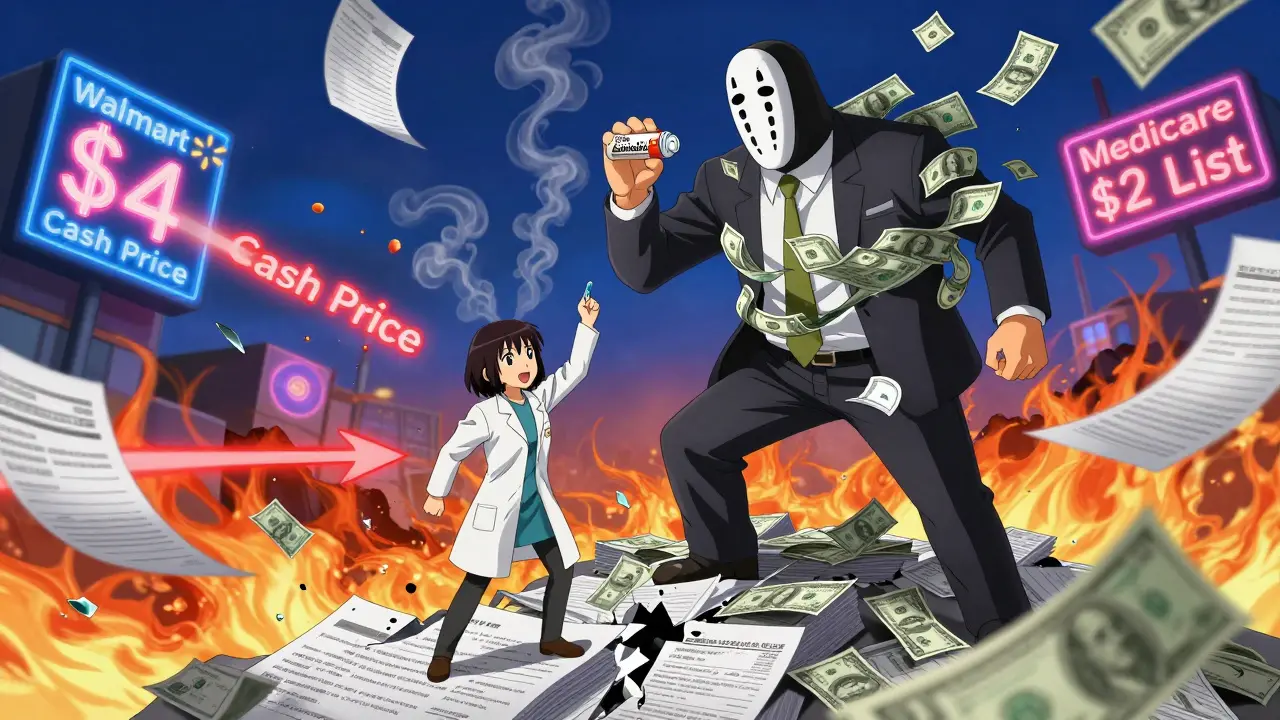
Patients on Medicare Extra Help pay no more than $4.50 for generics in 2024. But those without subsidies? They’re at the mercy of their plan’s formulary. Some pay $15 for a drug that costs $2 at Walmart - because their insurer’s reimbursement rate doesn’t reflect reality.
What’s Next? The Push for Value-Based Reimbursement
The current system is fee-for-service: pay per pill, regardless of outcome. But experts are pushing for value-based models - where pharmacies are rewarded for helping patients stay on their meds, not just for filling prescriptions.
CMS Innovation Center predicts it’ll take 5-7 years to shift. But pressure is building. States are suing PBMs. Congress is considering the “Prescription Drug Pricing Relief Act.” And patients are starting to ask questions.
The goal isn’t just to lower prices. It’s to make the system fair - so pharmacies can survive, patients get the drugs they need, and savings actually reach the people who need them most.
What You Can Do Today
- Ask your pharmacist: “What’s the cash price for this generic?”
- Compare prices at Walmart, Costco, or CVS - many offer $4 generics without insurance.
- If your plan denies coverage, appeal. Many denials are overturned.
- Use Medicare’s Plan Finder tool to compare formularies before signing up.
- Support state laws that ban spread pricing and require PBM transparency.
You don’t need to understand every regulation. But you do need to know: your pharmacy isn’t making money on your generic pills. And that’s why the system is failing.
Why is my generic drug more expensive with insurance than without?
Many insurance plans reimburse pharmacies below what the drug actually costs. If the pharmacy pays $5 for a pill but only gets $4 from your insurer, they may charge you more than the cash price to cover the loss. Cash prices at retailers like Walmart or Costco often reflect the true wholesale cost - and are lower than your insurance copay. Always ask your pharmacist for the cash price before using insurance.
What’s the difference between MAC and AWP reimbursement?
AWP (Average Wholesale Price) is a manufacturer-set list price that’s often inflated and rarely reflects real costs. Reimbursement was based on a discount from AWP - which led to overpayment. MAC (Maximum Allowable Cost) is a fixed rate set by insurers or PBMs based on actual market prices for generics. It’s designed to control costs, but often leaves pharmacies with little or no profit, especially if they bought the drug for more than the MAC rate.
Do all states have the same generic reimbursement laws?
No. As of 2023, 44 states have passed laws to regulate pharmacy reimbursement, but rules vary widely. Some ban spread pricing, others require PBMs to disclose MAC rates, and a few mandate minimum reimbursement levels. Federal programs like Medicare Part D override state rules, so even if your state protects pharmacies, your Medicare plan may not.
Why do some generic drugs have prior authorization requirements?
Even for generics, insurers may require prior authorization to control costs or steer patients toward a specific brand or formulation. This is common in Medicare Part D plans. It’s not about safety - it’s about economics. The insurer wants to ensure they’re paying the lowest possible price, even if the drug is clinically identical to others.
How does the Medicare $2 Drug List Model work?
The Medicare $2 Drug List Model is a voluntary program by CMS that would cap patient copays at $2 for about 100-150 low-cost, high-use generic drugs. To qualify, drugs must be clinically important, widely used by Medicare beneficiaries, and already on preferred formulary tiers. Participating plans must pay pharmacies enough to cover costs - but there’s no guarantee they will. The goal is to improve adherence and reduce confusion, but critics worry it could further squeeze pharmacy margins.
Final Thought: The Real Cost Isn’t on the Receipt
The price on your pharmacy receipt is just the tip of the iceberg. What’s hidden are the contracts, the rebates, the legal loopholes, and the profit margins that vanish before they ever reach you. The system was designed to save money - but too often, it saves it from the people who need it most: the pharmacies, the patients, and the communities that depend on them.
Lisa McCluskey
January 31 2026I work in a rural pharmacy. We've been losing money on generics for years. Cash prices at Walmart are often lower than our insurance reimbursement. We can't afford to keep stocking them, but if we stop, people in this town have to drive 40 miles. No one talks about this side of the equation.
owori patrick
February 1 2026This is exactly why I moved my meds to a Nigerian pharmacy online. I pay $1.50 for my blood pressure pills and get them shipped in 10 days. No insurance drama. No MAC rates. No PBM middlemen. I know it's not legal, but it's the only way I can afford my meds.
Darren Gormley
February 2 2026LMAO 😂 so the solution is to just pay cash? Wow. What a revolutionary idea. Meanwhile, the system is collapsing because we let pharmacies operate like convenience stores instead of healthcare providers. Someone needs to fix the incentives, not just tell people to shop around like it's a flea market.
Amy Insalaco
February 2 2026The structural inefficiencies inherent in the current MAC-based reimbursement paradigm are fundamentally misaligned with the economic realities of pharmaceutical supply chain dynamics. The absence of cost transparency, coupled with the perverse incentives embedded within PBM spread pricing models, creates a negative externality that disproportionately impacts independent community pharmacies, effectively rendering them economically nonviable under the prevailing fee-for-service paradigm. This is not a market failure-it is a regulatory capture.
Katie and Nathan Milburn
February 4 2026It is my understanding that the current reimbursement framework, while imperfect, was established with the intention of containing escalating pharmaceutical expenditures. The unintended consequence of reduced pharmacy margins, however, does present a legitimate concern regarding access and sustainability. A more granular analysis of regional cost differentials may yield more targeted policy interventions.
kate jones
February 4 2026The MAC system was meant to be a cost-control tool, but it's become a weapon against small pharmacies. What's worse is that PBMs don't even tell pharmacists the MAC rate until after the prescription is filled. That's not transparency-that's sabotage. States like California and New York have passed laws to require disclosure and ban spread pricing, but enforcement is weak because PBMs threaten to pull networks. It's a power imbalance that needs federal intervention.
Kelly Weinhold
February 6 2026I used to think generic drugs were just cheaper versions of brand names, but now I get it-they're a lifeline for people on fixed incomes. My grandma takes 6 generics a day. She pays $4 with insurance, but I found out the cash price at Costco is $2. She had no idea. We need to make this info easy to find. Maybe pharmacies should have little signs: 'Cash price: $2. Insurance: $4. Ask us!' It's not rocket science.
Kimberly Reker
February 6 2026I'm a pharmacist in Ohio. We just got hit with a new MAC rate that’s $0.80 below what we paid for the drug. We lost $1200 last month just on one blood pressure med. I told my boss we need to stop carrying it. He said, 'We can't. Medicare patients need it.' So we eat the loss. Again. The $2 drug list sounds nice, but if they don’t pay us enough to cover rent and staff, we’re out of business. And then who fills prescriptions in places like mine?