

Switching from Brand to Generic: What Patients Should Expect
Nearly 9 out of 10 prescriptions filled in the United States are now generic drugs. That means most people taking daily medicine are already using them without realizing the difference on their bottle. Yet, fear often stops people from making the switch. You might hear stories from neighbors or relatives about how the generic version didn’t work quite right. The reality is much simpler, and understanding the mechanics behind these switches can save you hundreds of dollars annually without sacrificing your health.
When you consider switching to generic medications, the biggest promise is cost. The second promise is safety, which many question. Recent data from September 2023 indicates that generic medications typically cost 80% to 85% less than their brand-name equivalents. If you have been paying premium prices for years, that shift adds up to significant relief on your monthly budget. However, money isn’t the only factor. You deserve to know exactly what stays the same and what changes during the transition.
The Core Science: Active Ingredients Remain Identical
At its simplest level, a generic drug contains the same Active Pharmaceutical Ingredient as the brand name version. Think of it like a copy-paste function. The molecule responsible for curing your condition must be identical in strength, dosage form, and route of administration. Whether you take a tablet orally or an injection subcutaneously, the core substance delivering the therapeutic effect does not change.
This identity is strictly enforced by regulatory bodies. According to U.S. Food and Drug Administration (FDA) guidelines, generic manufacturers must prove that their drug works the same way in the body as the brand name. This process relies on a concept called bioequivalence. During testing, scientists measure the area under the curve (AUC) and maximum concentration (Cmax) of the drug in the blood stream. These measurements confirm that the generic delivers the medication at the same rate and extent as the original brand.
There is a common myth that generics must match the brand perfectly down to the milligram. While the target is close, the law allows a small variance. Regulations require generics to fall within a 90% confidence interval of 80% to 125% of the brand’s pharmacokinetic parameters. In practice, Dr. Niteesh Choudhry from Harvard Medical School noted in 2022 that actual observed variations average only 4.1%. For the vast majority of patients, this microscopic difference is clinically irrelevant and does not alter treatment outcomes.
The Economic Impact: Real Savings Breakdown
The financial argument for generics is difficult to ignore. When patents expire, usually after 20 years, the market opens up to competition. This competition drives prices down dramatically. IQVIA data from 2023 shows brand-name medications averaging around $624 per prescription, whereas generics average just $128. That gap represents thousands of dollars over a lifetime of treatment.
| Type of Medication | Average Cost Per Prescription | Annual Savings Estimate |
|---|---|---|
| Brand-Name Drug | $624 | - |
| Generic Version | $128 | $378 |
These savings translate directly into better health behaviors. Kaiser Permanente data highlights that adherence rates are significantly higher when costs drop. For chronic conditions requiring long-term management, like diabetes, sticking to the regimen is vital. Generics account for approximately 90% of all prescriptions dispensed in the United States while representing only about 20% of total spending. This volume proves that millions of patients rely on them successfully every day.
FDA Standards: How Approval Works
You cannot manufacture or sell a generic drug without strict oversight. The approval pathway stems from the Hatch-Waxman Act of 1984, which created the legal framework for generic competition. The process involves submitting an Abbreviated New Drug Application (ANDA). Unlike a brand new drug, the manufacturer does not need to repeat massive clinical trials proving safety from scratch. Instead, they demonstrate the product is bioequivalent to the reference listed drug.
In 2022, FDA regulations were updated to tighten these standards further. Manufacturers must now prove bioequivalence across diverse populations. Dr. Janet Woodcock, former director of the Center for Drug Evaluation and Research, emphasized in congressional testimony that generics must have the same quality, strength, purity, and stability as brand-name drugs. They are tested for dissolution, meaning the pill breaks apart in your stomach at the same speed as the brand version. Without this consistency, the drug would fail approval regardless of how cheap it is to produce.

Exceptions: When You Must Be Careful
While generics are safe for most medicines, there is a specific category requiring extra caution: Narrow Therapeutic Index (NTI) drugs. These medications have a very small margin between a dose that helps and a dose that harms. Small changes in concentration could significantly impact efficacy or safety for some individuals.
Common examples include levothyroxine for thyroid issues, warfarin for blood thinning, phenytoin for seizures, and carbamazepine. The American Epilepsy Society reported in 2021 that roughly 12.7% of patients experienced breakthrough seizures when switching between different generic antiepileptic formulations compared to consistent brands. For these specific medicines, staying on one manufacturer’s product is often recommended. Your doctor may request that your pharmacist maintain a specific brand or generic supplier for you.
What Changes: Appearance and Inactive Ingredients
If the active ingredient is the same, why do pills look different? Trademark laws prevent generics from copying the exact shape and color of the brand drug. Pharmacists often find patients confused by a sudden change in pill appearance. It is normal for a generic to differ in color, shape, size, and markings. A study in July 2022 explained that varying appearance is legally required to avoid counterfeit confusion.
Beyond looks, inactive ingredients like fillers, binders, colors, and preservatives may vary. These substances hold the pill together but do not treat your illness. Most people notice nothing, but for the rare few with specific allergies to dyes or latex, these differences matter. The FDA acknowledges in its January 2023 Guidance that small differences in inactive ingredients may rarely cause adverse reactions. Always review the Patient Package Insert to see the full list of excipients. If you have known sensitivities, share them with your pharmacist before switching.
Managing the Transition: A Practical Checklist
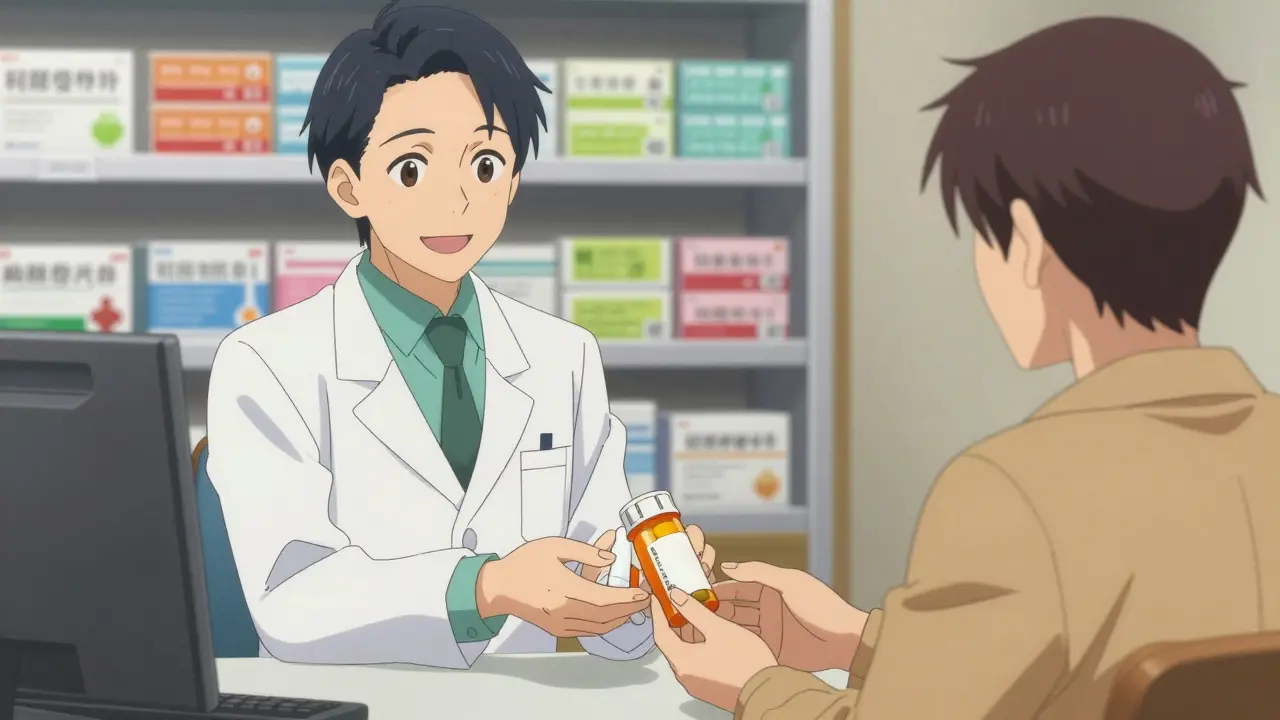
When you get your new prescription, take time to understand the change. Pharmacists are required to provide counseling sessions during substitutions in many states, focusing on monitoring protocols. Here is what you should track in your own log:
- Maintain a diary: Track effectiveness and side effects for two weeks post-switch.
- Monitor specific metrics: Diabetic patients should watch fasting blood glucose variations exceeding 20 mg/dL.
- Watch anticoagulants: Monitor INR fluctuations beyond 0.5 units if you take blood thinners.
- Note mental health: Use standardized scales like PHQ-9 for depression if managing psychiatric meds.
Documentation varies by manufacturer. Some labels clearly identify potential allergens, while others are vague. The FDA maintains a program for reporting medication errors if confusion leads to double-dosing. One documented case involved an 82-year-old patient who doubled her dose because the generic looked so different from the brand she recognized. Clear labeling and verbal confirmation with your healthcare team are your best defenses against confusion.
Success Stories and Patient Outcomes
Despite the fears, patient satisfaction remains high regarding generics. GoodRx’s 2023 Patient Savings Report showed 92% satisfaction among surveyed patients who switched. Many report improved adherence simply because they can afford to buy the full month supply. Maria Rodriguez, a patient from Phoenix, shared her experience publicly. She stated she was skipping doses of her brand-name cholesterol medicine costing $350 a month. After switching, the generic cost $15 and worked exactly the same.
Community forums reflect similar trends. On Reddit’s pharmacy community discussions from late 2023, 83.3% of respondents reported identical effects after switching. Dissatisfaction tends to cluster around visual changes rather than medical failure. Healthgrades data supports this, showing minimal statistical difference in ratings between generic and brand versions. The primary goal is consistent care, and for most users, the generic path offers the most reliable route to affordability.
Frequently Asked Questions
Can my insurance force me to switch to a generic?
Yes, most health plans cover generics automatically and require prior authorization for brand names unless medically necessary. Medicare Part D beneficiaries specifically save significant amounts by adhering to generic formularies.
Why does the generic pill look different?
Trademark laws require generic drugs to have different colors, shapes, and sizes than the brand to prevent counterfeiting and consumer confusion, even though the active medicine is the same.
Are there any drugs where I should avoid the generic?
For Narrow Therapeutic Index drugs like seizure meds or blood thinners, consistency in manufacturer is key. Consult your doctor before changing brands or sources for these sensitive medications.
How long does the FDA approval process take?
Under current patent linkage provisions, the average time from brand patent expiration to generic availability is approximately 14 months due to regulatory reviews and litigation.
What should I do if I feel worse after switching?
Track your symptoms immediately and contact your pharmacist. You can request a different generic manufacturer or revert to the brand if a medical necessity letter is submitted to your insurance.
Brian Yap
March 30 2026Just saw my dad switch his heart med last week and honestly he noticed zero difference.
Ruth Wambui
March 31 2026They claim bioequivalence but who really watches the factories behind the curtain pulling strings on the supply chain dynamics. Big Pharma always wants you dependent on their proprietary chemical cocktails disguised as identical copies. It is like swapping out a vintage painting for a print that looks perfect under specific lighting conditions. We ignore the subtle vibrations in our biology that might scream differently when exposed to the new binder agents. Trust is a fragile commodity in this medical industrial complex ecosystem we inhabit.
Michael Kinkoph
April 1 2026Your skepticism borders on dangerous misinformation; patients need evidence! The regulatory frameworks exist specifically to protect public health! One cannot simply dismiss decades of peer review based on shadowy assumptions. It is the moral duty of citizens to trust science rather than paranoia! Facts matter significantly! We must prioritize empirical data over conspiratorial narratives! Ignoring this reality endangers everyone!
emma ruth rodriguez
April 2 2026The FDA guidelines regarding Abbreviated New Drug Applications are indeed rigorous in their execution protocols. Manufacturers submit extensive dossiers proving pharmacokinetic equivalence during the approval lifecycle. Bioavailability testing ensures therapeutic consistency across diverse demographic groups. Stability testing confirms shelf life integrity under varying environmental conditions. Quality control measures prevent contamination risks associated with production facilities. Compliance audits happen regularly to maintain certification standards. These safeguards collectively ensure patient safety remains uncompromised throughout distribution channels.
Jonathan Sanders
April 3 2026Oh wow such dedication to reading boring compliance paperwork while actual people suffer from side effects nobody tracks. How noble of the industry to care about paperwork more than human experience. Maybe the next audit can focus on whether pills actually taste terrible too. Truly inspiring to watch regulations solve every single problem that exists in the real world.
Rick Jackson
April 4 2026Balance is essential when considering financial accessibility versus perceived risk factors. People deserve relief from high costs without feeling abandoned by the system. Small variations might not matter much statistically but they feel significant personally. We should strive for understanding instead of fighting against necessary changes. Community support helps bridge the gap between fear and acceptance. Finding middle ground allows for better health outcomes overall.
Beccy Smart
April 5 2026You sound like a textbook nobody reads 😒 Most people just want cheap meds without drama 🙄 Why complicate something simple with all your balance talk 💊 Just take the pill and stop worrying lol.
sanatan kaushik
April 7 2026Cost is the main thing for poor people here. Brand name prices kill families slowly. Generic save money why complain. If doctors say safe then it is safe. Stop making noise about nothing.
Debbie Fradin
April 8 2026Money is not the only currency involved in medical outcomes though. You ignore the potential variability issues entirely in your rush. Safety margins are thin for many critical conditions. Optimism does not fix biological inconsistencies either way.
Jonathan Alexander
April 10 2026The night I took the wrong looking pill was terrifying beyond comprehension. My hand shook opening the bottle because the colors were completely wrong. Fear gripped my chest like a vice hold. I thought the pharmacy made a deadly error right then. Panic set in before I even read the label clearly. It felt like my whole health stability vanished instantly.
Charles Rogers
April 11 2026You lack proper medication management skills obviously. Panic arises from ignorance of standard pharmaceutical practices. Patients must educate themselves on expected visual variances beforehand. Trust your pharmacist to explain the transition properly. Blaming appearance shows poor preparation on your part.
Adryan Brown
April 13 2026There is often a lot of misunderstanding regarding how medication transitions occur in modern healthcare systems today. Many individuals feel threatened by the change simply because they are unfamiliar with the process details. Communication breakdowns between pharmacy staff and patients create unnecessary anxiety levels. Patience is required while verifying that the active ingredient matches the prescription needs exactly. Pharmacists undergo training to handle these substitutions with great care and precision. It is important to verify the manufacturer code on every single bottle received. Checking expiration dates ensures the product stored correctly during transit logistics. Consulting with a primary care physician provides additional reassurance about dosage consistency. Tracking symptoms in a journal helps identify any genuine reactions to the formulation change. Insurance plans often mandate switches to lower tier generic options automatically. Understanding the fine print prevents unexpected bill shocks later in the month. Reading patient inserts offers detailed information about inactive ingredients present in the mixture. Most adverse events reported turn out to be placebo effects or unrelated health issues entirely. Regular monitoring labs confirm that blood levels remain within therapeutic windows safely. Building a relationship with one specific pharmacist can reduce confusion during refills repeatedly. Everyone deserves access to affordable treatments without compromising quality standards unnecessarily. We should focus on shared responsibility between providers and consumers for best results.
Christopher Curcio
April 15 2026Pharmacological adherence depends heavily on patient perception of therapeutic equivalence too. Bioavailability metrics often overshadow subjective comfort with the excipient matrix composition. Validating patient concerns regarding narrow therapeutic index substrates is clinically crucial. Empathy facilitates better engagement during transition periods involving bioequivalent substitutes. Monitoring plasma concentrations ensures efficacy remains consistent despite manufacturer variance.