Medication-Induced Palpitations Risk Assessment
Assess Your Risk Factors
Select all options that apply to you or the patient being evaluated.
Common High-Risk Medications
| Class | Examples | Mechanism |
|---|---|---|
| Beta-Agonists | Albuterol | Sympathetic Stimulation |
| Macrolides | Azithromycin | QT Prolongation |
| Decongestants | Pseudoephedrine | Vasoconstriction |
| SSRIs | Citalopram | QT Prolongation |
Risk Score Result
Standard monitoring is sufficient. Maintain healthy electrolyte levels.
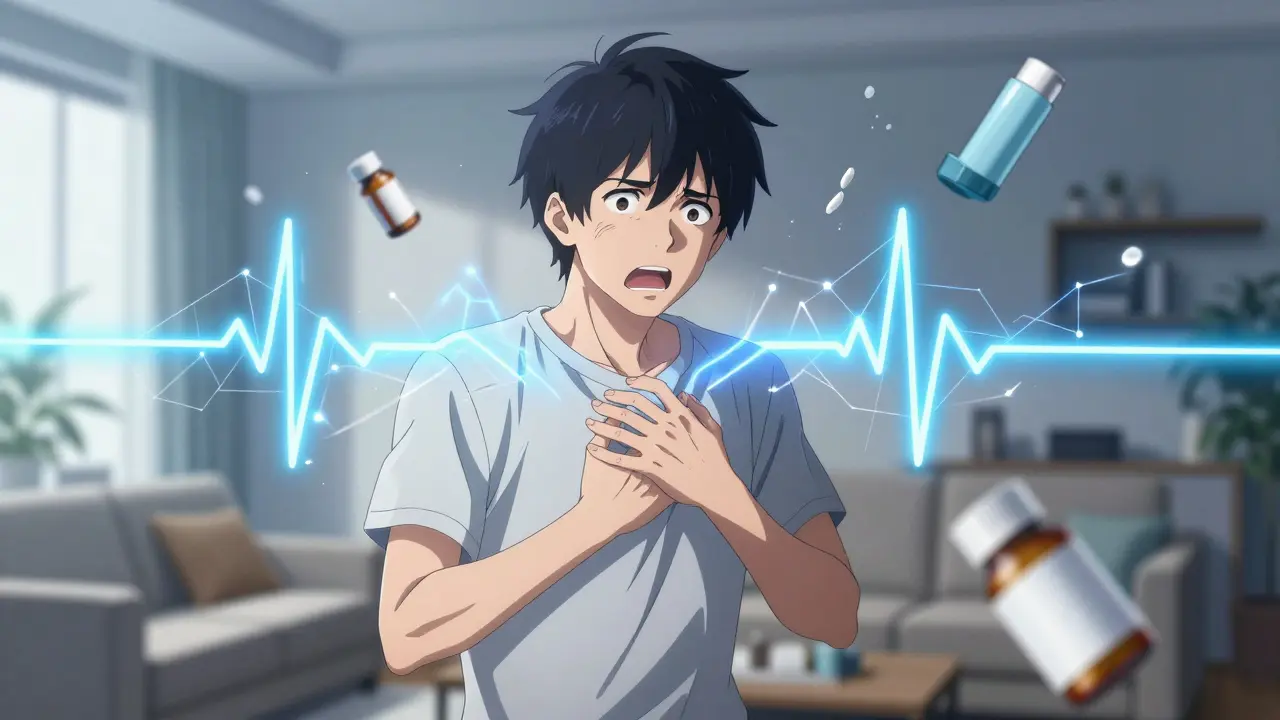
That sudden flutter in your chest or the feeling that your heart is racing out of control can be terrifying. If you’ve recently started a new prescription or over-the-counter remedy, those palpitations might not be stress-they could be your body reacting to the medicine. It’s a common but often overlooked issue. In fact, medication-induced arrhythmias account for roughly 10-20% of all irregular heartbeat cases seen by doctors. Understanding which drugs trigger this reaction and how to manage it safely is crucial for protecting your heart health.
Why Do Medications Cause Rapid Heartbeat?
Your heart beats because of electrical signals traveling through its tissue. Certain medications interfere with these electrical pathways or stimulate your nervous system, causing the heart to beat faster or irregularly. This phenomenon, known as tachycardia or palpitations, happens when drugs disrupt the balance of electrolytes like potassium and magnesium, or directly affect the heart’s conduction system.
For example, asthma inhalers containing albuterol are designed to open airways, but they also stimulate beta-receptors in the heart. This can cause your heart rate to jump by 15-25 beats per minute within 30 minutes of use. Similarly, antibiotics like azithromycin can prolong the QT interval-a measure of the heart’s electrical reset time-by 30-50 milliseconds, increasing the risk of dangerous rhythms.
Even newer weight-loss drugs like semaglutide have been linked to modest heart rate increases of 3-5 bpm in clinical trials. The key takeaway is that almost any drug affecting your autonomic nervous system or cardiac electrophysiology can potentially cause palpitations.
Common Medications Linked to Palpitations
Not all drugs carry the same risk, but several categories are well-documented culprits. Here is a breakdown of the most frequent offenders:
- Asthma and COPD Medications: Beta-agonists like albuterol and salmeterol directly stimulate the heart. Long-acting versions can keep your heart rate elevated for 8-12 hours.
- Antibiotics: Macrolides (azithromycin) and fluoroquinolones (levofloxacin, ciprofloxacin) are known to prolong the QT interval. A 2021 study found azithromycin increased tachycardia risk by 2.15-fold in certain patients.
- Decongestants: Over-the-counter remedies containing pseudoephedrine or phenylephrine raise blood pressure and heart rate. Standard doses can increase heart rate by 10-20 bpm.
- Thyroid Medications: Levothyroxine causes palpitations in 8-12% of users, especially if the dose is too high and TSH levels drop below 0.1 mIU/L.
- Psychiatric Drugs: Tricyclic antidepressants (amitriptyline) and some SSRIs (citalopram) can significantly prolong the QT interval, particularly at higher doses.
| Medication Class | Common Examples | Primary Mechanism | Typical Onset |
|---|---|---|---|
| Beta-Agonists | Albuterol, Salmeterol | Sympathetic stimulation | 15-30 minutes |
| Macrolide Antibiotics | Azithromycin | QT Interval Prolongation | 24-48 hours |
| Decongestants | Pseudoephedrine | Vasoconstriction & HR increase | 1-2 hours |
| SSRIs | Citalopram | QT Interval Prolongation | Dose-dependent |
Evaluating Your Symptoms: What Doctors Look For
If you experience new palpitations, don’t ignore them. The evaluation process starts with a thorough medication reconciliation, where your doctor reviews every pill, supplement, and OTC drug you take. About 70% of medication-induced arrhythmias appear within 72 hours of starting or changing a dose.
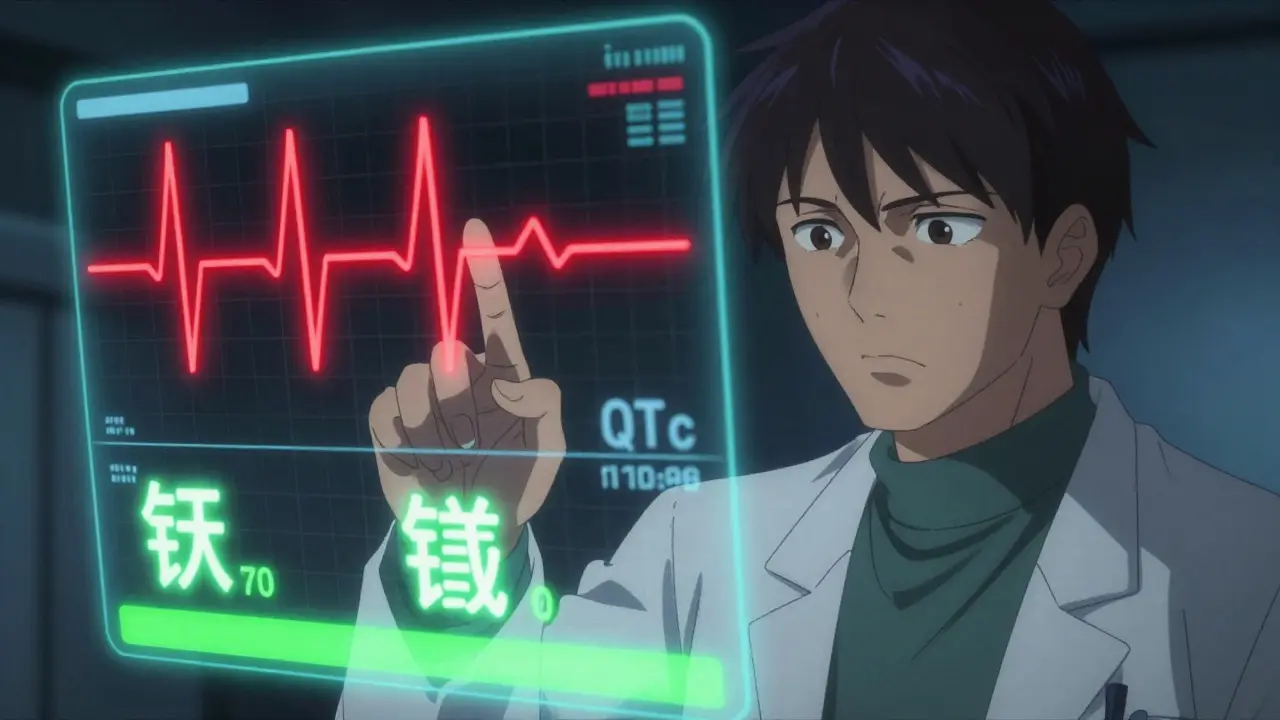
The cornerstone of diagnosis is the electrocardiogram (ECG). Doctors specifically look at the QTc interval. A normal QTc is under 450ms for men and 460ms for women. If it exceeds 500ms, or jumps more than 60ms from your baseline, it’s considered high-risk for dangerous arrhythmias like torsades de pointes.
Blood tests are also critical. Low potassium (<3.5 mmol/L) or low magnesium (<1.7 mg/dL) dramatically increases the risk of drug-induced palpitations. Thyroid function tests (TSH) help rule out hyperthyroidism caused by excessive thyroid medication.
Risk Factors That Make You More Vulnerable
Not everyone reacts the same way to these medications. Some people are naturally more susceptible due to genetics, age, or existing health conditions. The Brigham and Women’s Hospital uses a risk assessment tool that assigns points for specific factors:
- Age over 65: Adds +2 points to risk score.
- Female sex: Adds +1 point, as women generally have longer QT intervals.
- Multiple QT-prolonging drugs: Each additional agent adds +3 points.
- Electrolyte imbalances: Uncontrolled low potassium or magnesium.
- Structural heart disease: Prior heart attack or heart failure.
If your score exceeds 5, you’re in the high-risk category. Older adults face a particularly steep risk; patients over 75 are 3.2 times more likely to develop serious arrhythmias from these drugs compared to younger patients.

Management and Treatment Strategies
Treating medication-induced palpitations depends on severity. For mild cases with no structural heart disease, doctors may simply monitor you with weekly ECGs while correcting electrolyte imbalances. Dose reduction is often the first step for moderate symptoms, resolving issues in 60-70% of cases within 72 hours.
In high-risk situations-such as a QTc over 500ms or actual fainting episodes-the offending medication must be stopped immediately. Switching to a safer alternative is standard practice. For instance, if you need an antibiotic but have a high arrhythmia risk, amoxicillin carries a much lower incidence of palpitations (0.8%) compared to azithromycin (2.9%).
When no alternative exists, such as with certain cancer therapies, doctors may prescribe prophylactic beta-blockers like metoprolol succinate. This has been shown to reduce arrhythmia incidence by 45% without compromising the primary treatment’s effectiveness.
Prevention and Patient Safety Tips
Prevention is far easier than treatment. Always ask your pharmacist or doctor about cardiac side effects before starting a new drug. Keep a symptom journal noting when you take your medication and when you feel palpitations. This helps identify clear cause-and-effect relationships.
Avoid combining multiple QT-prolonging drugs unless strictly monitored. Never exceed recommended doses of OTC decongestants. If you have a history of heart rhythm issues, insist on a baseline ECG before starting any new psychiatric or antibiotic therapy. Modern electronic health records often flag dangerous combinations automatically, but human vigilance remains essential.
How quickly do medication-induced palpitations start?
Most medication-induced palpitations begin within 72 hours of starting a new drug or changing a dosage. However, some effects, like those from long-acting beta-agonists, can occur within 15-30 minutes of inhalation.
Is a rapid heartbeat from medication permanent?
No, it is usually reversible. Once the offending medication is discontinued or the dose is adjusted, heart rate typically returns to normal within 24-72 hours, provided there is no underlying structural heart damage.
What should I do if I feel palpitations after taking a pill?
If you feel lightheaded, short of breath, or have chest pain, seek emergency care immediately. For mild fluttering, sit down, rest, and contact your doctor. Do not stop prescribed medication abruptly without medical advice, as this can sometimes worsen symptoms.
Can over-the-counter cold medicines cause heart problems?
Yes, decongestants like pseudoephedrine and phenylephrine can significantly raise heart rate and blood pressure. People with pre-existing heart conditions should avoid these or consult their doctor before use.
Are natural supplements safe regarding heart rhythm?
Not necessarily. Some herbal supplements, such as ephedra or high-dose licorice root, can affect electrolyte balance and heart rhythm. Always disclose all supplements to your healthcare provider during medication reconciliation.