
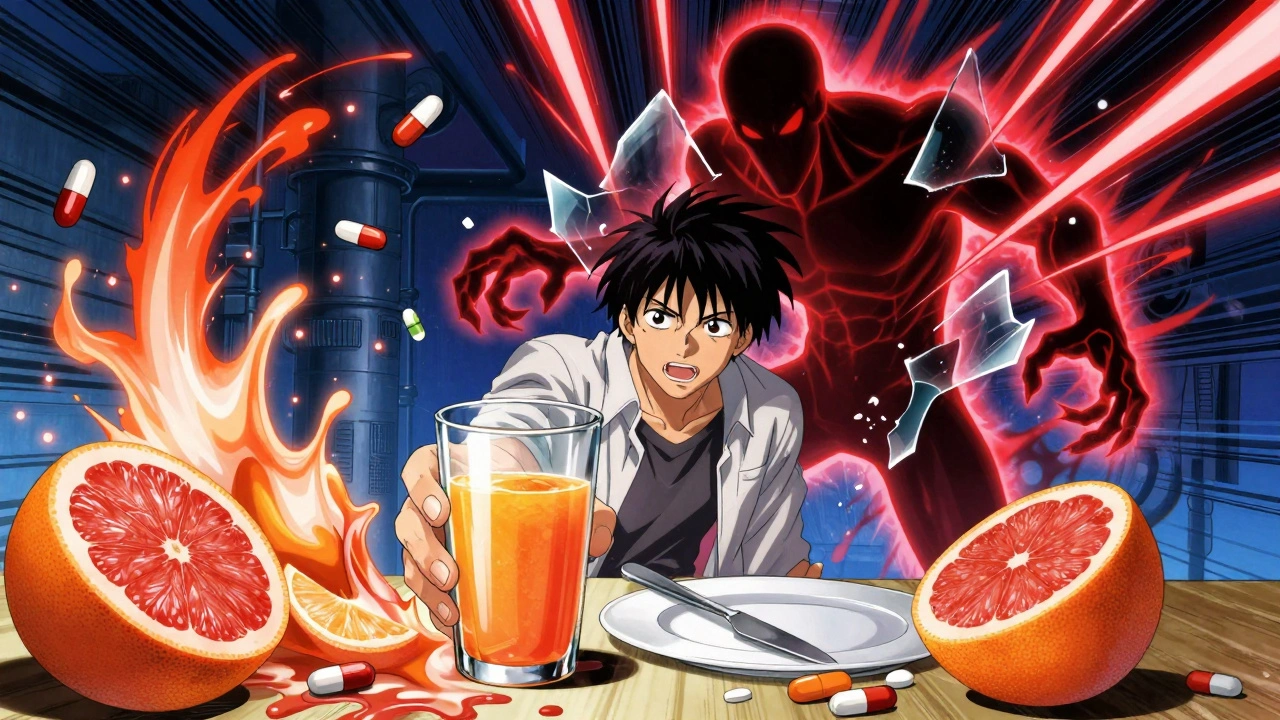
Statins & Grapefruit Interaction Checker
Safety Information
Select a statin to see safety information
When you're taking statins to lower your cholesterol, you might think grapefruit is a healthy addition to your breakfast. But for some statins, that half a grapefruit or glass of juice could be quietly turning a safe medication into a dangerous one. This isn't a myth or a warning from a distant past-it’s a well-documented, ongoing risk that affects millions of people worldwide. And the worst part? Many don’t even know it’s happening.
How Grapefruit Messes With Your Statins
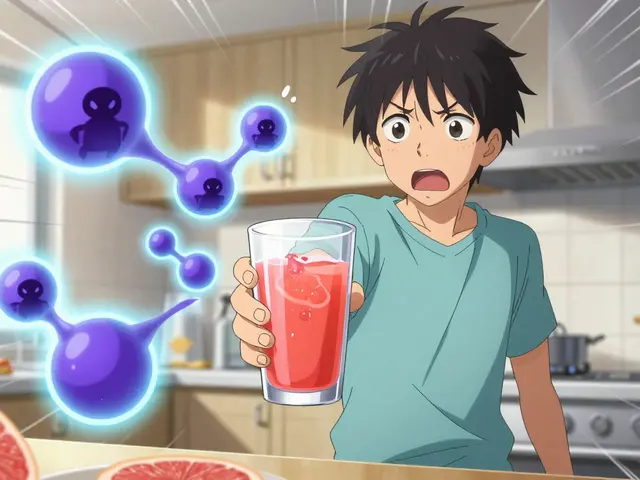
Grapefruit doesn’t interact with all statins. But when it does, the effect is powerful and long-lasting. The culprit? Furanocoumarins-natural chemicals in grapefruit that shut down a key enzyme in your body called CYP3A4. This enzyme lives in your gut and liver and normally breaks down about half of all oral medications before they enter your bloodstream. Think of it like a bouncer at a club, keeping the drug levels in check. When grapefruit juice hits your system, those furanocoumarins permanently disable CYP3A4 in your intestines. It’s not a temporary pause. The enzyme stays blocked for up to 72 hours. That means your statin isn’t being broken down like it should. Instead, it floods into your bloodstream at levels you didn’t sign up for. This isn’t just theory. In one study, people who drank grapefruit juice daily while taking simvastatin saw their blood levels of the drug jump by more than three times. That’s not a small bump-it’s a massive overload. And the higher the dose, the worse it gets.Which Statins Are Risky With Grapefruit?
Not all statins are created equal when it comes to grapefruit. Some are safe. Others are not. Here’s the split:- High risk: Simvastatin (Zocor), lovastatin (Mevacor), and atorvastatin (Lipitor). These are metabolized mostly by CYP3A4. Simvastatin is the worst offender-even a small amount of grapefruit can push drug levels into dangerous territory.
- Low or no risk: Pravastatin (Pravachol), rosuvastatin (Crestor), fluvastatin (Lescol), and pitavastatin (Livalo). These use different pathways in the body and don’t rely on CYP3A4. You can usually enjoy grapefruit without worry.
What Happens When Levels Get Too High?
The biggest danger? Muscle damage. Statins already cause muscle aches in 5-10% of users. Add grapefruit, and that risk spikes. The most common sign is unexplained muscle pain, weakness, or cramps-especially in the thighs, shoulders, or lower back. Worse, it can lead to rhabdomyolysis. That’s when muscle tissue breaks down so badly that it dumps proteins into your blood. Your kidneys can’t handle it. Acute kidney failure follows in 30-40% of cases. This is rare-only about 0.1 to 0.5 cases per 100,000 people on statins-but grapefruit can push it higher. One documented case involved a 40-year-old woman taking 20 mg of simvastatin daily. She drank grapefruit juice every morning for 10 days. She woke up with severe muscle pain and dark, tea-colored urine. Her creatine kinase (a muscle damage marker) was over 100 times normal. She spent days in the hospital. She survived-but she didn’t need to.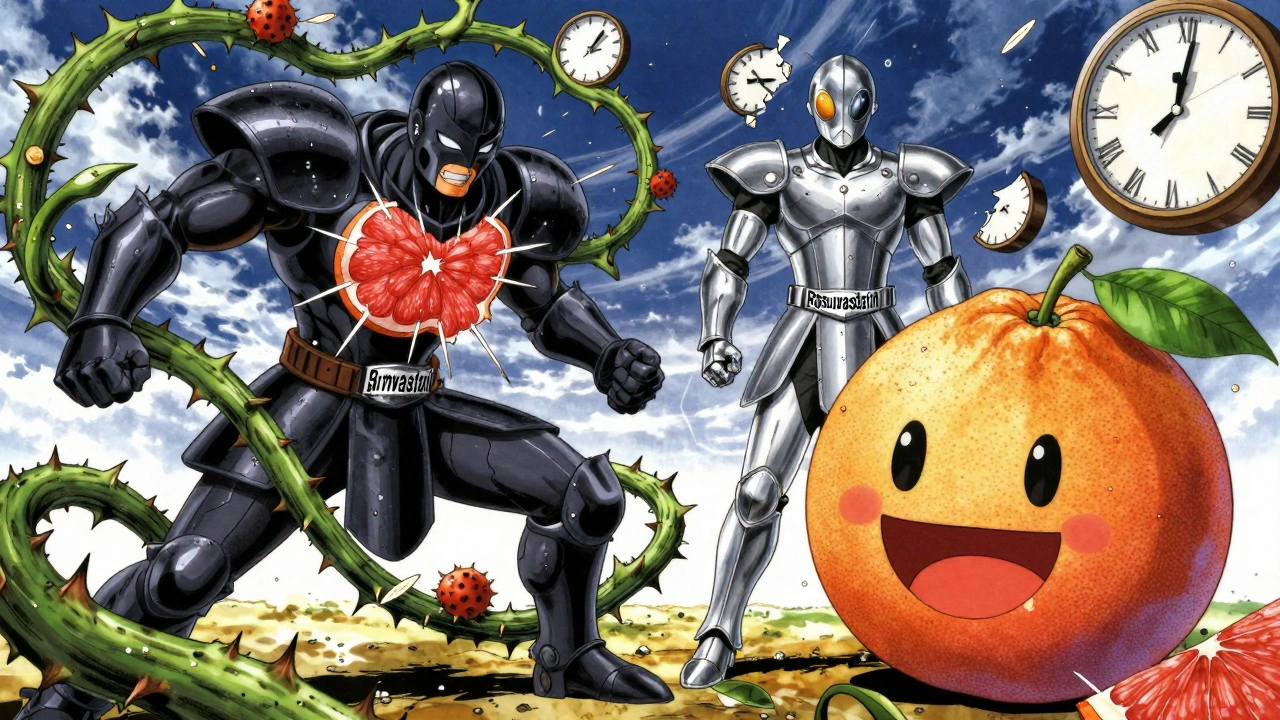
Why Timing Doesn’t Help
You might think: "I’ll just take my statin at night and have grapefruit in the morning." That won’t work. The enzyme damage lasts for days. Even if you space them out by 12 hours, the enzyme is still blocked. The grapefruit effect isn’t about when you take it-it’s about whether you took it at all. And it’s not just juice. Fresh grapefruit, grapefruit extract, even grapefruit-flavored candy or supplements can trigger the reaction. The furanocoumarins are in all of them.What Should You Do?
If you’re on a statin, here’s what to do next:- Check your prescription label. If it says "avoid grapefruit," take it seriously.
- Look up your statin name. If it’s simvastatin or lovastatin, avoid grapefruit completely.
- If you’re on atorvastatin, limit grapefruit to no more than one small glass per day-and only if you’re otherwise healthy.
- If you’re on pravastatin, rosuvastatin, fluvastatin, or pitavastatin, you’re likely safe-but still, check with your doctor.
- Ask your pharmacist or doctor: "Is my statin safe with grapefruit?" Don’t assume they told you. A 2021 survey found only 38% of statin users knew about this interaction-even though most labels warn about it.

The Bigger Picture
It’s easy to get scared and stop your statin altogether. Don’t. Statins reduce heart attacks and strokes by 25-35% in people who need them. The risk from grapefruit is small if you pick the right statin. The risk from stopping your statin? Huge. The goal isn’t to live in fear of fruit. It’s to make smart choices. If you’re on a high-risk statin, swap it. If you’re on a safe one, enjoy your grapefruit. If you’re unsure, ask. A simple conversation with your doctor or pharmacist can prevent a hospital visit.What’s Next?
Researchers are exploring ways to make grapefruit safe again-like removing furanocoumarins without losing the fruit’s health benefits. But that’s still years away. For now, the safest option is simple: know your statin. Know your fruit. And don’t mix the two unless you’re certain it’s safe.Can I drink grapefruit juice if I take rosuvastatin?
Yes. Rosuvastatin (Crestor) is not broken down by the CYP3A4 enzyme, so it doesn’t interact with grapefruit. You can safely drink grapefruit juice or eat the fruit while taking rosuvastatin. The same applies to pravastatin, fluvastatin, and pitavastatin.
How long does the grapefruit interaction last?
The enzyme-blocking effect of grapefruit can last up to 72 hours. That means even if you drink grapefruit juice in the morning and take your statin at night, the interaction still happens. You can’t time your way out of it. Avoidance is the only reliable solution.
Is it safe to eat grapefruit if I take a low dose of simvastatin?
No. Even low doses of simvastatin can become dangerously concentrated with grapefruit. The interaction isn’t dose-dependent in a way that makes small amounts safe. The FDA and European Medicines Agency recommend complete avoidance for anyone taking simvastatin, regardless of dosage.
What are the signs of muscle damage from statins and grapefruit?
Watch for unexplained muscle pain, weakness, or cramps-especially in your legs or back. Dark, tea-colored urine is a major red flag. These are signs of rhabdomyolysis. If you notice these symptoms, stop the grapefruit and contact your doctor immediately. Don’t wait.
Can I switch to a different statin to avoid grapefruit?
Yes. If you love grapefruit and are on simvastatin or lovastatin, talk to your doctor about switching to pravastatin or rosuvastatin. These statins work just as well for lowering cholesterol and have no known interaction with grapefruit. Many people make this switch without any loss in effectiveness.
Michael Gardner
December 14 2025Look, I get the warning, but let’s be real-how many people actually drink grapefruit juice daily? I’ve seen this post three times in the last month, and every time it’s the same fear-mongering. I’ve been on simvastatin for 8 years and had a grapefruit once a month. No muscle pain, no hospital trips. Your body adapts. Stop scaring people into thinking fruit is poison.
John Fred
December 15 2025Yessss!! 🙌 This is such an important post-seriously, so many people don’t know this. If you're on simva or lova, DITCH THE GRAPES 🍊🚫. But if you're on Crestor or Pravachol? GO CRAZY. I eat half a grapefruit every morning with my oatmeal. My LDL’s down, my kidneys are fine, and I’m living my best life. 🚀 Talk to your doc, not Dr. Google. #StatinSmart
Hamza Laassili
December 15 2025Grapefruit?!!? That’s some liberal, over-regulated nonsense!! I’m a hardworking American and I eat grapefruit with my eggs every damn day-statin or not! The FDA’s just trying to control us!! My cousin took simvastatin and drank juice for 15 years-he’s still alive and mowing his lawn at 72!! Stop with the fear-mongering!! It’s just a fruit!!!
Rawlson King
December 16 2025Interesting. But you’re missing the bigger picture. The fact that this interaction is so poorly understood by the general public speaks volumes about the state of pharmaceutical education. If your doctor didn’t explain this to you, they’re not doing their job. And yet, people still trust their prescriptions blindly. It’s not the grapefruit-it’s the system.
Cole Newman
December 17 2025Wait-you said atorvastatin is okay with 200ml? That’s a lie. I work in a pharmacy. We’ve had three patients in the last six months with rhabdo from ‘just a little’ grapefruit with Lipitor. That 200ml limit? It’s a loophole. If you’re over 60, on blood pressure meds, or have any kidney history? Even that’s too much. You think you’re safe? You’re not. I’ve seen the labs. Don’t gamble.
Casey Mellish
December 17 2025As an Aussie who’s been on rosuvastatin for five years, I can confirm-grapefruit is my breakfast BFF. No issues. No warnings. No drama. We’ve got a citrus industry here that runs on this stuff, and if this interaction were as dangerous as claimed, we’d be seeing hospital floods. The science is solid for some statins, but don’t let fear stop you from eating healthy. Just know your med. Simple as that.
Tyrone Marshall
December 18 2025There’s a deeper truth here beyond the grapefruit. We’ve turned medicine into a series of avoidances-don’t eat this, don’t drink that, don’t do this. But what if the real problem isn’t the fruit? It’s that we’ve created a system where a single chemical interaction can derail an entire treatment plan. We need better-designed drugs. We need better labeling. We need to stop treating patients like they’re fragile and start treating them like they’re capable of understanding their own bodies. The grapefruit is just a symptom.
Emily Haworth
December 19 2025Okay but what if the grapefruit juice was organic and the statin was generic? And what if the FDA is in on it with Big Pharma to sell more expensive statins? I read on a blog that grapefruit is genetically modified to trigger this reaction on purpose. My cousin’s neighbor’s dog got sick after eating grapefruit and now the whole neighborhood is on a ‘statin cleanse’. I think we’re being lied to. 🍊👁️🗨️
Yatendra S
December 19 2025It’s not about grapefruit. It’s about the illusion of control. We think we can manage our health with lists and rules-avoid this, take that, eat this fruit, don’t eat that. But the body is not a machine with buttons. It’s a dance. Sometimes the grapefruit is just a symbol of our fear that we don’t understand what’s inside us. Maybe the real question is: why do we need so many rules to stay alive?
Scott Butler
December 20 2025Let me tell you something. This whole thing is a scam. I’m a veteran. I’ve been on simvastatin since 2012. I eat grapefruit every day. I’ve never had a problem. The government wants you scared so you’ll take more pills. My doctor told me it’s fine. If you’re not American, you don’t know what real medicine is. Stop listening to these overeducated elitists with their ‘studies’ and ‘enzymes’. Just take your meds and eat your fruit. End of story.