
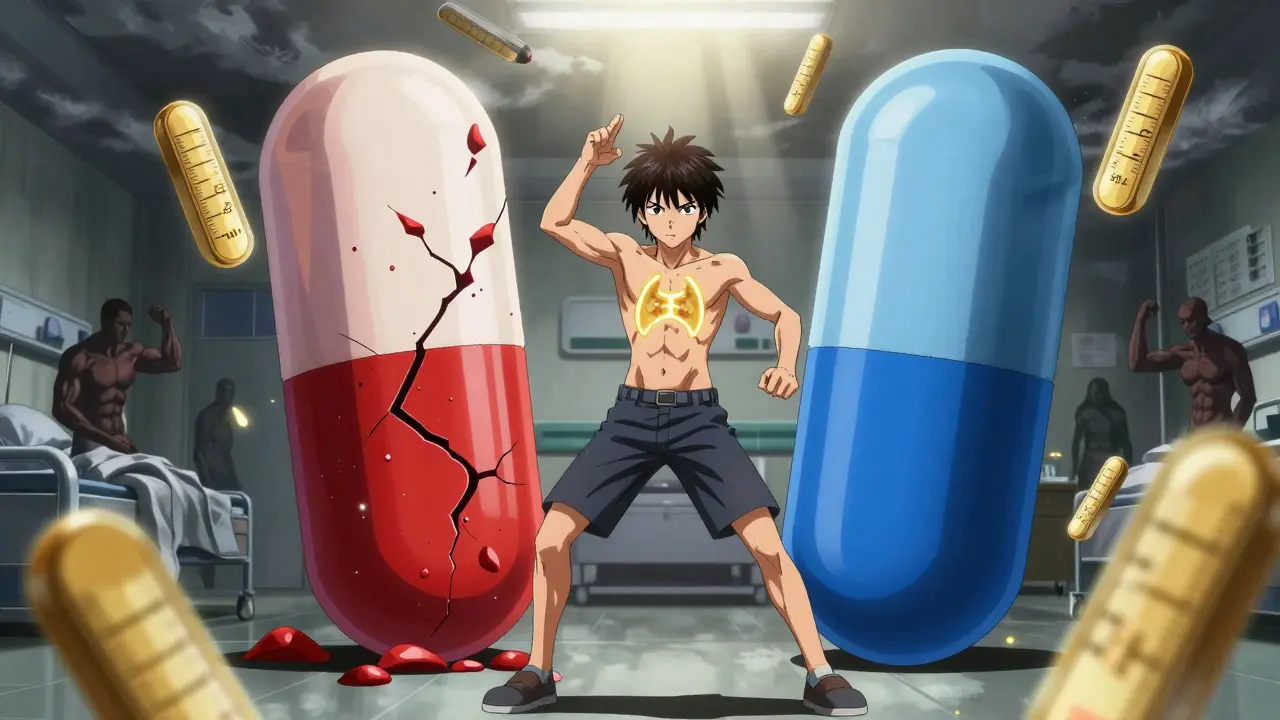
Thyroid & Statin Risk Calculator
Based on clinical research showing hypothyroidism can increase statin muscle damage risk by up to 4 times. This tool helps you understand your specific risk level.
When you have hypothyroidism and need to lower your cholesterol, statins can be a lifesaver. But for many people, they come with a hidden danger: muscle pain, weakness, or worse. This isn’t just a side effect-it’s a dangerous interaction that’s often missed. If your thyroid isn’t properly managed, statins can turn from helpful to harmful in a matter of weeks.
Why Your Thyroid Matters When Taking Statins
Your thyroid controls your metabolism. When it’s underactive, your body slows down in ways you might not notice-until your muscles start hurting. Statins work by blocking cholesterol production, but they also interfere with coenzyme Q10, a compound your muscles need for energy. In someone with normal thyroid function, this is usually fine. But in hypothyroidism, your muscles are already struggling to produce energy. Add statins on top, and the result is muscle damage. The science is clear: untreated hypothyroidism makes statin-induced muscle injury 3 to 4 times more likely. A 2019 study of over 12,000 patients found that those with TSH levels above 10 mIU/L had more than four times the risk of myopathy compared to those with normal thyroid function. Even subclinical hypothyroidism-where TSH is between 4.5 and 10-doubles the risk.The Real Risk: Rhabdomyolysis
Most people think of statin side effects as mild muscle aches. But in hypothyroid patients, it can escalate quickly. Rhabdomyolysis-where muscle tissue breaks down and floods the bloodstream with toxic proteins-is rare, but deadly. When it happens, it can cause kidney failure. One 2023 case report described a 67-year-old woman whose TSH spiked to 22.4 mIU/L during thyroid treatment. She kept taking simvastatin 40 mg daily. Her creatine kinase (CK) levels hit 28,500 U/L. She needed emergency dialysis. CK levels above 10 times the upper limit of normal are a red flag. But in hypothyroid patients, symptoms can appear even when CK is only 5 times higher. That’s why doctors can’t rely on blood tests alone. If you’re on a statin and feel unusual fatigue, soreness, or dark urine, get checked-don’t wait.Not All Statins Are Created Equal
Some statins are far riskier than others when your thyroid is out of balance. Lipophilic statins-like simvastatin, atorvastatin, and lovastatin-easily slip into muscle cells. That’s why they’re more likely to cause damage. Hydrophilic statins-like pravastatin and rosuvastatin-stay mostly in the liver, where they’re supposed to work. Here’s what the data shows:- Simvastatin 40 mg or higher: 12.7% myopathy risk in hypothyroid patients
- Atorvastatin: 3.2-fold increased risk compared to euthyroid patients
- Rosuvastatin 10-20 mg: Only 1.4-fold increased risk
- Pravastatin: Just 1.3% myopathy incidence in hypothyroid patients

Thyroid Levels Are the Key
Your TSH level isn’t just a number-it’s your safety threshold. The American Thyroid Association says TSH should be below 4.0 mIU/L before starting a statin. But the real target? Between 0.5 and 3.0 mIU/L. That’s the range where muscle risk drops dramatically. A 2022 study found that optimizing thyroid function before starting statins reduces myopathy risk by 78%. That’s not a small improvement-it’s life-changing. Many patients assume their thyroid is “fine” if they’re on levothyroxine. But if your dose isn’t right, your TSH could still be too high. One Reddit user shared how his CK jumped to 8,400 U/L after starting atorvastatin while his TSH was 9.2. After adjusting his thyroid meds, his symptoms vanished in four weeks. Don’t assume your current dose is perfect. Get your TSH and free T4 tested before starting a statin-and again 6 to 8 weeks after starting or changing your statin dose. If your TSH creeps up, don’t wait. Adjust your thyroid treatment before your muscles pay the price.What to Do If You Have Muscle Pain
Muscle pain on statins doesn’t always mean you have to stop them. But it does mean you need to act.- Stop the statin immediately if you have severe pain, weakness, or dark urine
- Get a CK blood test and TSH test right away
- If your TSH is above 4.0, work with your doctor to adjust your levothyroxine
- Don’t restart the statin until your TSH is in the 0.5-3.0 range
- Consider switching to rosuvastatin or pravastatin
Coenzyme Q10 and Other Supplements
Some people take CoQ10 supplements to reduce statin muscle pain. It makes sense-statins lower CoQ10, and your muscles need it. A 2020 clinical trial found that 200 mg of CoQ10 daily reduced muscle pain by over 50% in hypothyroid statin users. While it’s not officially recommended in all guidelines, it’s low-risk and often helpful. Other supplements like vitamin D and magnesium may also support muscle health, especially if you’re deficient. But none of them replace fixing your thyroid. If your TSH is high, no amount of CoQ10 will fully protect you.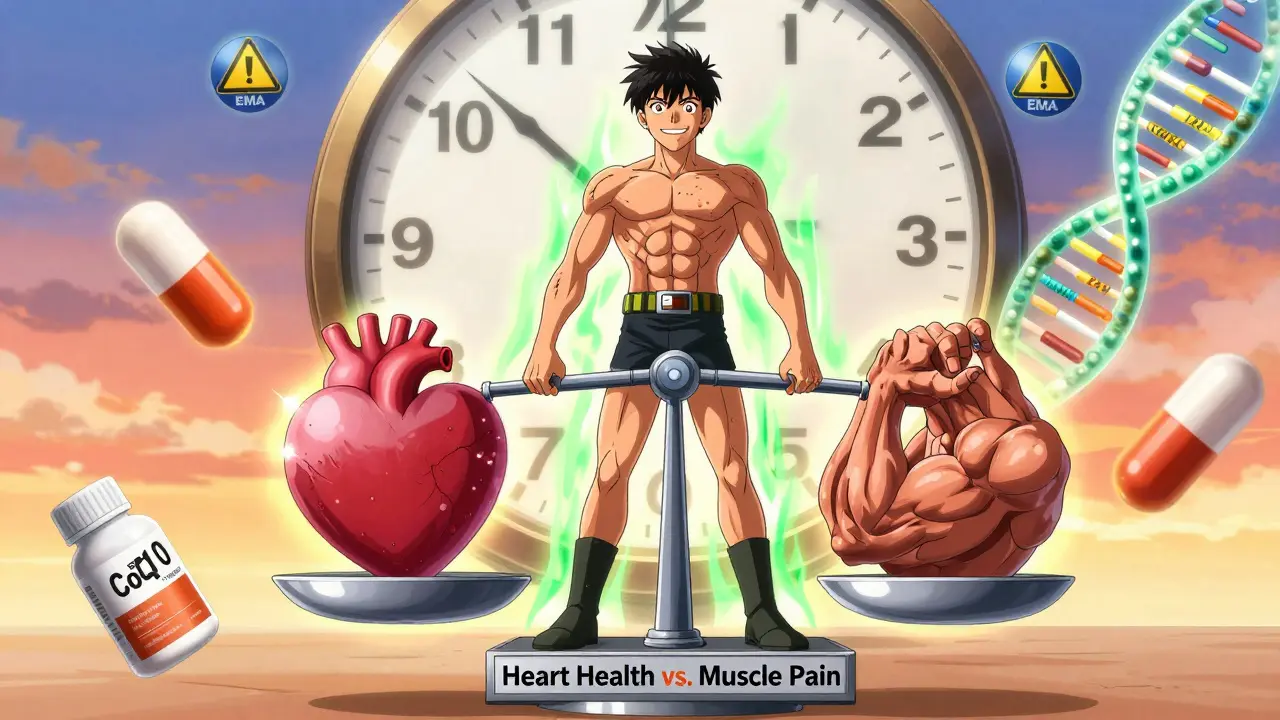
Why So Many People Quit Statins (And Why They Shouldn’t)
A 2022 study found that 32.4% of hypothyroid patients stopped their statins within a year because of muscle symptoms. Only 14.7% of people with normal thyroid levels did the same. That’s a huge gap-and it’s preventable. But here’s the catch: stopping statins puts you at higher risk for heart attack and stroke. The same study estimated that 6.3 million unnecessary statin discontinuations happen every year in the U.S. alone, mostly because thyroid issues weren’t addressed. You don’t have to live with muscle pain. You don’t have to quit your statin. You just need to get your thyroid right.What’s Changing in 2025
The FDA is preparing new guidance requiring thyroid testing before high-intensity statin therapy. The European Medicines Agency will soon require warnings about this interaction on every statin package insert. And a new genetic test is being tested in the THYROSIMVASTATIN trial (NCT05328761) that could soon tell you exactly how risky a statin is for you based on your thyroid status and DNA. These aren’t distant future ideas-they’re coming fast. If you’re on a statin and have hypothyroidism, the time to act is now. Don’t wait for a warning label. Don’t wait for a crisis.Final Takeaway
Hypothyroidism and statins don’t have to be a dangerous combo. With the right thyroid management, most people can take statins safely for life. The key is simple:- Test your TSH before starting a statin
- Keep it between 0.5 and 3.0 mIU/L
- Choose rosuvastatin or pravastatin over simvastatin or high-dose atorvastatin
- Check CK if you have muscle pain
- Don’t stop your statin without fixing your thyroid first
Can hypothyroidism cause statin muscle pain even if I’m on levothyroxine?
Yes. Being on levothyroxine doesn’t automatically mean your thyroid is well-controlled. Many people have TSH levels above 4.0 mIU/L even while taking medication. Muscle pain from statins often appears when TSH is too high-sometimes even between 4.5 and 10. Always test your TSH and free T4 before starting or changing statins, and keep your TSH in the 0.5-3.0 range for safety.
Which statin is safest for someone with hypothyroidism?
Rosuvastatin and pravastatin are the safest choices. They’re hydrophilic, meaning they don’t penetrate muscle tissue as easily as lipophilic statins like simvastatin or atorvastatin. Studies show rosuvastatin increases myopathy risk by only 1.4 times in hypothyroid patients, while simvastatin at 40 mg or higher increases risk by over 15 times compared to euthyroid patients. Avoid high-dose simvastatin entirely if you have hypothyroidism.
Should I take CoQ10 with my statin if I have hypothyroidism?
It’s a good idea. Statins lower CoQ10 levels by 25-50%, and hypothyroidism already reduces muscle energy production. A 2020 trial showed 200 mg of CoQ10 daily cut muscle pain by over 50% in hypothyroid statin users. It’s not a cure, but it’s low-risk and may help you tolerate your medication better. Always discuss supplements with your doctor first.
How often should I get my thyroid tested while on statins?
Test your TSH and free T4 before starting a statin. Then test again 6-8 weeks after starting or changing your statin dose. If you’re stable, check every 6-12 months. But if you develop muscle pain, weakness, or dark urine, test immediately. Your thyroid status can change due to stress, illness, or medication changes-so don’t assume your last test is still valid.
Is it safe to restart a statin after stopping it due to muscle pain?
Yes-if your thyroid is optimized. Many patients who stop statins due to muscle pain can safely restart them after their TSH is brought into the 0.5-3.0 range. Switching to a safer statin like rosuvastatin or pravastatin also helps. Don’t restart the same statin at the same dose. Start low, go slow, and monitor closely. Muscle pain often returns if you don’t fix the root cause: uncontrolled hypothyroidism.
Can untreated hypothyroidism make statins less effective for heart protection?
Not directly-but it can make you stop taking them. Statins work just as well to lower cholesterol in hypothyroid patients. The problem isn’t effectiveness-it’s tolerability. If muscle pain causes you to quit your statin, you lose the heart protection. When thyroid function is properly managed, hypothyroid patients on statins have the same low risk of heart attack and stroke as people with normal thyroid levels.

Jigar shah
December 17 2025Interesting breakdown. I’ve been on levothyroxine for 7 years and just started rosuvastatin last month. My TSH was 2.1 when I began-no muscle issues so far. I didn’t realize how much thyroid status affects statin tolerance. This should be standard info in every GP’s office.
Joe Bartlett
December 19 2025Simvastatin is a nightmare for thyroid folks. I quit it after my legs turned to jelly. Switched to pravastatin and life’s fine. Simple as that.
Marie Mee
December 19 2025They’re hiding this on purpose. Big Pharma doesn’t want you to know thyroid meds and statins don’t mix. They profit off your muscle pain and dialysis bills. I saw a guy on YouTube with CK over 50k. They just pump him with fluids and send him home. This is a scam.
Philippa Skiadopoulou
December 19 2025Thyroid optimization before statin initiation is critical. The data is robust. TSH targets of 0.5–3.0 mIU/L significantly reduce myopathy risk. Rosuvastatin and pravastatin remain first-line in this population. Routine CK monitoring is advised if symptoms arise. No need for CoQ10 unless deficient-thyroid correction is the priority.
Patrick A. Ck. Trip
December 20 2025I appreciate the depth of this post. I’ve been hesitant to bring up my muscle pain to my doctor, worried I’d be told to just ‘push through.’ But after reading this, I’m going to request a TSH and CK test next week. I’ve been on atorvastatin for two years and my TSH was last checked over a year ago. Maybe that’s the issue. Thank you for the clarity.
Sam Clark
December 21 2025This is exactly the kind of nuanced, evidence-based guidance that’s missing from most patient education materials. Thank you for emphasizing that statins aren’t the enemy-uncontrolled hypothyroidism is. The real tragedy is how many people stop their meds unnecessarily when the solution is often as simple as adjusting levothyroxine. Well done.
Virginia Seitz
December 22 2025CoQ10 is a game changer 🙌 I took 200mg daily and my leg cramps vanished. Also, I drink coconut water now. It’s full of electrolytes 😊
amanda s
December 23 2025THIS IS WHY YOU CAN’T TRUST DOCTORS. They don’t test your thyroid before slapping you with statins. My sister died from rhabdo. They said it was ‘statin side effect’-but her TSH was 18. No one checked. I’m starting a petition. This needs to be a law.
Brooks Beveridge
December 24 2025There’s a quiet revolution happening here. We’ve been taught to treat cholesterol like the enemy, but the real enemy is imbalance. Your body isn’t broken-it’s out of sync. Fix the thyroid, choose the right statin, and your muscles will thank you. You’re not weak for feeling pain. You’re smart for listening to it.
Anu radha
December 25 2025I had this exact problem. My legs hurt so bad I couldn’t walk. My doctor said ‘it’s normal.’ I went to a naturopath and she checked my TSH-it was 8.9. We adjusted my meds and now I’m fine. Thank you for saying this.
Jane Wei
December 26 2025Just started pravastatin 10mg after reading this. My TSH is 1.8. Fingers crossed. Also, I’m not taking CoQ10. I hate pills. 😅