
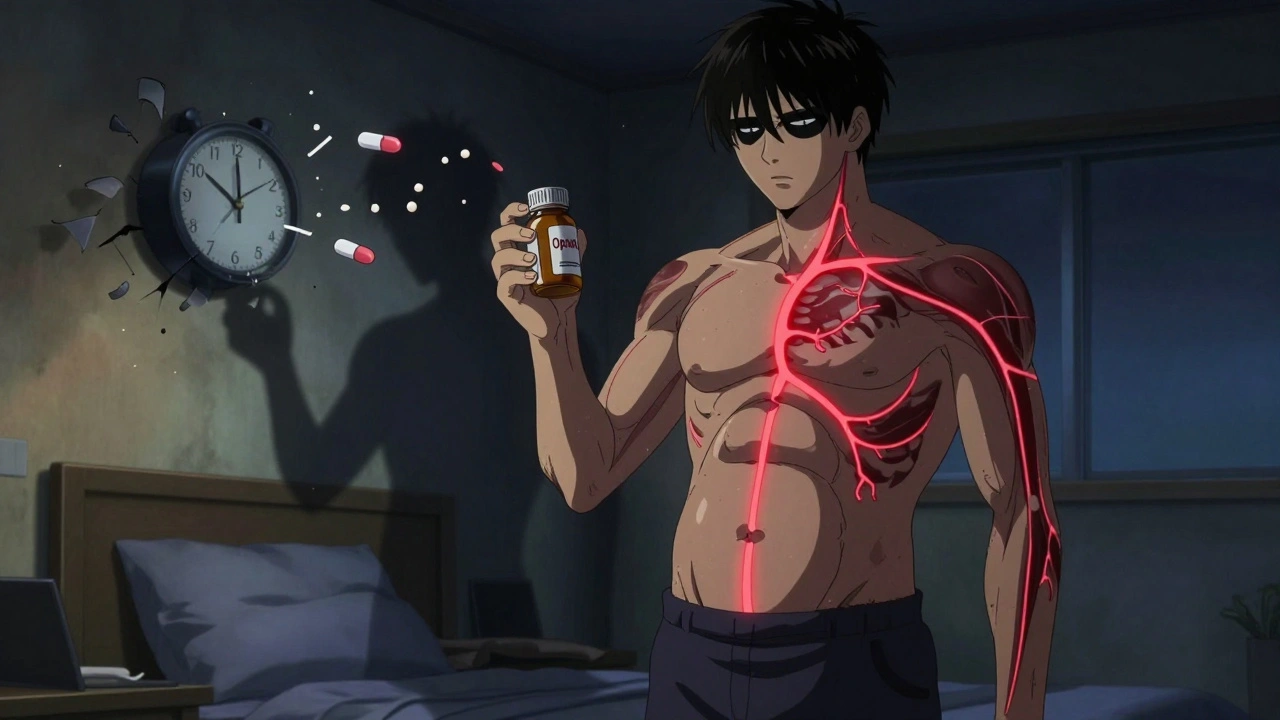
Opioid Testosterone Symptom Checker
How It Works
Answer 7 questions about your symptoms. If you answer "yes" to 3 or more questions, you should discuss testosterone testing with your doctor.
This tool is based on the Androgen Deficiency in Aging Males (ADAM) questionnaire recommended by the Endocrine Society.
Answer questions to see your results...
When you're on long-term opioids for chronic pain, the last thing you think about is your testosterone levels. But if you're feeling constantly tired, losing interest in sex, or noticing you're gaining weight despite eating the same, there might be a hidden cause: opioid-induced androgen deficiency (OPIAD). This isn't rare. It affects between 50% and 90% of men using opioids for more than three months. And most doctors don't screen for it.
How Opioids Kill Your Testosterone
Opioids don't just block pain signals-they mess with your brain's hormone system. Specifically, they hit the hypothalamic-pituitary-gonadal (HPG) axis, the control center for testosterone production. When you take opioids regularly, they reduce the pulses of gonadotropin-releasing hormone (GnRH) from your hypothalamus. That means your pituitary gland stops sending out enough luteinizing hormone (LH), which tells your testes to make testosterone. Without that signal, testosterone production drops-sometimes by half.This isn't just a side effect. It's a direct biological response. Long-acting opioids like methadone and buprenorphine are especially bad because they stick around longer, continuously suppressing the system. Studies show men on methadone have testosterone levels averaging 245 ng/dL-well below the normal range of 300-1000 ng/dL. Those on buprenorphine do better, but still average only 387 ng/dL. The longer you're on opioids, the worse it gets. After one year, testosterone can be 50-75% lower than before you started.
What Low Testosterone Feels Like
If you're on opioids and feeling off, it's easy to blame the pain, the meds, or just getting older. But these symptoms are classic signs of low testosterone:- Low sex drive-reported in 68-85% of affected men
- Erectile dysfunction-affects 60-75% of users
- Chronic fatigue-fatigue scores are 2.5 times higher than normal
- Depressed mood-symptoms are 40% more severe than in men with normal testosterone
- Loss of muscle and increased belly fat
- Brain fog and trouble concentrating
- Bones getting weaker-spine bone density drops 15-20%
- Anemia-hemoglobin levels average 12.3 g/dL, compared to 14-18 g/dL in healthy men
These symptoms don’t show up overnight. They creep in over 3-6 months. Many men assume they’re just "getting older" or "dealing with pain." But when you fix the testosterone, these problems often improve-fast.
How to Know If You Have It
You can’t guess your testosterone level. You have to test it. And timing matters. Testosterone peaks in the morning, so blood work should be done between 7-10 AM. One low reading isn’t enough. The Endocrine Society recommends two low measurements, taken at least a week apart, to confirm hypogonadism.Doctors should also use the Androgen Deficiency in Aging Males (ADAM) questionnaire. If you answer "yes" to three or more of these questions:
- Do you have less interest in sex?
- Do you feel less energetic?
- Do you feel weaker?
- Have you noticed a decrease in your height?
- Do you feel less happy or more irritable?
- Do you have trouble getting or keeping an erection?
- Have you noticed a decrease in your muscle mass?
-you need lab testing. Many clinics skip this entirely. If your doctor doesn’t bring it up, ask. It’s simple, cheap, and life-changing.
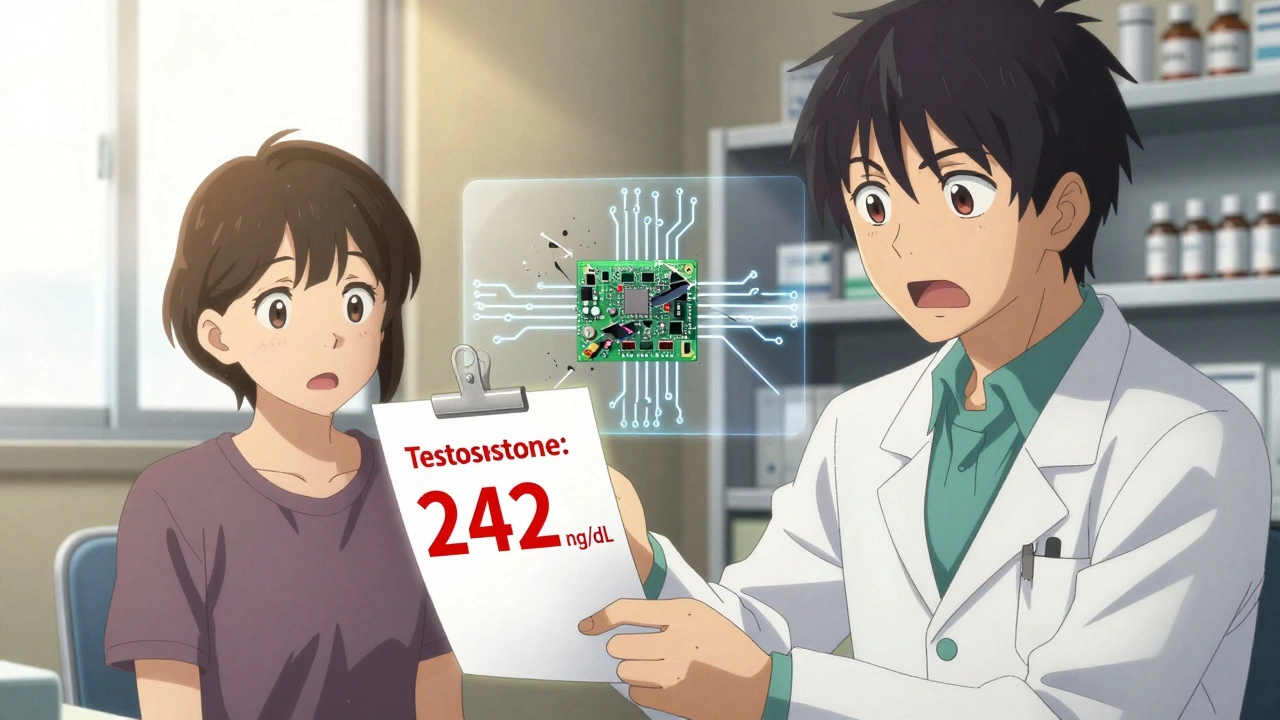
Treatment: Testosterone Replacement Therapy (TRT)
If your levels are low and symptoms match, testosterone replacement therapy (TRT) is the standard treatment. It doesn’t cure the opioid use-it replaces what your body stopped making. And it works.Studies show TRT improves:
- Sexual function-IIEF scores jump from 12.5 to 19.8 in six months
- Pain sensitivity-reduced by 30% in some patients
- Body composition-lean mass increases by 3.2 kg, fat mass drops by 2.1 kg
- Mortality-men on TRT have 49% lower risk of dying from any cause
- Heart health-38% lower risk of major cardiac events
- Bone strength-fracture risk drops by 35%
- Anemia-risk reduced by 26%
TRT comes in several forms:
- Injections-testosterone cypionate or enanthate, 100-200 mg every 1-2 weeks
- Gels-50-100 mg daily, applied to skin (shoulders, arms, abdomen)
- Patches-5-7.5 mg daily, worn on skin
- Buccal tablets-30 mg twice daily, stuck to the gum
Most men start with gels or injections. Gels are easier to manage daily; injections last longer but cause spikes and dips in levels. Your doctor will pick based on your lifestyle and preferences.
What to Watch Out For
TRT isn’t risk-free. The FDA requires black box warnings because of potential dangers:- Polycythemia-red blood cell count rises in 15-20% of users, thickening blood and increasing clot risk
- Lower HDL (good cholesterol)-drops 10-15 mg/dL
- Acne-affects about 25% of gel users
- Increased stroke risk-relative risk goes up 1.3-1.8x
- Increased blood clot risk-1.4-2.0x higher chance of venous thromboembolism
TRT is strictly forbidden if you have or have had prostate or breast cancer. It can fuel cancer growth. Your doctor must check your PSA (prostate-specific antigen) every 6 months if you’re over 50 or have risk factors.
Also, once you start TRT, your body stops making its own testosterone. Stopping suddenly can crash your levels. You need to plan long-term with your doctor.
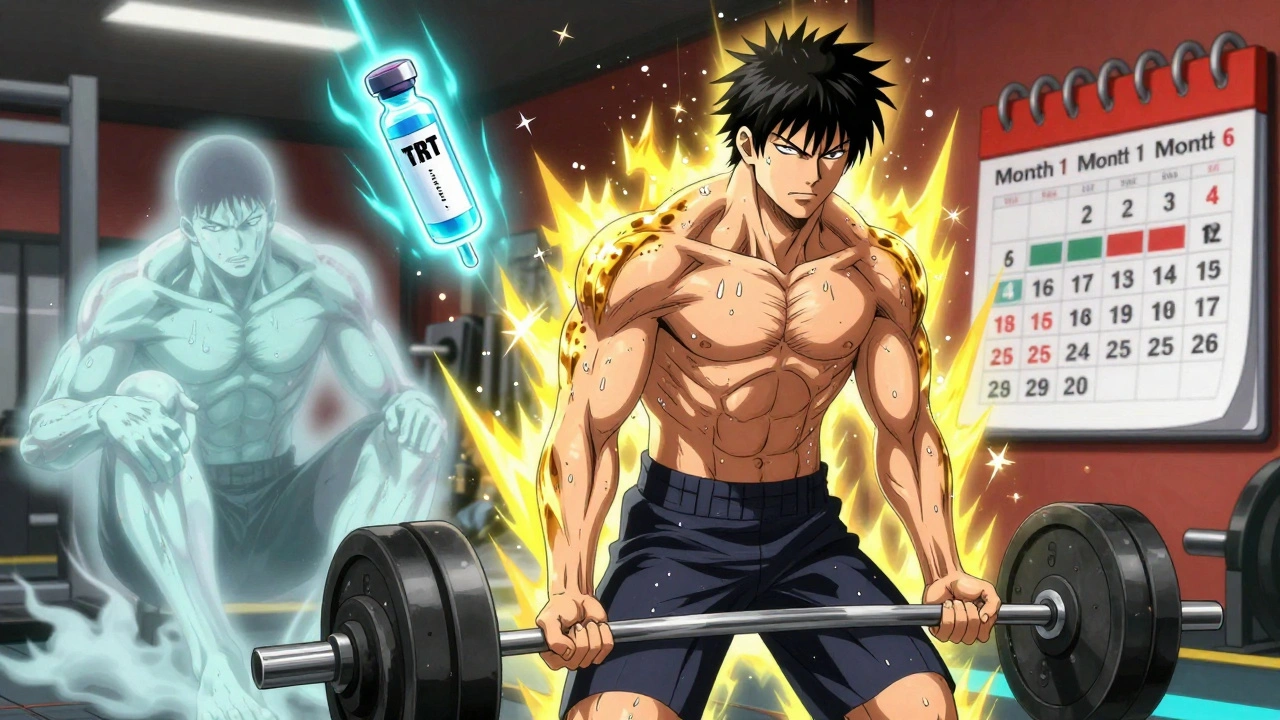
Non-Medical Ways to Help
Even if you’re on TRT, lifestyle changes can make a big difference:- Keep your weight down-men with BMI under 25 have 20-30% higher testosterone
- Do resistance training-three weekly sessions boost testosterone by 15-25%
- Sleep 7-9 hours-poor sleep cuts levels by 20%
- Avoid smoking-smokers have 15-20% lower testosterone
- Limit alcohol-more than 14 drinks a week drops levels by 25%
- Prevent diabetes-diabetics have 25-35% lower testosterone
These aren’t magic fixes-but they support your treatment and reduce other health risks. And if you’re on opioid agonist therapy (like methadone or buprenorphine for addiction), these habits can be your best defense.
The Big Picture
Over 58 million people used opioids globally in 2022. Even if only half develop OPIAD, that’s tens of millions of men with untreated low testosterone. Most don’t know it’s fixable. They’re told it’s just aging, stress, or pain. But it’s not.This is a treatable medical condition. And treating it doesn’t mean you’re taking more drugs-it means you’re fixing a side effect that’s stealing your energy, your sex life, your strength, and even your lifespan.
Doctors in the UK and US are starting to wake up. But if you’re on long-term opioids, don’t wait for them to bring it up. Ask for a testosterone test. If your levels are low and symptoms match, ask about TRT. The benefits are real. The risks are manageable-with proper monitoring.
You don’t have to live tired, weak, and sexless just because you’re managing pain. Your body still has the capacity to recover. You just need to ask for the right help.
Can opioids cause low testosterone even if I’m not addicted?
Yes. Opioid-induced androgen deficiency (OPIAD) happens with any long-term use-even if you’re taking prescribed opioids for chronic pain, not for recreation. It’s a biological effect of the drugs on your hormone system, not a sign of addiction. People on daily pain meds for arthritis, back pain, or nerve pain are just as likely to develop it as those with opioid use disorder.
How long does it take for testosterone to drop after starting opioids?
Testosterone levels usually start falling within 2-4 weeks of daily opioid use. By 3-6 months, most men show clear signs of deficiency. The drop is gradual, which is why symptoms are often missed. It’s not sudden like a crash-it’s a slow drain that you might not notice until your energy, mood, or sex drive is already gone.
Is testosterone replacement therapy safe for older men on opioids?
For older men, TRT can be very safe-and even life-saving-if monitored properly. Studies show men over 50 on long-term opioids who receive TRT have significantly lower rates of heart attacks, fractures, and death. The key is regular blood tests to check testosterone, PSA, hematocrit, and liver enzymes. If you’re healthy otherwise and don’t have prostate cancer, the benefits often outweigh the risks.
Will TRT make me dependent on it?
Yes, but not in the way you think. Your body will stop making its own testosterone while you’re on replacement therapy. That’s normal. It doesn’t mean you’re "addicted" like with opioids. It means your natural system is turned off. If you stop TRT suddenly, your levels will drop again. That’s why TRT is meant to be a long-term management plan, not a quick fix. You and your doctor should plan for ongoing care.
Can women on opioids also have low testosterone?
Yes. While women produce far less testosterone than men, it’s still essential for energy, mood, and libido. Opioids suppress testosterone in women too. Symptoms include low sex drive, fatigue, and depression. DHEA supplementation is sometimes used in women with OPIAD, but evidence is limited. Women should have their hormone levels checked if they’re on long-term opioids and experiencing these symptoms.
Can I stop opioids to fix my testosterone levels?
If you’re on opioids for pain, stopping suddenly can be dangerous and may worsen your symptoms. For those with opioid use disorder, tapering under medical supervision can help restore natural testosterone production over time-but it takes months, and not everyone recovers fully. For many, TRT is a necessary bridge while reducing opioids. Never stop opioids without your doctor’s guidance.
Ignacio Pacheco
December 3 2025So let me get this straight - we’re telling men on long-term pain meds that their entire sex life, energy, and muscle mass are just "collateral damage" from a drug that was supposed to help them function? And the solution is to slap on a testosterone gel while still taking the opioid that broke them in the first place? Classic medical whack-a-mole.
James Kerr
December 5 2025Man, I’ve been on oxycodone for 5 years after my back surgery. I thought I was just getting old. Turns out I was just low as hell. Started TRT 3 months ago - sleep’s better, I actually want to lift again, and my wife noticed I stopped being a zombie. No magic, just science. 🙌
Myson Jones
December 6 2025Thank you for writing this with such clarity. Many patients don’t realize that their fatigue and loss of libido aren’t just "part of aging" or "side effects of pain." This is a physiological cascade, not a personal failing. If you’re on opioids long-term, please advocate for yourself - get tested. Your body didn’t quit; it was silenced.
Jim Schultz
December 7 2025Oh, wonderful. Another "just get TRT" solution from the pharmaceutical-industrial complex. You know what else suppresses testosterone? Alcohol, obesity, sleep deprivation, and sitting on your ass watching Netflix. But no - let’s just inject hormones instead of fixing the root causes. And don’t even get me started on the fact that TRT increases stroke risk by 80%. Who’s really benefiting here? The endocrinologists? The lab companies? The guys selling gels on Amazon? I’ll pass.
Archie singh
December 9 2025Let’s be brutally honest - this entire framework is a symptom of a broken healthcare system. We medicate pain into submission, ignore endocrine disruption because it’s inconvenient to diagnose, then throw hormones at the problem because it’s cheaper than rehab or physical therapy. TRT isn’t treatment - it’s maintenance for a system that failed you. And yes, the FDA black box warning exists for a reason. You’re trading one chronic condition for another. Wake up.
Gene Linetsky
December 10 2025They don’t want you to know this, but the CDC and WHO have been quietly tracking opioid-induced hypogonadism since 2017. It’s not just a side effect - it’s a bioweapon of the pharmaceutical industry. They profit off the pain meds AND the TRT. And your PSA? They’ll ignore it until you’re diagnosed with stage 4 prostate cancer. That’s why I stopped all opioids and started cold turkey with keto and sauna therapy. My levels are back to 800 ng/dL in 4 months. No drugs. Just biohacking.
Kara Bysterbusch
December 10 2025As a woman who’s watched my husband struggle with chronic pain and the silent erosion of his vitality, I want to say: this article is a lifeline. He didn’t know why he’d stopped laughing, why he’d stopped wanting to hold me, why he’d become a shadow of himself. Testing revealed his testosterone was at 210. TRT didn’t just restore his body - it restored our marriage. Thank you for naming what was invisible.
Rashmin Patel
December 12 2025Wow, this is so important! 🙏 I’m from India and we don’t talk about this stuff at all - men just suffer in silence. My uncle has been on tramadol for 8 years for back pain and he’s been depressed, weak, and has zero interest in anything. He never thought it was the medicine - he thought he was just "getting old." I’m going to print this out and give it to him tomorrow. Also, resistance training is life-changing - I started doing squats at home and now I have more energy than my 25-year-old nephew 😄
Cindy Lopez
December 12 2025TRT increases stroke risk. Period.
shalini vaishnav
December 12 2025Why are Americans always looking for a pill to fix everything? In India, we know that real strength comes from discipline - diet, yoga, and hard work. Opioids are a Western crutch. Testosterone therapy is just another Western addiction disguised as medicine. You want energy? Wake up at 5 AM. Eat dal and roti. Lift your own groceries. Stop blaming drugs and start taking responsibility.
vinoth kumar
December 14 2025Just wanted to say thank you for this. I’m on buprenorphine for chronic back pain and I thought my low libido was just stress. Got tested last month - testosterone was 290. Started TRT and now I’m actually enjoying life again. I know some people are skeptical, but I’ve seen the change. It’s not a miracle, but it’s real. And yes, I go for blood work every 3 months. Safety first.
bobby chandra
December 15 2025This isn’t just about hormones - it’s about reclaiming your damn life. I was a ghost: tired, soft, emotionally numb. I thought I was just resigned to pain. Then I got tested. TRT didn’t fix my back - but it gave me back my fire. I started running. I started laughing again. I stopped being a patient and became a person. Don’t let opioids steal your spark. Fight back - with science, not silence.