
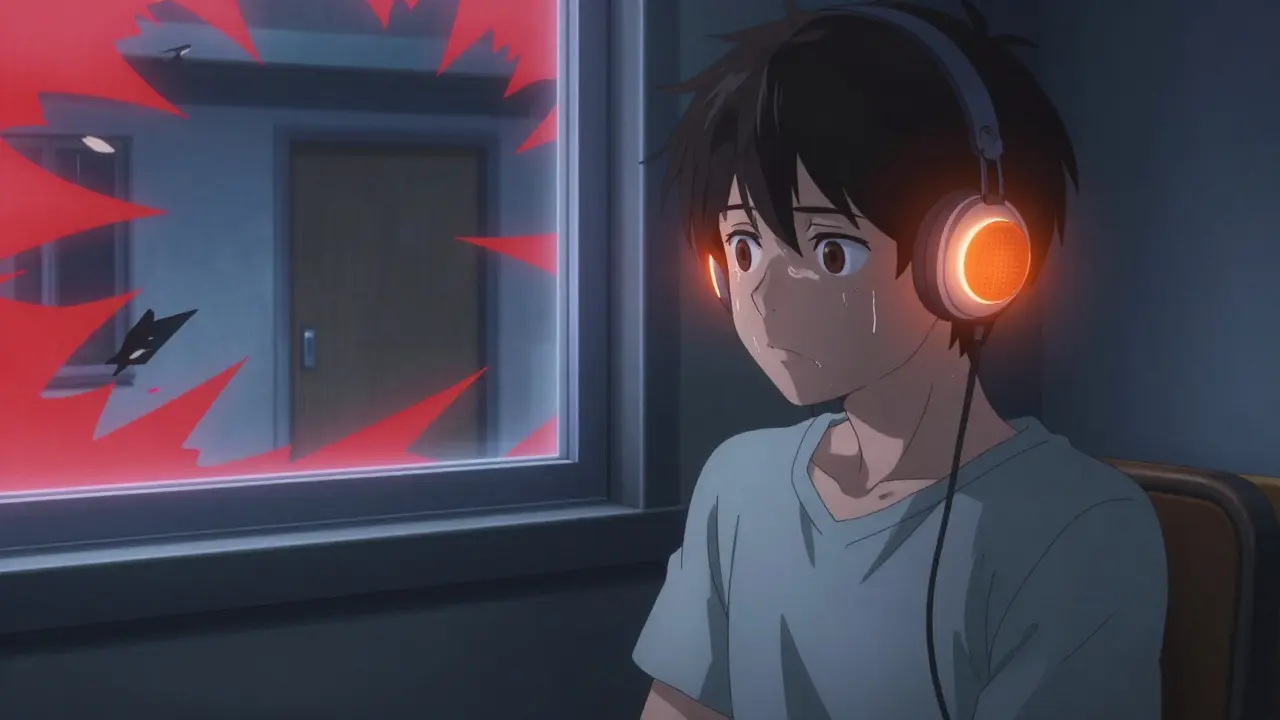
Imagine walking into a grocery store and the hum of the refrigerator feels like a jackhammer. Or hearing a door slam and your whole body tenses up like you’ve been punched. This isn’t an overreaction-it’s hyperacusis. It’s a real, measurable condition where everyday sounds-laughter, dishes clinking, even your own voice-trigger pain, anxiety, or physical discomfort. It doesn’t matter if you have perfect hearing. In fact, most people with hyperacusis pass standard hearing tests. The problem isn’t their ears. It’s their brain.
What Exactly Is Hyperacusis?
Hyperacusis is a neurological condition where the brain over-amplifies normal sounds. It’s not just being sensitive to loud noises. It’s a distortion in how sound is processed. A normal conversation at 60 decibels might feel like 90. A vacuum cleaner could feel like a jet engine. Studies show that 1 to 2% of the population lives with clinically significant hyperacusis. That’s over 17 million people in the U.S. alone. And it’s not rare among musicians, construction workers, or anyone who’s been exposed to loud environments. One 2017 study found nearly 19% of professional musicians experience it-far higher than the general population.
Unlike hearing loss, where sounds get quieter, hyperacusis makes sounds feel louder and more threatening. The brain’s auditory system becomes hypersensitive, turning harmless noise into a signal of danger. This isn’t psychological-it’s physiological. Brain imaging studies show increased activity in the limbic system (the emotional center) and the autonomic nervous system (which controls fight-or-flight responses) when people with hyperacusis hear everyday sounds. That’s why the reaction isn’t just annoyance. It’s fear, panic, or even physical pain.
Why Avoiding Sound Makes It Worse
Most people’s first instinct? Wear earplugs. Cover your ears. Stay quiet. But that’s exactly what makes hyperacusis worse. Avoiding sound doesn’t protect your ears-it rewires your brain to be even more sensitive. Research shows that complete sound avoidance increases sensitivity by 30 to 40%. Why? Because your brain starts treating silence as the norm. When you finally hear a sound again, it feels like a shock. It’s like wearing blindfolds for weeks and then suddenly opening your eyes-you’re overwhelmed.
And medications? They rarely help. Antidepressants or anti-anxiety drugs might ease the emotional fallout, but they don’t fix the core issue: the brain’s overactive sound processing. Hearing aids? Usually useless. Most are designed to amplify sounds for people with hearing loss. People with hyperacusis don’t need more volume-they need the brain to stop reacting so strongly to volume that’s already normal.
The Science Behind Desensitization Therapy
The only proven method to reverse hyperacusis is desensitization therapy. Developed in the 1980s by Dr. Pawel Jastreboff, it’s based on his neurophysiological model, which shows that hyperacusis isn’t a hearing problem-it’s a brain wiring problem. The therapy doesn’t try to fix the ears. It retrains the brain.
The process is simple in theory but hard in practice. You expose yourself to low-level, continuous sound-usually broadband noise or soft music-for 4 to 6 hours a day. The volume starts below your discomfort level, sometimes barely audible. You slowly increase it by 1 to 2 decibels per week. It’s like physical therapy for your auditory system. You’re teaching your brain that sound isn’t dangerous.
Here’s how it works: When you hear a sound at a safe level, your brain starts to associate it with safety instead of threat. Over time, the limbic system stops lighting up. The autonomic nervous system calms down. Your tolerance increases. Clinical studies show that 60 to 80% of people who stick with the full protocol see major improvement. One 2014 study in the American Journal of Audiology found patients could tolerate sounds they once found unbearable after 12 to 18 months.

What the Therapy Actually Looks Like
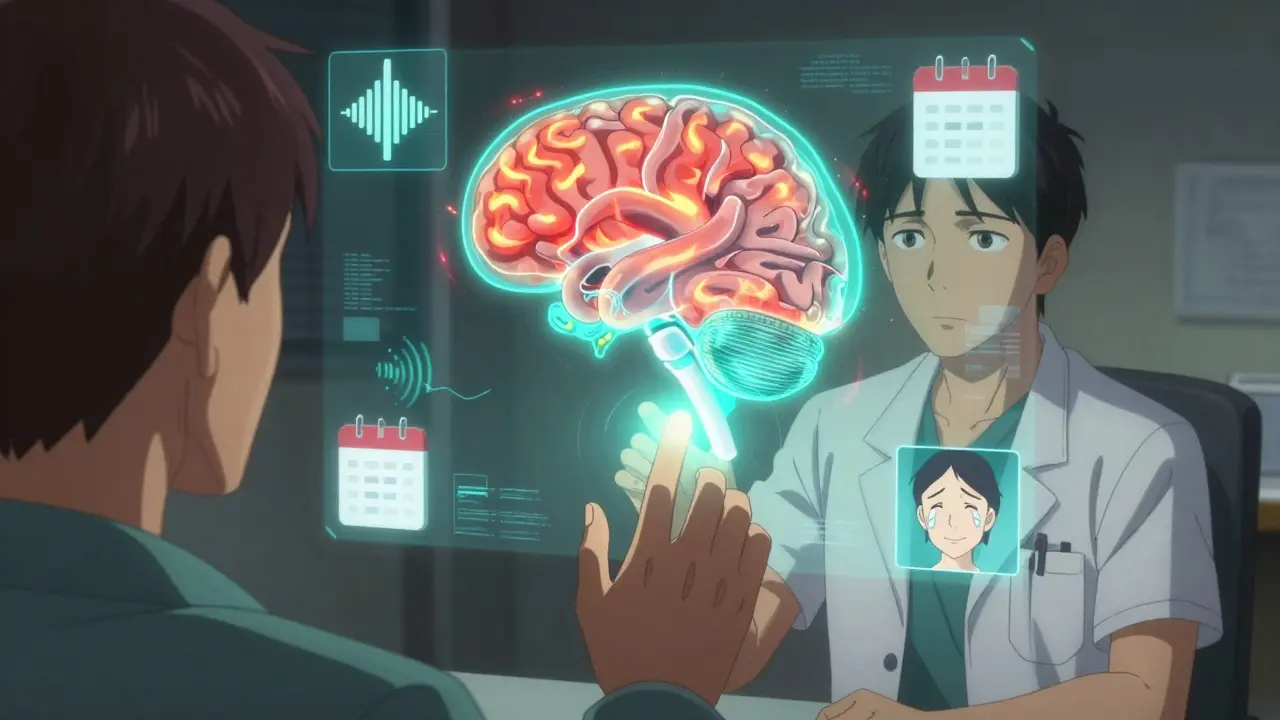
It’s not just listening to music. There’s structure. First, an audiologist measures your loudness discomfort levels (LDLs) across different frequencies. This takes 2 to 3 hours. Then, you get a sound generator-a small device that plays white noise or pink noise at precise levels. These cost between $200 and $800. Standard hearing aids won’t work-they can’t output sound quietly enough.
You start at home, in a quiet room. You wear the device while doing quiet tasks: reading, watching TV, even sleeping. After a few weeks, you move to slightly noisier environments: the kitchen, the car, a quiet café. By month 6 to 8, many can handle grocery stores. By month 12, most can go to restaurants without earplugs.
Success depends on consistency. You can’t do it for a week and call it quits. The average treatment lasts 12.7 months. Some take up to 18. And it’s not fun. The first 4 weeks are the hardest. Sixty percent of patients say their symptoms get worse before they get better. That’s normal. It’s called “initial exacerbation.” If you quit because it feels hopeless, you’ll likely never recover.
What Makes Therapy Work-or Fail
Not everyone succeeds. About 20 to 30% drop out. Why? The most common reason: they start too loud. Many people try to speed things up by cranking up the volume. That backfires. It reinforces fear. A 2021 survey by the American Academy of Audiology found that 33% of people who quit did so because they started at levels that made their symptoms worse.
Another big issue: lack of professional guidance. People try to self-manage using phone apps. But most apps aren’t calibrated. They don’t track your LDLs. They don’t adjust volume based on your progress. A 2022 study found that 89% of people who worked with a trained audiologist completed therapy. Only 52% of those who went it alone did.
And it doesn’t work for everyone. If hyperacusis is caused by a neurological condition like Ramsay Hunt syndrome or superior canal dehiscence, the therapy often fails. The same goes for people with severe misophonia (anger triggered by specific sounds). In those cases, cognitive behavioral therapy (CBT) is often combined with sound therapy. Studies show combining both improves outcomes by 35%.
Real People, Real Results
On Reddit’s r/hyperacusis, users share stories like this: “After 11 months of daily sound therapy, I can sit in a coffee shop without panicking. I didn’t believe it would work. But I kept going. Now I’m going out again.” That’s not an outlier. A survey of 1,200 patients on the Hyperacusis Research Limited forum found 68% reported “significant improvement.” The most common wins? Regaining social life (74%), sleeping through noise (65%), and not flinching at sudden sounds (65%).
But the frustration is real too. “I only gained 5 decibels in 6 months. Felt like I was wasting my time.” That’s why patience isn’t optional-it’s required. Progress is measured in millimeters, not miles.
What’s Changing in 2026
Things are improving. In 2023, the FDA cleared a new device called Lenire, which combines sound therapy with gentle tongue stimulation. Early trials showed 67% improvement. That’s promising. Meanwhile, telehealth platforms are growing fast-40% year-over-year growth since 2020. More clinics are training audiologists. The British Tinnitus Association updated its protocols in January 2024 to include real-time physiological monitoring, so therapy adapts to your stress levels, not just your schedule.
MIT’s 2024 prototype uses machine learning to personalize sound exposure based on your brain’s response. Early results show 23% faster progress. These aren’t sci-fi-they’re real, coming soon.
But here’s the catch: Only 22% of U.S. audiology clinics offer formal hyperacusis programs. And only 35% of audiologists are certified in the technique. That means if you have hyperacusis, you might have to search hard to find the right help. Don’t settle for a general audiologist. Look for someone who specifically treats hyperacusis. Ask if they use the Jastreboff protocol. Ask if they measure LDLs. Ask how many patients they’ve treated.
What You Should Do Now
If you think you have hyperacusis, don’t wait. Don’t rely on earplugs. Don’t assume it’s just stress. See an audiologist who specializes in auditory processing disorders. Get your LDLs tested. Start desensitization therapy with professional guidance. It’s not quick. It’s not easy. But for most people, it works. And for the first time in years, you might hear the world again-not as a threat, but as just… sound.
Can hyperacusis go away on its own?
No, hyperacusis rarely improves without intervention. Avoiding sound or waiting for it to resolve usually makes the condition worse. The brain’s hypersensitivity becomes more entrenched over time. Desensitization therapy is the only proven method to reverse the condition. While some mild cases may stabilize, true recovery requires active retraining of the auditory system.
Is hyperacusis the same as tinnitus?
No, but they often occur together. Tinnitus is hearing ringing or buzzing with no external source. Hyperacusis is having normal sounds feel painfully loud. About 40% of people with tinnitus also have hyperacusis. The two share the same neurological roots-both involve abnormal brain processing of sound. That’s why treatments like Jastreboff’s therapy are designed to help both conditions at once.
Do I need special equipment for desensitization therapy?
Yes. You need a sound generator that can produce low-level, continuous broadband noise (like white or pink noise) at precise volumes. These devices cost $200 to $800. Standard hearing aids won’t work-they’re designed to amplify sound for hearing loss, not to deliver quiet, therapeutic noise. Phone apps are unreliable because they lack calibration and fine control. Professional-grade devices are essential for safe, effective therapy.
How long does it take to see results from desensitization therapy?
Most people start noticing changes between 6 and 9 months, but full improvement usually takes 12 to 18 months. The first few weeks often feel worse-this is normal. Progress is slow and steady. You might gain tolerance to one extra decibel per month. It’s not dramatic, but over time, it adds up. Patients who stick with it for the full duration report life-changing results, like being able to eat at restaurants or attend family gatherings again.
Can children have hyperacusis?
Yes. Children can develop hyperacusis, often after exposure to loud events like concerts, fireworks, or even prolonged use of headphones. It’s underdiagnosed because kids may not describe the sensation clearly. Symptoms include covering ears, crying at normal sounds, or refusing to go to school. Desensitization therapy works for children too, but it requires parental involvement and adjustments for developmental stages. Pediatric audiologists with experience in auditory processing disorders are best equipped to help.
What if I can’t afford desensitization therapy?
Cost is a real barrier, but help exists. Some clinics offer payment plans or sliding-scale fees. University-affiliated audiology programs often provide low-cost services through training clinics. Online support groups like Tinnitus Talk and Hyperacusis Research Limited offer free, calibrated sound files and progress trackers. While professional guidance is ideal, starting with a low-cost sound generator and following a structured protocol (available on reputable forums) can still yield results-especially if you’re consistent and avoid sound avoidance. Don’t wait until you can afford the perfect solution-start where you are.

Weston Potgieter
March 6 2026So you're telling me I've been wasting money on noise-canceling headphones for years? I thought I was protecting myself. Turns out I was just training my brain to hate the world. Thanks for the gut punch, OP. Now I gotta buy a $800 gadget and listen to white noise for 6 hours a day? Cool. I'll get right on that after I finish my 12-hour workday and 3-hour commute. 🤡
William Minks
March 8 2026This is so real. I’ve been doing this therapy for 14 months. First 3 months? Pure hell. Felt like my brain was screaming. But now? I sat through a birthday party last week. Kids screaming, balloons popping, music blaring. I didn’t run. I didn’t cry. I just… sat there. And smiled. 🥹 You’re not broken. You’re just rewiring. Keep going.
Susan Purney Mark
March 8 2026I’m a speech pathologist and I’ve worked with 3 kids with hyperacusis this year. One was terrified of the microwave. Another couldn’t go to gym class because of locker doors slamming. It’s not ‘being dramatic.’ It’s neurological. The therapy works-but only if you don’t give up. And yes, it’s expensive. But if you’re in the US, call your local university audiology clinic. They often have sliding scales. You’re not alone.
Amina Aminkhuslen
March 10 2026People who say 'just wear earplugs' are the same ones who think autism is just being shy. This isn't 'sound sensitivity.' It's your brain interpreting a whisper as a siren. And yes, the fact that audiologists don't even know about this protocol is criminal. 22% of clinics offer it? That's not a gap. That's a massacre.
amber carrillo
March 11 2026I appreciate how thoroughly this was researched. The data is clear. The science is solid. The emotional toll is real. Thank you for sharing not just the facts but the human experience behind them. This is the kind of content that changes lives.
Tim Hnatko
March 12 2026I had this after a car accident. Trauma + loud noise = brain glitch. I tried everything. Meds. Therapy. Silence. Nothing worked. Then I found Jastreboff. Started at 35 dB. Felt like torture. But now? I can hear my dog bark without wanting to scream. It’s not magic. It’s science. And it’s worth every minute.
Aaron Pace
March 13 2026I’ve been doing this for 8 months. Last week I went to a concert. Not a quiet one. A rock show. Loud. Crowd. Bass. And I didn’t leave. I didn’t cover my ears. I just… enjoyed it. I cried afterward. Not from pain. From joy. This works. But you gotta be stupid consistent. No days off. No exceptions. Even if you hate it. Even if you want to quit. Even if you feel worse. Keep going.
Joey Pearson
March 13 2026You got this. I know it feels like you’re stuck in slow motion. But every decibel you gain is a victory. You’re not failing. You’re fighting. And the fact that you’re even reading this means you’re still in the game. That’s huge. Keep showing up. Your future self is already thanking you.
Roland Silber
March 14 2026The part about self-managed apps failing 89% of the time? That’s critical. Most people think ‘white noise app’ = therapy. It’s not. You need calibrated, frequency-specific, low-output devices. A $10 app won’t do it. And if you’re trying to DIY this, you’re risking setbacks. Find a specialist. Even if it takes 6 months to save up. It’s worth it.
Patrick Jackson
March 14 2026This isn’t just about sound. It’s about safety. Your brain is screaming: 'This is a threat!' And it’s not wrong-it’s just misfiring. Think of it like a smoke alarm that goes off every time you toast bread. The alarm isn’t broken. The sensor is. Desensitization is recalibrating the sensor. Not muffling the alarm. Not ignoring it. Rewiring it. And that? That’s beautiful. It’s neuroscience poetry.
Adebayo Muhammad
March 15 2026I find it fascinating how Western medicine has spent 40 years developing a 'therapy' for a condition that could be solved with a simple philosophical shift: stop fearing sound. Why not just accept that the world is loud? Why must we 'retrain' the brain? This feels like a capitalist solution to a spiritual problem. Also, why are we trusting a 1980s protocol? The FDA cleared a tongue-stimulating device? That’s not science. That’s sci-fi with a lab coat.
Pranay Roy
March 15 2026I’ve been following this since 2020. I think this is all a placebo. The real cause? 5G. The brain is reacting to electromagnetic interference. The 'therapy' just distracts you long enough for your body to 'reset.' I’ve been using copper foil on my headphones and it’s helped. Also, I’ve noticed that people who do this therapy never mention the fact that the CDC has been hiding the truth about sound pollution since 2017. You’re being manipulated. The system doesn’t want you to heal. It wants you dependent.
Joe Prism
March 17 2026The real tragedy? We treat hearing like a physical thing. But it’s not. It’s a story your brain tells. Hyperacusis is when the story turns horror. Therapy doesn’t fix the ears. It rewrites the narrative. Quietly. Slowly. One decibel at a time.
Bridget Verwey
March 17 2026So let me get this straight: you’re telling me I have to pay $800, sit through 18 months of torture, and hope my brain doesn’t explode… just to be able to eat at a restaurant? And this is the best we’ve got? 😂 I mean… I’m glad it works for some. But holy hell, what a system.
Andrew Poulin
March 18 2026Stop complaining about cost. Get a cheap sound generator off Amazon. Use it. Don’t wait. Don’t overthink. Don’t ask for permission. Just start. You don’t need a PhD. You need consistency. I did it. You can too. No excuses. Just do it.