Imagine picking up a bottle of medication for high blood pressure, only to realize later it was actually for heart rhythm control. The labels looked nearly identical. This isn’t a hypothetical nightmare scenario; it’s a documented reality in healthcare. Look-alike and sound-alike (LASA) drug names are a major source of medication errors, accounting for roughly 25% of all reported medication mistakes. With over 3,000 pairs of confusing drug names documented by the United States Pharmacopeial Convention as of 2023, knowing how to spot these similarities is not just helpful-it’s critical for your safety.
If you’ve ever stared at a pharmacy label wondering if you got the right thing, you’re not alone. The human brain is wired to skim and recognize patterns, which works great for reading books but terribly for distinguishing between drugs that share 60-80% of their characters. In this guide, we’ll break down exactly what to look for on your prescription labels, why certain formatting exists, and how you can double-check your meds before taking them.
Understanding the Danger of Similar Drug Names
Before we get into the visual tricks, it helps to understand why this happens. Drug manufacturers often create new medications that are chemically similar to existing ones. To keep naming conventions consistent, they use similar roots or suffixes. For example, vinBLAStine is a chemotherapy drug used to treat various cancers and vinCRIStine is another chemotherapy agent with different dosing requirements. They sound alike and look alike. If you confuse them, the consequences can be severe.
The Institute for Safe Medication Practices (ISMP) tracks these errors closely. Their data shows that about 1.7 errors occur per 1,000 prescriptions involving look-alike names. While that sounds small, remember that millions of prescriptions are filled daily. More alarmingly, 34% of those errors reach the patient, and 7% cause actual harm. That’s why organizations like the U.S. Food and Drug Administration (FDA) launched the Name Differentiation Project back in 2001. They realized that changing how we see these names could save lives.
What Is Tall Man Lettering?
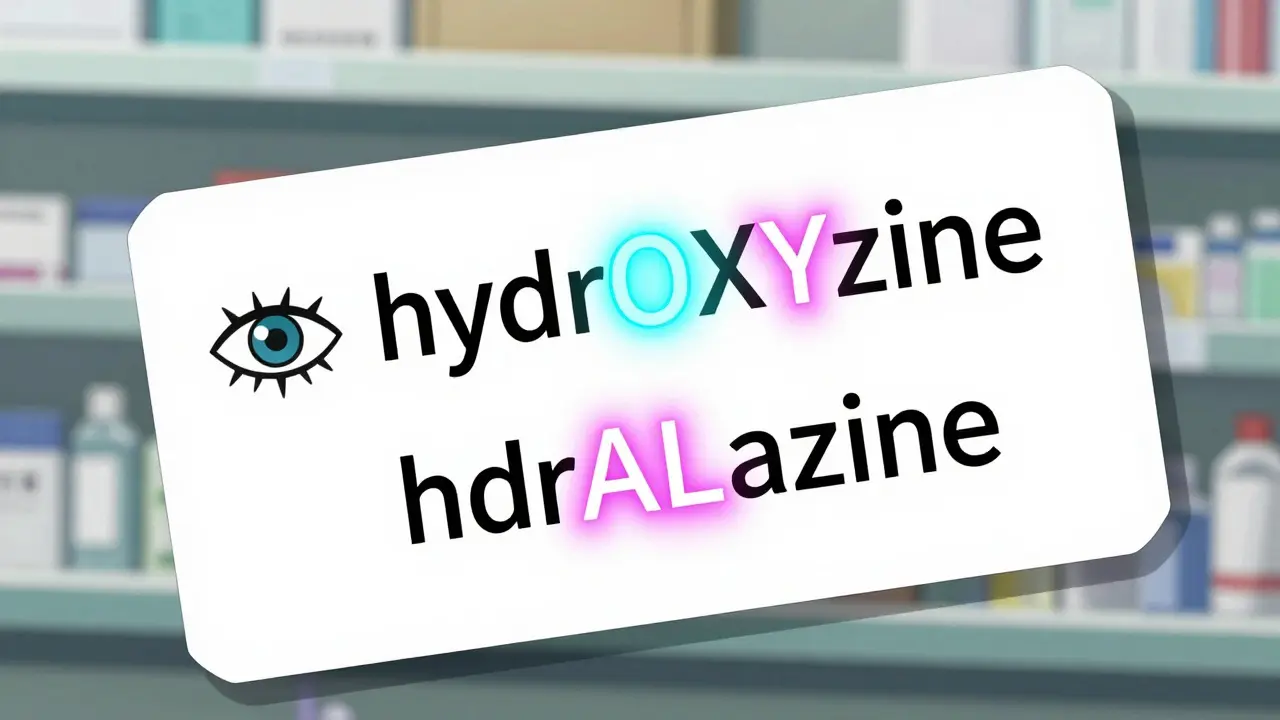
You might have noticed some drug names on your labels having random capital letters in the middle of the word. This is called Tall Man Lettering (TML) is a visual differentiation strategy that uses uppercase letters to highlight differences between similar drug names. It’s the primary tool used to stop you from mixing up drugs that look too similar.
Here is how it works:
- Capitalization of Differences: Instead of writing everything in lowercase or standard title case, specific letters are capitalized to draw your eye to the part of the name that makes it unique.
- Left-Side Focus: Research shows our eyes scan left-to-right. TML guidelines recommend capitalizing dissimilar letters starting from the left side of the drug name.
- Visual Distinction: The goal is to create a "visual bump" that breaks your automatic scanning pattern, forcing you to slow down and read carefully.
For instance, instead of seeing hydroxyzine and hydralazine, you will likely see hydrOXYzine and hydrALAzine. Notice how the capital OXY and ALA pop out? That’s the system working. As of 2023, the FDA officially recommends TML for 23 specific drug pairs, including doXEPamine versus doBUTamine.
Key Visual Cues to Check on Your Label
When you pick up your prescription, don’t just grab it and go. Take ten seconds to perform a visual check. Here are the specific elements you should look for:
- The Drug Name Format: Look for the Tall Man Lettering mentioned above. If you know you are getting a high-risk drug (like insulin or chemotherapy agents), check if the distinctive letters are capitalized. If they aren’t, ask the pharmacist to verify.
- Brand vs. Generic Names: Many labels display both the brand name and the generic name. For high-risk LASA pairs, displaying both reduces selection errors by 54%. For example, you might see Valtrex (valACYclovir) and Valcyte (valGANciclovir). These treat different viral infections. Seeing both names helps confirm you have the right one.
- Font Size and Contrast: According to Joint Commission standards, the font size for TML sections should be at least 12-point. The text should also have a contrast ratio of 4.5:1 against the background. If the label is blurry, faded, or printed in light gray on white paper, ask for a reprint. Poor print quality is responsible for 29% of LASA errors encountered by patients.
- Purpose of Treatment: Some modern labels include a line stating the reason for the medication (e.g., "For High Blood Pressure"). This adds a layer of verification beyond the name itself. Studies show that adding purpose-of-treatment information increases error prevention effectiveness to 59%.
Digital Safeguards You Should Know About
While physical labels are important, much of the safety net lies in the digital systems behind the scenes. Understanding these can help you trust the process-or question it when something feels off.
Electronic Health Record (EHR) systems are programmed to prevent consecutive display of confusing drug names in dropdown menus. This single change has reduced selection errors by 41%. Additionally, pharmacists’ computer systems often require entering at least five letters of a drug name before it appears in search results. This prevents similar names from appearing together on the screen, reducing confusion by 68%.
However, technology isn’t perfect. Computerized alerts, which warn staff of potential LASA issues, are overridden by clinicians 49% of the time due to "alert fatigue." This means the human element-your vigilance and the pharmacist’s final check-remains crucial.
| Strategy | Effectiveness Rate | Key Limitation |
|---|---|---|
| Tall Man Lettering (TML) Alone | 32% | Can be ignored if reader skims quickly |
| TML + Color Differentiation | 47% | Color blindness can reduce efficacy |
| TML + Purpose of Treatment | 59% | Requires clear labeling space |
| Barcode Scanning | 89% | High infrastructure cost ($153k avg/hospital) |
| Computerized Alerts | 76% | High override rate (49%) due to fatigue |
Practical Steps for Patients and Caregivers
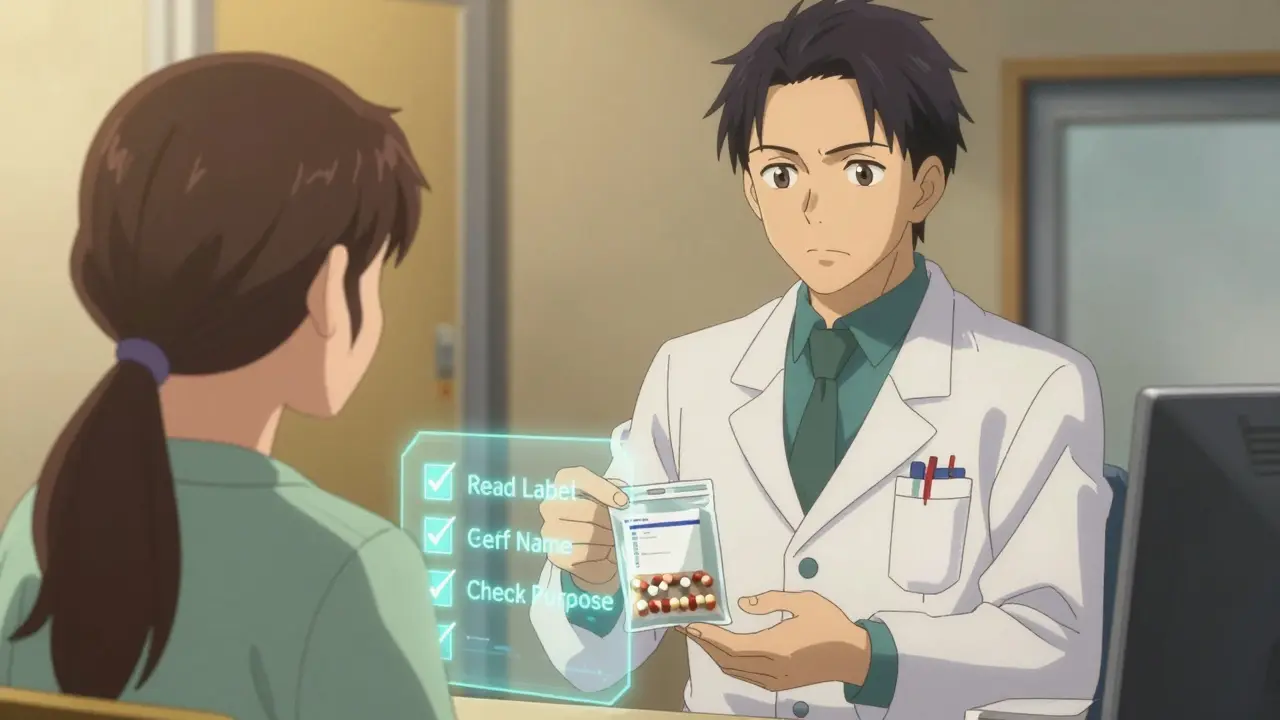
You play a vital role in this safety chain. Here is a practical checklist to use every time you receive a new prescription or refill:
- Read the Full Container Label: Don’t just glance at the big bold name. Read the smaller text below it, including the dosage form (tablet, liquid, injection).
- Verify Before Leaving the Pharmacy: When the pharmacist hands you the bag, take a moment. Does the name match what you discussed? If you asked for "Zyrtec" and see "Zofran," speak up immediately. These are easy to mix up visually.
- Check for Handwritten Errors: If you are dealing with a handwritten script (less common now, but still happens), be extra cautious. Handwriting accounts for 41% of LASA cases where TML fails because there is no standardized font to rely on.
- Use the "Three-Step Verification": Adapted from professional pharmacy protocols:
- Read the full label when you pick up the bottle.
- Confirm the product matches your memory of the discussion with your doctor.
- Read the label again when you get home and place it in your medicine cabinet.
Training programs for nurses show that dedicating just 2-3 minutes to verify high-risk LASA pairs increases accuracy from 82% to 97%. You don’t need three minutes, but even thirty seconds of focused attention makes a huge difference.
Future Trends in Medication Safety
The fight against look-alike drug errors is evolving. The FDA expanded its TML program in September 2023 to include 12 additional drug pairs, bringing the total to 35 recommended pairs. By December 2024, healthcare systems were required to implement these changes fully.
We are also seeing the rise of advanced technologies. Computer vision tools, tested in pilot programs at places like Mayo Clinic, can now detect look-alike vials through smartphone cameras with 94% accuracy. Imagine snapping a photo of your meds with an app that instantly flags if two bottles look dangerously similar. Artificial intelligence models like Google Health’s Med-PaLM 2 are also being developed to predict LASA confusion potential with 89% accuracy.
Despite these tech advances, experts like Dr. Michael Cohen of ISMP emphasize that technology is "necessary but not sufficient." Human awareness remains the final safeguard. The ISMP’s 2023 Action Plan calls for mandatory TML implementation across all U.S. healthcare settings by 2026, reinforcing that visual clarity is a non-negotiable standard.
Conclusion: Stay Vigilant, Stay Safe
Identifying look-alike names on prescription labels is a skill that protects your health. By understanding Tall Man Lettering, checking for brand/generic pairings, and verifying the purpose of treatment, you add a powerful layer of safety to your medication routine. Don’t hesitate to ask your pharmacist questions. They are there to ensure you get the right drug, every time.
What does Tall Man Lettering mean on my prescription?
Tall Man Lettering is a formatting technique where specific letters in a drug name are capitalized to highlight differences between similar-sounding or looking drugs. For example, hydrOXYzine and hydrALAzine use capital letters to make the distinct parts of the names stand out, helping prevent mix-ups.
Why do some drug names look so similar?
Drug manufacturers often use similar chemical structures for related medications. To maintain consistency in naming conventions, they use shared roots or suffixes. This creates look-alike and sound-alike (LASA) pairs, which is why safety measures like Tall Man Lettering were introduced.
How common are medication errors due to similar names?
Look-alike and sound-alike errors account for approximately 25% of all reported medication errors. The Institute for Safe Medication Practices reports that about 1.7 errors occur per 1,000 prescriptions involving these names, with 34% of those errors reaching the patient.
Should I check my prescription label before leaving the pharmacy?
Yes, absolutely. You should read the full container label, confirm the drug name matches your expectation, and check the dosage form. Taking 30 seconds to verify your medication can prevent serious errors, especially since poor label printing or handwriting can contribute to confusion.
Does the FDA regulate drug name similarity?
Yes, the FDA runs the Name Differentiation Project, which evaluates drug names for potential confusion. As of 2023, they recommend Tall Man Lettering for 35 specific drug pairs. All new drug applications must undergo LASA risk assessment using specialized algorithms to prevent confusing names from reaching the market.
What is the most effective way to prevent LASA errors?
While Tall Man Lettering is widely used, combining it with other strategies is more effective. Using TML along with color differentiation and including the purpose-of-treatment on labels increases error prevention effectiveness to 59%. Barcode scanning is even more effective at 89%, but requires significant hospital investment.
Are electronic health records safe from LASA errors?
EHR systems have safeguards, such as preventing confusing drug names from appearing consecutively in dropdown menus, which reduces selection errors by 41%. However, alert fatigue can lead clinicians to override warnings, so human verification remains essential.
What should I do if I suspect a medication error?
If you suspect you received the wrong medication, do not take it. Contact your pharmacist or healthcare provider immediately. Report the incident to the pharmacy so they can investigate and prevent future occurrences. Your vigilance helps improve overall patient safety.