
The pharmaceutical world is standing on the edge of a massive financial shift. Between now and 2030, blockbuster biologic drugs worth over $200 billion in annual global sales are losing their patent protection. This event, often called the 'patent cliff,' opens the door for biosimilars, which are biologic medical products highly similar to an already approved reference biologic product, with no clinically meaningful differences in terms of safety, purity, and potency. For patients, providers, and payers, this means significant cost reductions are coming soon. But unlike small-molecule generics, these complex therapies require careful navigation of regulatory pathways, manufacturing standards, and market adoption strategies.
If you are wondering how this affects your treatment options or budget, the answer lies in understanding the timeline of these expirations and the specific biosimilars entering the market. We will break down the key players, the science behind the approvals, and what you can expect in terms of pricing and availability over the next few years.
Key Takeaways
- Massive Savings Ahead: The U.S. healthcare system could save up to $250 billion over the next decade as biosimilars enter the market for top-selling drugs.
- Major Expirations Looming: Keytruda (pembrolizumab) faces patent expiration in 2028, while Eylea (aflibercept) has already seen biosimilar approvals in 2024.
- Complex Approval Process: Unlike simple generics, biosimilars require extensive clinical data and strict manufacturing controls under the FDA's 351(k) pathway.
- Market Penetration Varies: Adoption rates depend heavily on payer policies, with European markets leading at 70%+ penetration compared to 30-40% in the U.S.
- Pricing Discounts: Expect initial launch discounts of 15-35% off reference products, potentially rising as competition increases.
Understanding the Biosimilar Landscape
To grasp why these upcoming entries matter, we first need to clarify what a biosimilar actually is. Many people confuse them with generic drugs, but the distinction is critical. A generic drug is an identical copy of a small-molecule chemical drug. Think of it like copying a recipe for a simple cookie-same ingredients, same result.
Biosimilars, however, deal with large, complex molecules produced by living cells. You cannot simply copy them; you must recreate them. It’s more like trying to bake a soufflé in a different kitchen with slightly different humidity and oven settings. The result must be nearly identical in taste and texture, even if the process varies slightly. Under the Biologics Price Competition and Innovation Act (BPCIA) of 2009, the FDA defines a biosimilar as having no clinically meaningful differences from its reference product regarding safety, purity, and potency.
The modern era of biosimilars began in March 2015 when the FDA approved Zarxio (filgrastim-sndz). Since then, the landscape has exploded. According to Clival's 2024 analysis, we are now facing an unprecedented wave of patent expirations. Companies like Sandoz, Samsung Bioepis, Biocon Biologics, and Celltrion are aggressively positioning themselves to capture market share from originators like Merck, Bristol Myers Squibb, and Regeneron.
The Patent Cliff: What’s Coming and When?
The term 'patent cliff' refers to the rapid decline in revenue for brand-name drugs as patents expire and competition enters the market. For biologics, this cliff is steep and imminent. Here is a look at some of the most significant upcoming entries and their timelines.
| Reference Product | Brand Name | Therapeutic Area | Expected Biosimilar Entry | 2024 Global Sales (Approx.) |
|---|---|---|---|---|
| Aflibercept | Eylea | Ophthalmology | 2024 (Approved) | $5.9 Billion (U.S.) |
| Pembrolizumab | Keytruda | Oncology | 2028 | $25.5 Billion |
| Secukinumab | Cosentyx | Dermatology/Autoimmune | 2026 (EU), 2029 (U.S.) | $7.2 Billion |
| Apixaban | Eliquis | Cardiology | 2029 (Extended) | $6.1 Billion |
| Nivolumab | Opdivo | Oncology | 2028-2030 | $10.2 Billion |
Note that dates can shift due to legal maneuvers. For instance, Merck holds 237 patents related to Keytruda with staggered expirations through 2035. While the core composition patent expires in 2028, secondary patents may delay full generic-style competition. Similarly, Bristol Myers Squibb secured pediatric exclusivity extensions for Eliquis, pushing effective competition back to 2029.
The Science Behind the Approval: Why It Takes So Long
You might wonder why a biosimilar doesn’t hit the shelves the day a patent expires. The answer lies in complexity. Take pembrolizumab (Keytruda) as an example. This monoclonal antibody must match the exact glycosylation patterns of Merck’s original molecule to maintain efficacy in cancer immunotherapy. Glycosylation is the addition of sugar molecules to proteins, which affects how the drug interacts with the immune system.
The FDA requires extensive analytical characterization, nonclinical studies, and clinical pharmacology data to demonstrate 'biosimilarity.' Most developers use the 351(k) approval pathway, which typically requires 12-18 months for review after submission. Manufacturing facilities must comply with Current Good Manufacturing Practices (cGMP). Samsung Bioepis, for example, invested $450 million in their Incheon, South Korea facility specifically designed for biosimilar production.
This rigorous process ensures safety but creates a barrier to entry. The Biotechnology Innovation Organization (BIO) reports that successful biosimilar developers typically invest $150-$250 million per product in development, requiring 7-10 years from candidate selection to commercial launch. This is significantly higher than the cost for traditional generics.
Pricing Strategies and Healthcare Savings
The primary value proposition of biosimilars is cost reduction. But how much cheaper are they? Historically, biosimilars launch at a discount of 15-35% compared to the reference product. Sandoz’s Enbrel biosimilar launched at a 35% discount in 2023. Pfizer’s Ibrance generic equivalents are expected to debut at 20-25% discounts, according to William Blair's 2024 pricing analysis.
These discounts translate into massive systemic savings. The RAND Corporation projected in their 2023 market analysis that biosimilars could save the U.S. healthcare system $250 billion over the next decade. Dr. Henry Waxman, former Chairman of the House Energy and Commerce Committee's Health Subcommittee, stated in a 2024 Health Affairs commentary that 'the next wave of biosimilar entries could reduce Medicare Part B drug spending by $12 billion annually by 2030.'
However, realizing these savings depends on adoption. Payer policies play a huge role. Centene Corporation’s 2025 formulary mandates biosimilar use for all new patients on tumor necrosis factor inhibitors. Cigna’s 2025 Medicare Advantage plans include $0 copays for biosimilars versus $50 for reference products. These incentives drive utilization.
Challenges in Market Adoption
Despite the clear benefits, adoption isn't automatic. Several factors slow down the switch from reference biologics to biosimilars.
- Reimbursement Disincentives: Medicare Part B reimburses providers based on Average Sales Price (ASP). This creates a perverse incentive where providers profit more from higher-priced reference products. The Medicare Payment Advisory Commission documented an 18-month lag between biosimilar approval and meaningful market penetration due to this structure.
- Patent Thickets: Originator companies employ sophisticated lifecycle management strategies. They file dozens of secondary patents covering formulation, dosage, and method-of-use. This leads to prolonged litigation. Dr. Janet Woodcock, former FDA Acting Commissioner, cautioned about 'the dangerous precedent of patent settlements delaying biosimilar entry, as seen with the 2020 Eliquis litigation that postponed generic competition by 4 years.'
- Provider Hesitancy: Some clinicians remain cautious about switching patients, especially in oncology. Dr. Mark McClellan, Director of the Duke-Margolis Center for Health Policy, warned in a March 2025 FDA workshop about 'therapeutic substitution risks with complex oncology biologics where minor structural differences could impact efficacy.'
- System Integration: Health systems require 6-12 months to update electronic health records with biosimilar substitution protocols. Kaiser Permanente implemented mandatory biosimilar substitution for filgrastim products in 2024, but such changes take time to roll out nationally.
Regional Differences: Europe vs. United States
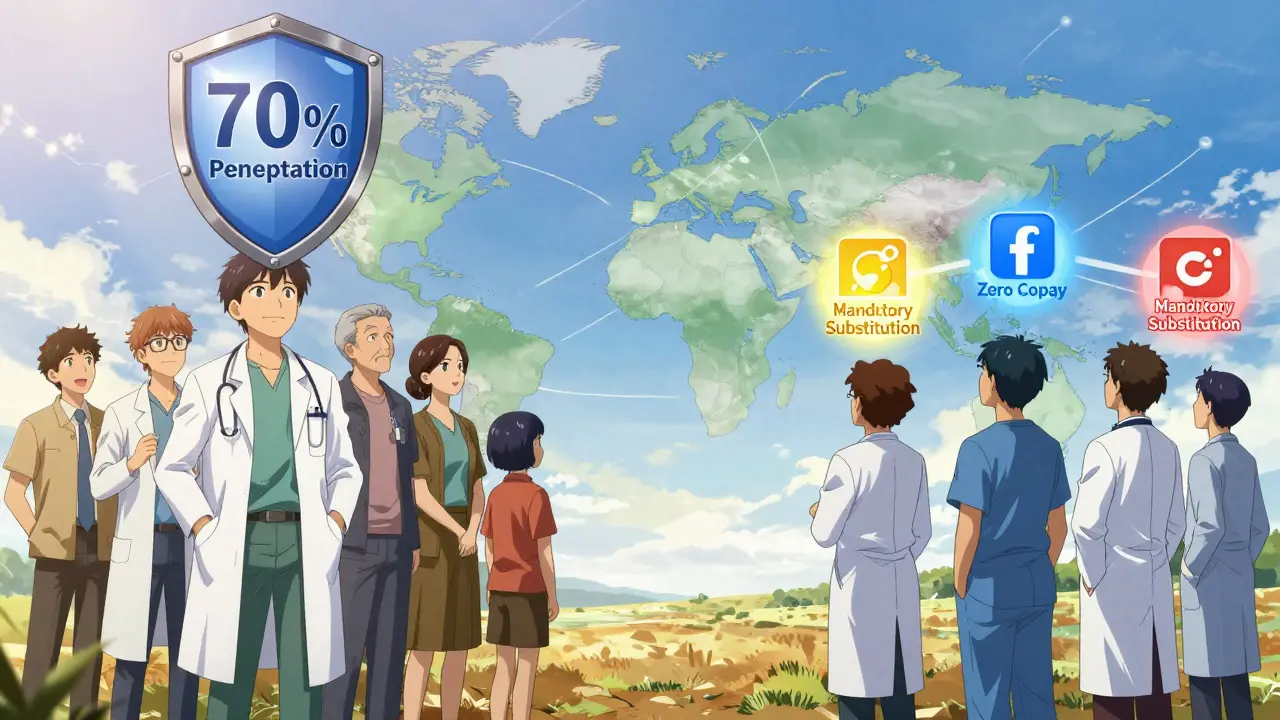
If you live in Europe, you’ve likely been using biosimilars longer than your counterparts in the U.S. European biosimilar penetration exceeds 70% for some products due to favorable reimbursement policies and proactive regulatory frameworks. The European Medicines Agency (EMA) reports 82 approved biosimilars in the EU versus 47 in the U.S. as of late 2025.
In contrast, U.S. adoption lags at 30-40%. This gap is narrowing, however. The FDA’s biosimilar approval rate increased from 5 per year in 2020 to 17 in 2024. Additionally, the FDA’s January 2025 final rule on 'Purple Book Modernization' will require real-time patent listing updates, potentially reducing the 'patent dance' litigation that delayed Humira biosimilar entry by 9 years.
What Patients and Providers Should Do Now
As we approach 2026, here are practical steps for stakeholders navigating this transition.
- For Patients: Ask your doctor if a biosimilar is available for your condition. If you are currently on a reference biologic like Humira or Enbrel, inquire about switching. Note that you do not need to re-titrate (adjust dose gradually) when switching to a biosimilar, as they are considered interchangeable in many contexts, though check local regulations.
- For Providers: Stay updated on formulary changes. Hospitals like Mass General Brigham saw biosimilar utilization jump from 12% to 68% after implementing mandatory substitution protocols. Educate yourself on the clinical data supporting specific biosimilars to address patient concerns confidently.
- For Payers/Administrators: Implement value-based contracting. Novartis’ Sandoz implemented a 'value-based contracting' approach with UnitedHealthcare for Enbrel biosimilars, guaranteeing 25% savings or refunding the difference. Consider zero-copay structures to encourage patient uptake.
Future Outlook: Beyond 2030
The biosimilar market is evolving rapidly. The global biosimilars market reached $12.7 billion in 2024 and is projected to hit $80 billion by 2030, according to Evaluate Pharma's 2025 forecast. But the story doesn’t end there. Next-generation biologics, including antibody-drug conjugates (ADCs) and cell therapies, present new challenges and opportunities.
The FDA’s 2025 draft guidance on 'Analytical Similarity for Highly Complex Biologics' aims to streamline approvals for these advanced molecules. However, Goldman Sachs projects biosimilars will capture 75% of expiring blockbuster revenue by 2035, while BMO Capital Markets warns that 'next-generation biologics with novel mechanisms will limit biosimilar impact to 55% market share' due to therapeutic advances.
Regardless of the exact percentage, one thing is clear: the monopoly era of high-cost biologics is ending. As patent cliffs continue to reshape the industry, biosimilars will become a standard part of care, offering high-quality treatments at accessible prices.
Are biosimilars exactly the same as the original biologic drug?
No, they are not identical copies like generic pills. Because biologics are made from living organisms, slight variations are inevitable. However, biosimilars are required to be 'highly similar' to the reference product with no clinically meaningful differences in safety, purity, or potency. The FDA rigorously tests them to ensure they work just as well as the original.
When will Keytruda have a biosimilar?
The primary patent for Keytruda (pembrolizumab) is set to expire in 2028. Multiple companies, including Coherus BioSciences, are already conducting Phase 3 trials. However, Merck holds numerous secondary patents that may delay widespread market entry until closer to 2028 or beyond, depending on litigation outcomes.
Can my doctor switch me from a brand-name biologic to a biosimilar?
Yes, in most cases. For many approved biosimilars, physicians can switch patients without restarting the titration process. However, this depends on whether the biosimilar is designated as 'interchangeable' by the FDA and state laws governing pharmacy substitution. Always consult your healthcare provider before making any changes to your medication.
Why are biosimilars still expensive if they are cheaper than originals?
While biosimilars are discounted (typically 15-35%), they are still complex, expensive-to-manufacture drugs. Unlike simple chemical generics, producing biologics requires specialized facilities and rigorous quality control. The price reflects these high manufacturing costs, even though they are lower than the original branded product.
How does the U.S. compare to Europe in biosimilar usage?
Europe leads the way, with biosimilar penetration exceeding 70% for some products due to aggressive government procurement policies and earlier regulatory approval. The U.S. lags at 30-40% adoption, largely due to complex rebate structures and patent litigation. However, the gap is closing as the FDA accelerates approvals and insurers mandate biosimilar use.
What is the 'patent dance' mentioned in biosimilar law?
The 'patent dance' is a legal process defined by the Biologics Price Competition and Innovation Act (BPCIA). It involves a series of information exchanges and negotiations between the biosimilar applicant and the reference product sponsor to identify which patents might be infringed. This process often leads to litigation, which can delay biosimilar market entry for several years.
Will biosimilars replace all biologic drugs eventually?
Not all, but many. Biosimilars target existing, approved biologics. New, innovative biologics with novel mechanisms will always have a period of exclusivity. However, as older blockbusters lose patent protection, biosimilars will become the standard of care for those conditions, driving down costs and increasing access.
Is it safe to switch between different biosimilars of the same drug?
This is a nuanced issue. While each biosimilar is proven safe and effective against the reference product, switching between two different biosimilars (e.g., Biosimilar A to Biosimilar B) has less clinical data. Most experts recommend staying on one specific biosimilar once started to ensure consistent monitoring, though the FDA considers them therapeutically equivalent.