

Why Infections Are the Biggest Threat After a Kidney Transplant
You got your new kidney. The surgery went well. But the real battle? It starts after you leave the hospital. The drugs keeping your body from rejecting the new organ also weaken your defenses. That’s why post-transplant infections are the leading cause of death in the first year after transplant - even more than rejection in some cases.
It’s not just about catching a cold. Your immune system is turned down to a whisper. Bacteria, viruses, fungi - they all see you as an easy target. And they’re everywhere: in the air, your food, your pets, even your own skin. The good news? You’re not defenseless. With the right steps, most infections can be avoided.
Three Pillars of Infection Prevention
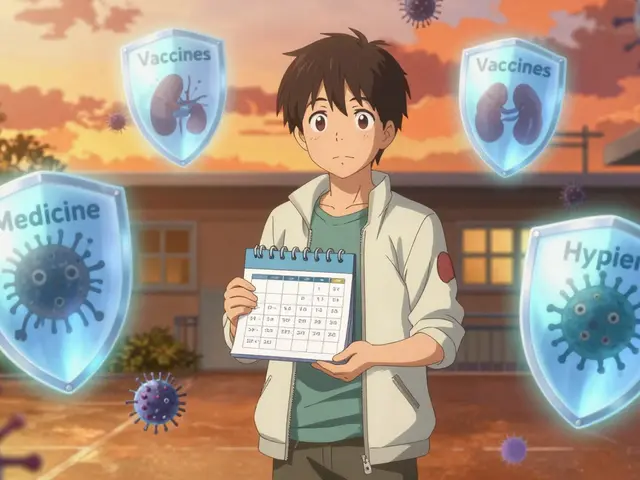
There’s no single magic bullet. Prevention comes down to three clear, proven strategies: medicine, vaccines, and everyday habits. Get all three right, and your risk drops dramatically.
1. Preventive Medicines: The First Line of Defense
Right after your transplant, you’ll be on a schedule of anti-infection drugs. These aren’t optional. They’re timed to match when your risk is highest.
- For herpes viruses (HSV, VZV): Acyclovir or valacyclovir for 1 to 3 months. These stop cold sores and shingles from flaring up.
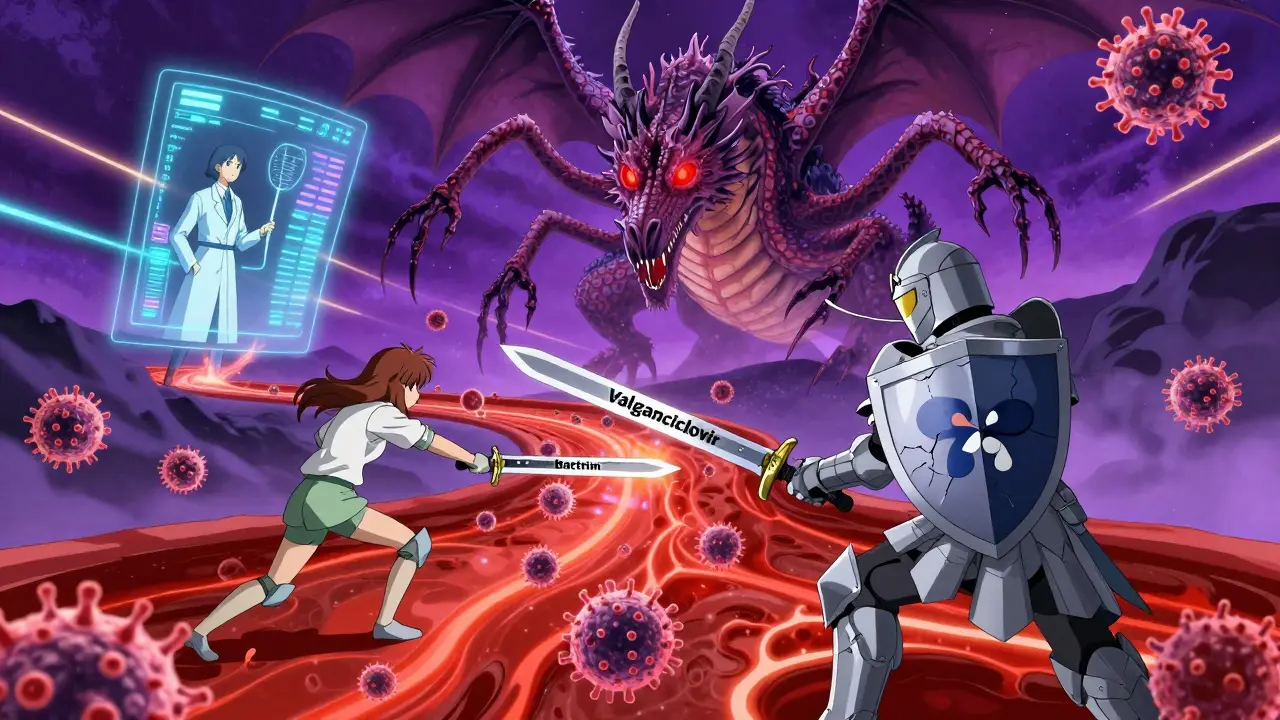
- For CMV (cytomegalovirus): This is the big one. If you’re a donor-negative, recipient-positive (D−/R+) patient, you’re at highest risk. Doctors give you valganciclovir for 3 to 6 months. It cuts your chance of CMV disease by over 80%. CMV doesn’t just make you sick - it can trigger rejection and damage your new kidney.
- For Pneumocystis jirovecii: Trimethoprim-sulfamethoxazole (Bactrim) for 6 months. This prevents a deadly lung infection that used to kill half of transplant patients before it was routinely blocked.
- For fungal infections: Fluconazole or posaconazole if you’re high-risk - especially after a stem cell transplant or if you’ve had a long ICU stay.
Some patients get preemptive therapy instead of full prophylaxis. That means doctors test your blood weekly for CMV DNA using PCR. If the virus starts multiplying - even before you feel sick - they start antivirals right away. It’s smarter than blanket treatment and cuts down on drug side effects.
2. Vaccines: Timing Is Everything
Getting vaccinated before transplant is ideal. But if you missed it, don’t panic. You can still catch up - just not right away.
- Before transplant: Get all your shots - flu, pneumonia, hepatitis B, tetanus, MMR (if you’re not immune), and varicella. Do this at least 2-4 weeks before surgery. Once you’re on immunosuppressants, live vaccines become dangerous.
- After transplant: Wait at least 6 months. Then get inactivated vaccines: flu shot, Tdap, pneumococcal (PCV15 or PCV20), and hepatitis B if you’re still unprotected. The CDC recommends a second pneumococcal shot one year later.
- Live vaccines are off-limits: No MMR, varicella, nasal flu, or yellow fever. These contain weakened viruses that could make you sick when your immune system is down.
- Family matters: Your household should all be up to date on flu and COVID vaccines. This creates a “cocoon” around you. A sick grandparent or sibling can be deadly to you.
3. Lifestyle Changes: Your Daily Shield
Medicine and vaccines protect you from the inside. Your habits protect you from the outside.
- Food safety: No raw fish, undercooked meat, or unpasteurized cheese. Listeria in deli meats or soft cheeses can cause sepsis. Wash all fruits and veggies. Cook eggs until the yolk is solid.
- Water: Avoid hot tubs, swimming pools, and lakes. Tap water is fine, but don’t drink from garden hoses or unfiltered sources. If you’re traveling, stick to bottled water.
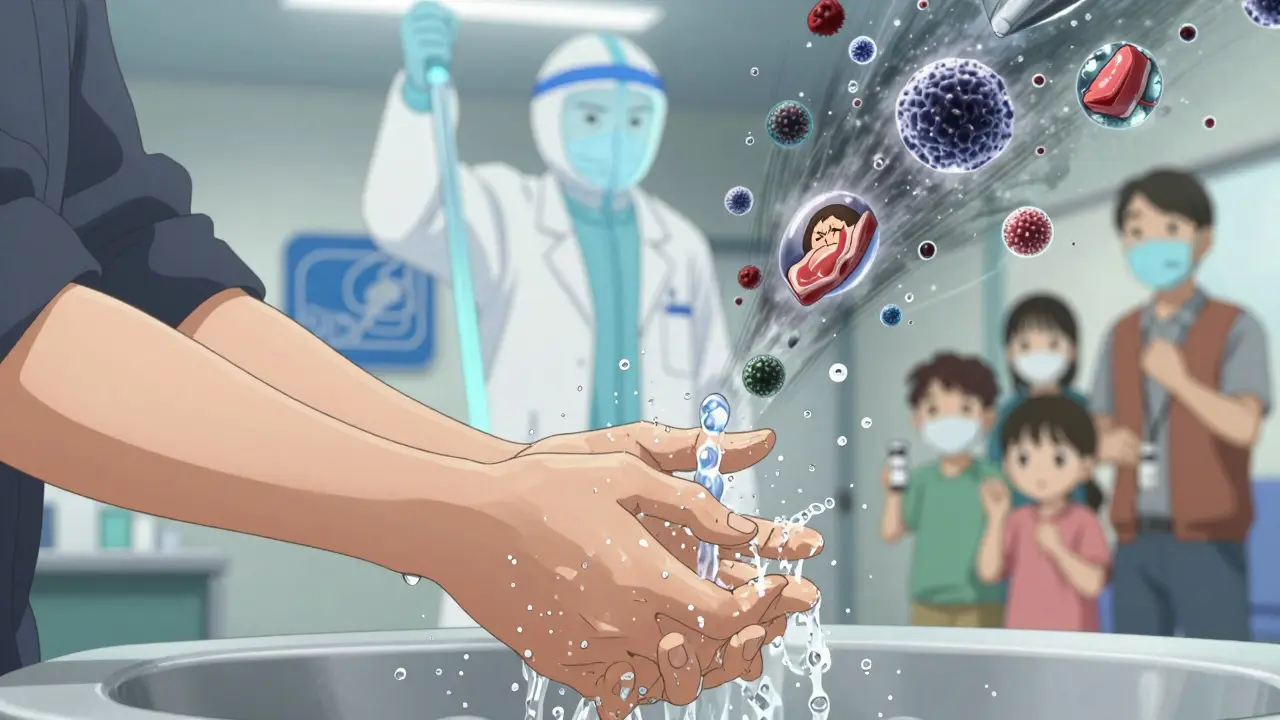
- Handwashing: Wash with soap and water for 20 seconds - the time it takes to sing “Happy Birthday” twice. Use hand sanitizer when soap isn’t available. Do this before eating, after touching pets, and after being in public.
- People: Avoid crowds during flu season. Skip the mall on Black Friday. Wear a mask in hospitals or crowded indoor spaces. If someone has a cold, stay 6 feet away.
- Pets: You can keep your dog or cat. But don’t clean litter boxes or bird cages. Have someone else handle it. Wash your hands after petting. Avoid reptiles, amphibians, and exotic pets - they carry salmonella and other nasties.
- Soil and plants: Wear gloves when gardening. Fungi in soil can cause histoplasmosis or coccidioidomycosis - deadly lung infections. Avoid dusty construction sites. If you live in Ohio, the Midwest, or the Southwest, ask your doctor about region-specific risks.
Monitoring: Catching Infections Before They Strike
Waiting for symptoms is too late. By the time you feel feverish or tired, the infection might already be spreading.
Doctors use smart, regular testing to catch problems early:
- CMV: Blood tests every 1-2 weeks for the first 3 months, then monthly for up to a year. PCR detects viral DNA before you even feel sick.
- Fungal infections: Blood tests for beta-D-glucan and galactomannan. These markers rise before imaging shows damage.
- Drug-resistant bacteria: If you’ve had recent hospital stays or antibiotics, you might get stool or nasal swabs every few weeks to check for MRSA or ESBL bacteria.
- Central lines: If you have a PICC line or port, your team checks the site daily. Chlorhexidine dressings are changed every 5-7 days to prevent bloodstream infections.
Don’t ignore tiny signs: a low-grade fever, new fatigue, loose stools, or a cough that won’t quit. Call your transplant team immediately - don’t wait for your next appointment.
The New Frontiers: Beyond Antibiotics
Antibiotics are losing ground. One in three bacterial infections after transplant now involves drug-resistant bugs like ESBL-producing E. coli. These don’t respond to standard drugs.
Doctors are testing new tools:
- Fecal microbiota transplant (FMT): Healthy gut bacteria from a donor are given to transplant patients to crowd out bad bacteria. Early trials show it reduces recurrent C. diff and may lower colonization by resistant strains.
- Anti-adhesion therapies: These block bacteria from sticking to your bladder or gut lining - stopping infection before it starts.
- CMV vaccines: Several are in trials. None are approved yet, but if one works, it could replace lifelong antivirals.
- Letermovir: Already approved for stem cell transplants, this newer antiviral is being tested for kidney patients to extend CMV protection beyond 100 days.
What Happens After 6 Months?
Many patients think they’re “out of the woods” after six months. They’re wrong.
Yes, immunosuppression is lowered. But you’re still vulnerable. Community infections - flu, RSV, COVID - become your biggest threat. And viruses like CMV can flare up if you stop prophylaxis too soon.
Keep your vaccines current. Keep washing your hands. Keep avoiding risky foods. Keep telling your doctor about every fever, rash, or odd symptom. Your new kidney depends on it.
When to Call Your Transplant Team
Don’t wait. Call immediately if you have:
- Fever over 100.4°F (38°C)
- Diarrhea lasting more than 24 hours
- Shortness of breath or new cough
- Red, swollen, or draining wound site
- Unexplained fatigue or confusion
- Any new rash or blister
It’s better to be checked and found okay than to wait and risk organ damage or sepsis.
Can I get the flu shot after my kidney transplant?
Yes, but wait at least 6 months after your transplant. Use the inactivated flu shot - never the nasal spray, which contains live virus. Get it every year, ideally before flu season starts. Make sure everyone in your household gets it too.
Why can’t I eat blue cheese after a transplant?
Blue cheese and other soft, unpasteurized cheeses can carry Listeria monocytogenes. This bacteria doesn’t make healthy people sick, but it can cause severe infection in transplant patients - leading to meningitis, sepsis, or even death. Stick to hard cheeses like cheddar or pasteurized options.
Is it safe to have a pet after a kidney transplant?
Yes, but with limits. Dogs and cats are generally safe if they’re healthy and up to date on vaccines. But don’t clean litter boxes, bird cages, or fish tanks. Avoid reptiles, amphibians, and exotic pets. Always wash your hands after petting. Pets can reduce stress - just manage the risks.
How often do I need blood tests for CMV after transplant?
Every 1-2 weeks for the first 3 months, then monthly for up to a year - even if you feel fine. CMV can grow silently in your blood. Detecting it early lets doctors start antivirals before you get sick. This is standard for high-risk patients (D−/R+).
Do I need to avoid crowds forever?
No, but be smart. Avoid large crowds during flu season, cold outbreaks, or if there’s a known outbreak in your area. Wear a mask in hospitals, clinics, and packed indoor spaces. After 12-18 months, most patients return to normal social life - as long as they stay up to date on vaccines and practice good hygiene.
Michael Dillon
December 25 2025This is the most comprehensive guide I've ever seen on post-transplant infection control. Seriously, if your transplant center isn't giving you this level of detail, you're being underserved. The CMV monitoring schedule alone is worth printing and laminating.
Linda B.
December 25 2025They never told me about the soil fungi risk. I live in Arizona. I've been gardening for years. Now I'm wondering if my kidney is just a slow-motion bomb waiting to go off.
Ben Harris
December 27 2025I mean sure take all these pills and avoid cheese and wash your hands but what about the real issue the pharmaceutical companies are making billions off this fear and you're just a walking ATM for their antivirals and vaccines and nobody talks about how the immune system is supposed to work naturally why are we so scared of germs now
Gary Hartung
December 28 2025I appreciate the clinical precision here... but let's be honest: the idea that a single bacterium in a piece of blue cheese could end your transplant journey is less medical advice and more psychological warfare. The fear-mongering is palpable. And yet... I still won't eat brie.
Jason Jasper
December 30 2025I'm 18 months post-transplant and still get nervous when I sneeze. This guide helped me realize I've been doing most things right. Still, the weight of vigilance never really lifts. It's exhausting.
Mussin Machhour
December 31 2025If you're reading this and you're post-transplant, you're already winning. Don't let fear steal your joy. Get the shots. Wash your hands. Eat safe food. But also go for walks. Hug your kids. Live. You've earned it.
Christopher King
January 1 2026This is the same system that told us to avoid crowds during a pandemic but then pushed us into hospitals for 'routine monitoring' where we were exposed to every superbug in the county. Who's really protecting us here?
Bailey Adkison
January 2 2026The CDC recommends a second pneumococcal shot one year later. This is factually incorrect. PCV20 is a single dose. PCV15 followed by PPSV23 is the correct sequence. Fix your guidelines.
Rick Kimberly
January 3 2026I'm curious about the efficacy of FMT in kidney transplant recipients specifically. Most studies focus on C. diff in immunocompetent patients. Has there been any controlled trial data on colonization resistance in this population?
Terry Free
January 5 2026Listeria? Pneumocystis? CMV? You're telling me I can't even touch my dog without risking sepsis? This isn't medicine. It's a survival simulation. I'm 10 months out and I'm already mentally exhausted.
Sophie Stallkind
January 6 2026Thank you for the meticulous and clinically grounded information presented herein. It is both reassuring and profoundly informative. The emphasis on proactive monitoring rather than reactive intervention reflects a paradigm shift in post-transplant care that deserves widespread adoption.
Katherine Blumhardt
January 7 2026I just got my transplant last week and I'm already scared to breathe. I asked my nurse about the pet thing and she said 'just wash your hands' so I'm just gonna avoid all animals forever I guess
sagar patel
January 7 2026In India we dont have access to these drugs. My brother died because they gave him only one antiviral. Your system is luxury. We just pray.
Oluwatosin Ayodele
January 8 2026The author clearly has no idea how the immune system works. You don't need all these drugs. Your body can heal itself. The real danger is the pharmaceutical-industrial complex manipulating your fear to sell more pills. Stop trusting doctors. Trust your intuition.