
You buy the prescription. You pay the price. But do you actually take every single dose? If you are like most people, the answer is probably no. The World Health Organization found that only about half of patients in developed countries follow their long-term therapy plans exactly as written. This isn't just a minor oversight; it leads to roughly 125,000 preventable deaths annually in the United States alone. Medication adherence is the extent to which a patient's behavior matches agreed recommendations from a healthcare provider. It sounds clinical, but it really comes down to whether your blood pressure drops, your diabetes stabilizes, or your heart stays strong. We often blame ourselves for being forgetful or lazy. But missing doses is rarely about character flaws. It is usually a mix of confusing instructions, side effects that make you feel worse before better, and simple human error. Understanding why we skip pills is the first step toward fixing the habit. Let’s look at how to bridge the gap between what your doctor prescribes and what you actually swallow.
Why We Miss Doses: Intentional vs. Unintentional Barriers
To fix the problem, you have to know what kind of barrier you are facing. Experts split non-adherence into two buckets: intentional and unintentional. Knowing which one applies to you changes the solution entirely. Unintentional non-adherence happens when you want to take your medicine but something gets in the way. Maybe you forgot. Maybe the bottle was too heavy to carry. Maybe the cost was higher than expected. A survey by Farmington Drugs found that 68% of patients cite forgetting as the main reason they miss a dose. Another 42% struggle with complex regimens-like taking four different pills at three different times of day. On the other hand, Intentional non-adherence occurs when you consciously decide to skip a dose. You might fear side effects. You might feel fine and think you don’t need the drug anymore. Or you might disagree with the diagnosis. Dr. Karen L. Rascati, an expert in pharmacy practice, notes that adherence is not a single act but a dynamic process influenced by beliefs and risks. If you are intentionally skipping meds, talking to your doctor about switching drugs or adjusting doses is more effective than setting another alarm clock.
The Three Phases of Adherence
Adherence isn't just about daily habits. It happens in three distinct stages, and you can drop off at any point:
- Initiation: Do you fill the prescription? Many people get the script but never go to the pharmacy due to cost or hassle.
- Implementation: Are you taking the right amount at the right time? This is where forgetfulness and confusion strike.
- Discontinuation: Do you stop taking the med when you should continue? Patients often quit antibiotics early because they feel better, or stop blood pressure meds because they see normal numbers on the cuff (not realizing the med caused those normal numbers).
Practical Tools to Build Better Habits
If your issue is unintentional non-adherence, you need systems, not willpower. Willpower fades; routines stick. Here are specific, proven strategies to keep you on track.
| Tool | Best For | Limitations |
|---|---|---|
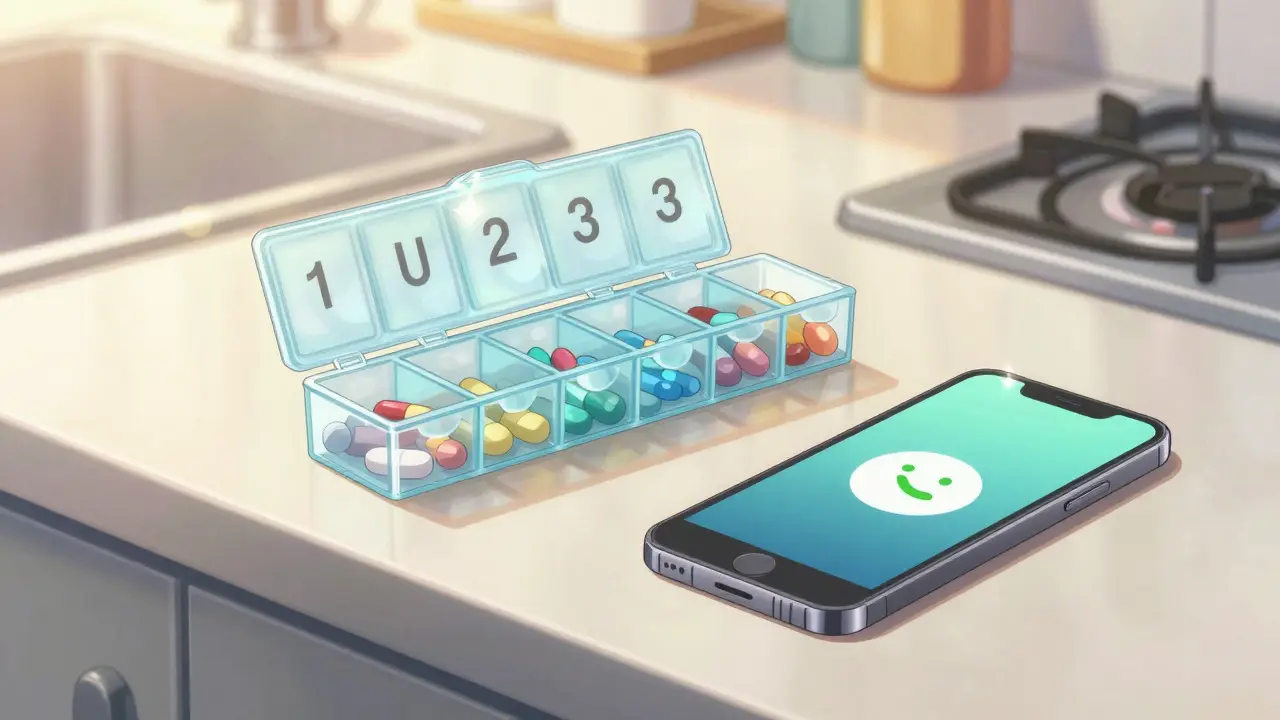
| Pill Organizers | Visual confirmation of taken doses | Requires weekly refilling; easy to misplace |
| Mobile Apps | Reminders and tracking logs | Tech barriers for older adults; battery dependence |
| Blister Packs | Pre-dosed convenience | Higher pharmacy fees; less flexible timing | r>
| Smart Caps/Bottles | Automated alerts and data sharing | High upfront cost; requires charging |
Simplifying Your Regimen
Complexity kills compliance. The data is clear: adherence drops by approximately 2% for every additional daily dose you must take. Once-daily regimens achieve 79% adherence, while four-times-daily schedules plummet to 51%. Talk to your doctor about simplifying. Ask:
- Can any medications be combined into once-daily dosing?
- Are there generic alternatives that reduce financial stress?
- Can we align dosing times with existing habits (like brushing teeth or eating breakfast)?
Overcoming Financial and Systemic Hurdles
Money is a massive barrier. The Kaiser Family Foundation reported that 61% of non-adherent patients cited cost as the primary obstacle. If you are rationing insulin or skipping blood pressure pills to save cash, you are creating a much larger medical bill later. Here is how to tackle cost:
- Use coupon cards: Services like GoodRx or SingleCare can lower cash prices significantly.
- Ask for generics: They contain the same active ingredients and are far cheaper.
- Check patient assistance programs: Drug manufacturers often offer free meds for qualifying low-income patients.
- Utilize mail-order pharmacies: These often provide 90-day supplies at lower copays.

Communication: The Shame-Free Approach
Most patients hide their missed doses from doctors out of shame. They worry the doctor will judge them or lose patience. This secrecy prevents proper care. The NHS Specialist Pharmacy Service recommends starting conversations with open-ended questions like, "Many people have trouble taking medications as prescribed-have you?" This normalizes the struggle. Use the teach-back method. After your appointment, explain your regimen back to the clinician in your own words. Studies show this increases understanding by 35%. If you can’t explain how and when to take your meds, neither can you execute the plan reliably. Bring your actual bottles to appointments. Not a list, but the physical containers. Doctors often write prescriptions without checking for interactions or duplication. Seeing all your meds on the table allows for real-time reconciliation.
Monitoring and Accountability
What gets measured gets managed. The CDC recommends four ways to monitor adherence:
- Document your own behavior (keep a simple log).
- Review your EHR fill history with your provider.
- Use automated monitoring via insurance claims data.
- Discuss adherence openly during every visit.
Next Steps for Immediate Improvement
If you are ready to improve your medication adherence today, start small. Pick one tool from the list above-a pill box, an app, or a calendar reminder-and commit to using it for two weeks. Track your progress. Notice how you feel physically and mentally when you stay consistent. Then, schedule a conversation with your pharmacist or doctor to simplify your regimen and address any cost concerns. Consistency beats perfection. Taking 90% of your meds consistently is infinitely better than taking 100% for a week and then quitting.
What is considered good medication adherence?
The American Medical Association considers a patient adherent if they take 80% or more of their prescribed medicine. However, optimal health outcomes often require even higher consistency, especially for critical conditions like hypertension or diabetes.
How does complexity affect medication adherence?
Adherence decreases by approximately 2% for each additional daily dose required. Once-daily regimens achieve 79% adherence, while regimens requiring four daily doses drop to 51%. Simplifying your schedule is one of the most effective ways to improve compliance.
What is the difference between intentional and unintentional non-adherence?
Unintentional non-adherence occurs due to practical barriers like forgetting, cost, or confusion. Intentional non-adherence happens when a patient consciously decides to skip doses due to side effects, beliefs, or feeling better. Solutions differ: unintentional needs tools/reminders, while intentional needs dialogue with providers.
Can mobile apps really help with taking meds?
Yes, studies show mobile health apps can improve adherence by 12-18%, particularly for chronic conditions like diabetes. They provide reminders, educational content, and tracking features. However, effectiveness depends on user comfort with technology; elderly or rural users may benefit more from traditional tools.
How much does cost impact medication adherence?
Cost is a major barrier, with 61% of non-adherent patients citing it as the primary obstacle. High out-of-pocket expenses lead to rationing or skipping doses. Using generics, coupon services, and patient assistance programs can mitigate these financial hurdles.