
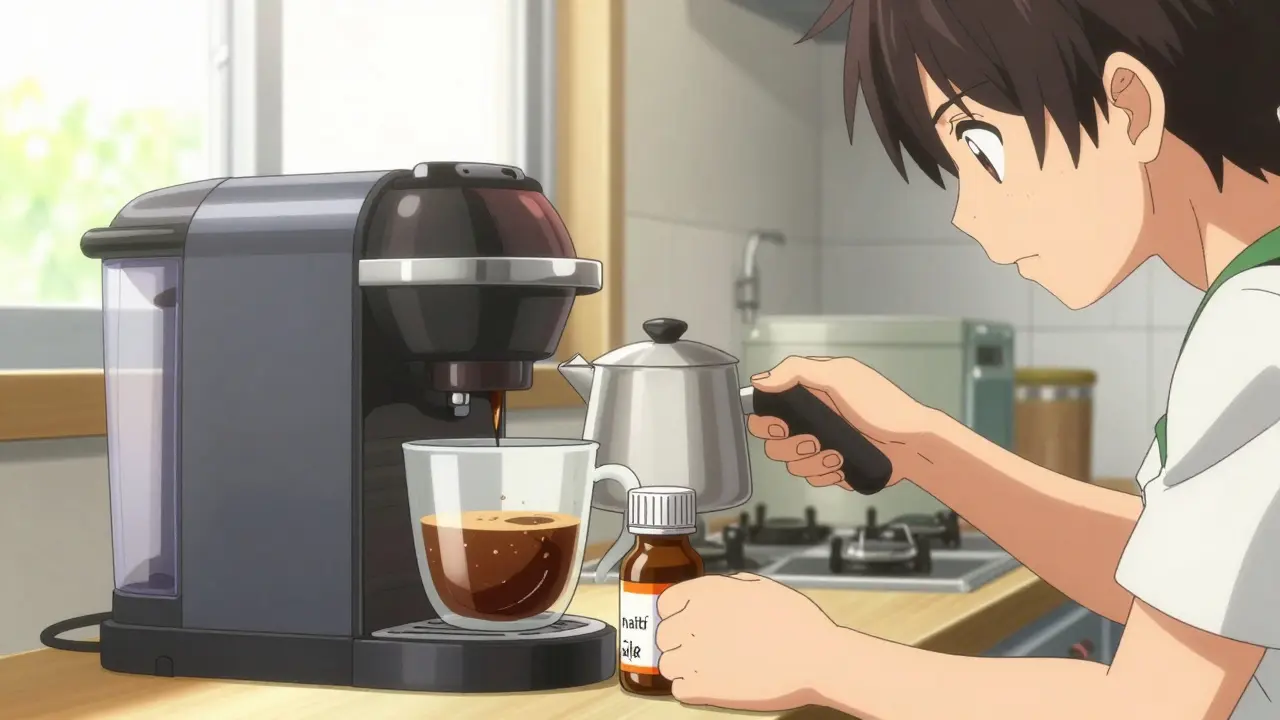
Taking a pill every day sounds simple until you're actually doing it. Whether it's a once-a-day blood pressure tablet or a complex regimen for a chronic condition, the gap between "knowing I need to take this" and actually doing it is huge. In fact, data from the National Institutes of Health suggests that about 50% of people with chronic illnesses struggle to stick to their prescriptions. That's not usually because of laziness; it's because our brains aren't wired for repetitive, low-reward tasks.
The secret to staying on track isn't more willpower-it's using medication adherence is the extent to which a patient takes their medication as prescribed by their healthcare provider strategies to turn a chore into an automatic reflex. By shifting the burden from your conscious mind to your environmental cues, you can stop the "did I take my pill today?" panic and actually improve your health outcomes.
The Magic of Habit Stacking
One of the most powerful behavioral tricks is called habit stacking. This involves pairing a new behavior you want to build with an existing, rock-solid habit. Instead of trying to remember a medication in a vacuum, you anchor it to something you already do without thinking.
For example, if you always brew a pot of coffee at 7:00 AM, place your medication bottle right next to the coffee maker. The act of starting the machine becomes the trigger for taking the pill. According to NAMI guidelines, pairing medication with a daily routine like brushing your teeth or feeding the dog creates a level of automaticity that drastically reduces the cognitive load on your brain.
When you stack habits, you aren't creating a new memory; you're just adding a "sidecar" to an old one. This is far more effective than a random alarm, which we often snooze and then forget about ten minutes later.
Simplify the Friction
In behavioral science, "friction" is anything that makes a task harder to complete. If your pills are tucked away in a child-proof bottle inside a cabinet, behind a stack of vitamins, you've created high friction. To build a habit, you need to make the path of least resistance the correct one.
Start by looking at your regimen. If you're taking five different pills at different times, you're fighting a losing battle. Dose consolidation, or using single-pill combinations, has been shown to increase adherence rates by about 26%. If you can't switch medications, use a weekly pill organizer. While it seems basic, reducing the number of times you have to open a bottle each day removes a significant mental barrier.
| Tool/Strategy | Behavioral Focus | Estimated Adherence Boost |
|---|---|---|
| Habit Stacking | Environmental Trigger | High (Automaticity) |
| Digital Reminders | External Prompt | ~28.7% increase |
| Pill Organizers | Visual Verification | ~8.4% to 27% increase |
| Dose Consolidation | Friction Reduction | ~26% increase |
Using Digital Prompts the Right Way
Most of us just set a phone alarm, but generic alarms are easy to ignore. To make technology work for you, you need a system that provides an active feedback loop. Digital reminder systems are most effective when they aren't just beeps, but interactive tools. Apps that allow you to check off a dose and show a visual progress bar (like a streak) tap into the reward center of your brain.
Research in JMIR mHealth and uHealth indicates that smartphone-based reminders can boost adherence by nearly 29% for adults with chronic conditions. The key is customization. If you're usually in the shower at 8:00 AM, a reminder at that time is useless. Set your digital prompts for the exact moment you are physically able to take the medication.
Dealing with the Mental Block
Sometimes we forget because of a distraction, but other times we "forget" because we subconsciously dislike the medication or fear the side effects. This is called intentional non-adherence. You can't fix this with a pill organizer; you need a psychological shift.
Motivational interviewing is a technique used by pros to help patients find their own internal reasons for staying healthy. Instead of focusing on the "must" (e.g., "I must take this or I'll get sick"), focus on the "want" (e.g., "I want to be healthy enough to travel next year").
If you struggle with emotional barriers, techniques from Cognitive Behavioral Therapy (CBT) can be a game-changer. By addressing the attitudinal barriers-like the feeling that the medicine is "poisoning" you or the frustration of a lifelong diagnosis-you clear the mental path for the habit to actually take root. In some cases, CBT has reduced non-adherence by up to 31% by changing how the patient views the treatment.
Advanced Strategies for Complex Needs
For those whose lives are too chaotic for a daily pill, or for those with cognitive impairments like early-stage dementia, a different approach is needed. Structural solutions are often better than behavioral ones. This is where Long-Acting Injectables (LAIs) come in. By replacing a daily pill with a monthly or quarterly shot, you effectively eliminate the need for a daily habit entirely. In patients with serious mental illness, LAIs have reduced non-adherence by 57% compared to oral meds.
If you are managing someone else's medication, the most effective move is to integrate a support system. Team-based interventions-where the doctor, pharmacist, and family all provide the same consistent messaging-result in much higher adherence rates (around 68%) than when the patient is left to figure it out alone.
The "Fail-Safe" Checklist
To make this stick, don't try to do everything at once. Start with one structural change and one behavioral trigger. Here is a quick checklist to audit your current routine:
- Visual Cue: Is the medication in your line of sight at the moment you need it?
- Anchor Point: Which existing habit (coffee, brushing teeth, feeding pets) are you stacking this onto?
- Friction Check: Can you reduce the number of bottles you open? (e.g., a weekly organizer).
- Digital Backup: Do you have an app with a visual progress tracker, rather than just a loud alarm?
- Safety Net: Are you enrolled in a pharmacy auto-refill program to avoid the "out of stock" gap?
Why do I keep forgetting my meds even with alarms?
This is often called "alarm fatigue." Your brain begins to treat the alarm as background noise rather than a call to action. To fix this, try habit stacking-linking the medication to a physical action you already do-or changing the alarm sound frequently to keep it surprising.
How do I start a habit if I hate the side effects?
This is a psychological barrier, not a memory one. Use a technique called "benefit framing." Instead of focusing on the side effect, write down the specific life goal the medication enables (e.g., "taking this allows me to play with my grandkids"). Also, talk to your doctor about dose timing or alternatives to reduce those effects.
Are pill organizers actually better than bottles?
Yes, because they provide "visual verification." If you can't remember if you took your pill, you can just look at the organizer. This eliminates the double-dosing risk and the anxiety of forgetting, which in turn makes the habit feel less stressful.
What is the best app for medication tracking?
The best app is one that offers more than just a notification. Look for apps that have a visual progress display, allow for easy logging, and potentially integrate with your health records. The visual "streak" of successful days is a powerful behavioral motivator.
How can I help a parent who keeps forgetting their medication?
For older adults or those with cognitive decline, pairing medication with a highly ingrained daily routine is key. Use a large, clear pill organizer and set up auto-refills with their pharmacy to ensure they never run out, as a gap in supply often breaks the habit entirely.
What to Do When You Slip Up
Missing a dose happens. The danger isn't the single missed pill; it's the "what the hell" effect, where one mistake leads you to give up on the habit entirely. When you miss a dose, don't beat yourself up. Instead, use it as a data point. Ask yourself: "Why did I miss it today?"
If you missed it because you were traveling, you need a "travel kit" strategy. If you missed it because you were stressed, you might need a simpler reminder system. Use a problem-solving approach: identify the barrier, adjust the environment, and restart the streak immediately. The goal isn't perfection; it's consistency over the long haul.



Tama Weinman
April 16 2026Funny how we're told to "automate" our health with these tricks while ignoring the bigger picture of why these prescriptions are pushed so aggressively by big pharma in the first place. It's all just a cycle of dependency designed to keep the profits rolling in while we play with pill organizers.
Agatha Deo
April 17 2026Oh, please. As if a "visual progress bar" is going to solve the systemic failure of modern medicine. It's absolutely quaint that people think a little streak on an app is the pinnacle of behavioral science. Truly adorable.
Randall Barker
April 17 2026The real failure here isn't the memory, it's the lack of discipline. We live in an age of instant gratification where people expect a "hack" to solve a fundamental lack of will. If you cannot perform the basic moral duty of caring for your own body, no amount of "habit stacking" will save your character from its own lethargy.
Cheryl C
April 18 2026USA all the way!! 🇺🇸 My doctor gave me a little box and it works great lol. Just keep it by the coffee and u good ☕️💊 love this stuff!
Josephine Wyburn
April 20 2026I honestly can't even describe the absolute emotional rollercoaster I go through every single morning just trying to remember if I took my pills because my anxiety is just through the roof and I start spiraling thinking I've ruined my entire health progression for the week 😭💔 it's just so exhausting to live like this every day and I feel like nobody understands the mental toll of this constant panic 😫
Jon lee
April 20 2026Be kind to yourself if you're struggling. It's a journey and finding the right system takes time. Just take it one step at a time.
Kim Hyunsoo
April 21 2026The concept of a "travel kit" is actually such a clever way to handle the chaos of life... I wonder if there are specific organizers designed for high-mobility lifestyles? 🌌✨
Nell O'Leary
April 21 2026Total agreement on the friction reduction aspect! 💊 Utilizing a high-fidelity adherence tool definitely optimizes the patient-provider feedback loop and minimizes the cognitive load associated with complex titration schedules. Love the data-driven approach here (^_^)v
Dana Chichirita Nicoleta
April 22 2026This is absolutely an extraordinary resource for anyone feeling lost in the fog of chronic illness! It is simply marvelous how the author has broken down the psychological barriers with such grace and precision, providing a beacon of hope for those of us who have struggled for years to find a rhythm that actually works for our unique lives! I am just so overwhelmed with gratitude that this information is available to the public for free! Truly a magnificent guide to reclaiming one's health and vitality through the power of behavioral science!
Rob Schlautman
April 22 2026not sure why people act like this is some revolutionary discovery because honestly just putting a bottle in front of your face is common sense and the whole bit about the reward center of the brain is just basic psych 101 fluff that doesnt really change the fact that most people are just too lazy to be consistent with their own health
Nathan Berlin
April 23 2026Only in the west do they need apps to tell them to take a pill 🙄🇮🇳 we have better ways of managing life without this obsessive tracking nonsense 💅🔥