
Every day, millions of Americans take generic drugs. They’re cheaper, widely available, and just as effective as brand-name medications-when they’re safe. But what happens after the FDA approves a generic drug? You might think approval is the finish line. It’s not. It’s the starting point. The real work begins once the pills hit the shelves.
Approval Isn’t the End-It’s Just the Beginning
The FDA doesn’t approve generic drugs based on large clinical trials like brand-name drugs. Instead, they rely on bioequivalence studies. These studies usually involve 24 to 36 healthy volunteers. They check if the generic drug releases the same amount of active ingredient into the bloodstream at the same rate as the brand-name version. If it passes, the FDA says it’s good to go. But here’s the problem: 36 people can’t tell you what might happen when millions take the drug over years. Rare side effects, interactions with other medications, or reactions in older adults or people with liver disease? Those don’t show up in small studies. That’s why the FDA has to keep watching-long after the approval stamp is stamped.The Systems That Keep Watch
The FDA doesn’t rely on guesswork. It uses multiple, interconnected systems to catch problems early. The main tool is the FDA Adverse Event Reporting System (FAERS). It’s a giant database that collects reports of side effects, allergic reactions, and other problems from doctors, pharmacists, patients, and drug companies. In 2022, FAERS received about 2 million reports. That’s not just brand-name drugs-about half are for generics. The FDA’s team of pharmacologists, epidemiologists, and data analysts dig through these reports looking for patterns. If ten people report the same unusual reaction after taking a specific generic version of a blood pressure drug, that’s a red flag. Then there’s the Sentinel Initiative. Launched in 2008 and expanded under the 21st Century Cures Act, Sentinel uses real-world data from over 100 million patient records across hospitals, clinics, and insurance systems. Instead of waiting for someone to report a problem, Sentinel actively scans electronic health records for signs of trouble. For example, if a certain generic statin shows a spike in liver enzyme levels in patients over 65, Sentinel can flag it within weeks-not months or years. Manufacturing quality is another big piece. The FDA inspects about 1,200 U.S. factories and 600 foreign ones every year. These aren’t just routine checks-they’re often unannounced. Inspectors look at everything: how raw materials are stored, whether machines are cleaned properly, if lab tests are accurate. A single batch of a generic antibiotic with impurities above safe levels can trigger a recall. The Office of Pharmaceutical Quality (OPQ) works hand-in-hand with the Office of Generic Drugs (OGD) to make sure the pills you get are not just chemically identical, but also made to the same high standards.What Makes Generic Drugs Harder to Monitor?
Generic drugs are supposed to be the same as brand-name drugs. But they’re not exact copies. The active ingredient must match. But the fillers, dyes, and coatings? Those can be different. And sometimes, those differences matter. Take a generic version of a narrow therapeutic index drug-like warfarin or levothyroxine. These drugs have a tiny window between being effective and being dangerous. A slight change in how the pill dissolves because of a different coating could mean the difference between a stable dose and a dangerous spike. These aren’t easy to spot with FAERS alone. That’s why the FDA created the OGD Clinical Safety and Surveillance Committee. This team meets regularly to review new safety signals specifically for generics. They look at impurities, manufacturing changes, and even patient complaints that don’t fit the usual pattern. Another challenge? Underreporting. Studies suggest only 1% to 10% of adverse events are ever reported to the FDA. A patient might feel dizzy after switching to a generic and assume it’s just aging. Or a doctor might not connect the dots. That’s why the FDA doesn’t just wait for reports-they proactively mine data. They look for spikes in hospitalizations, emergency room visits, or lab test abnormalities linked to specific generic drugs.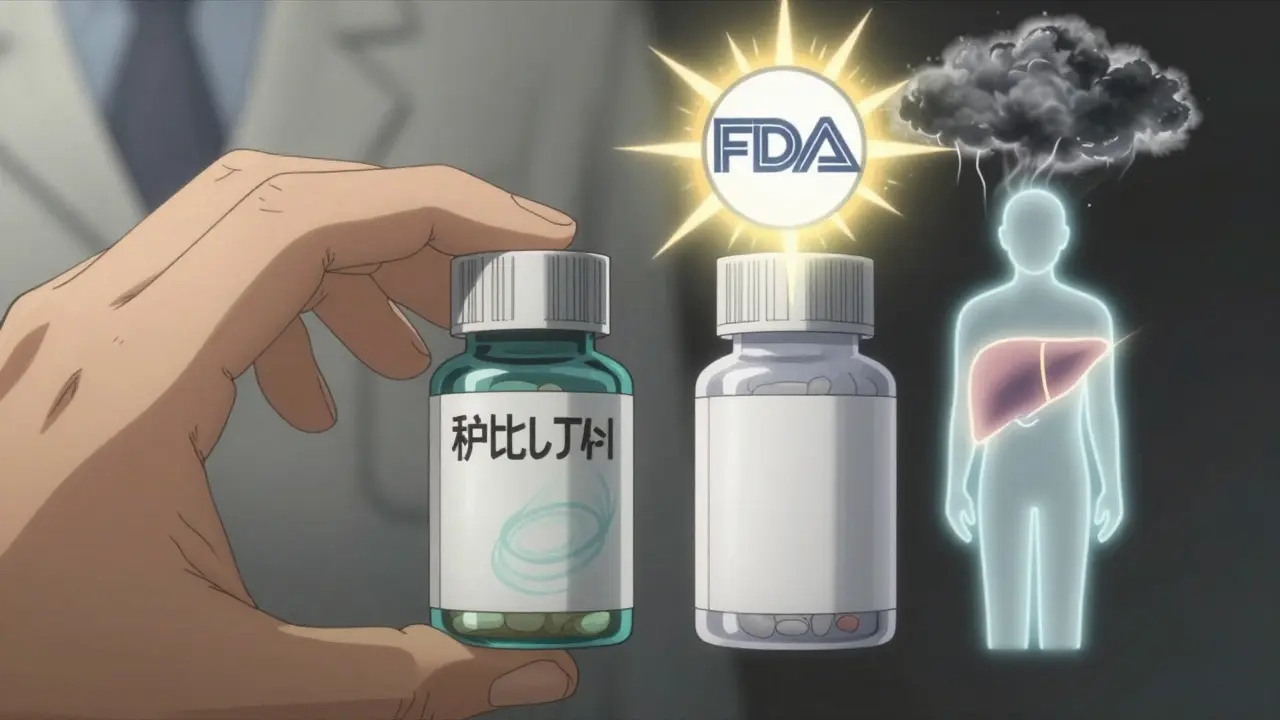
What Happens When Something Goes Wrong?
The FDA doesn’t wait for a crisis. If a pattern emerges, they act fast. - If a batch of generic metformin is found to contain a cancer-causing impurity, the FDA can demand an immediate recall. That happened in 2020 with some extended-release versions. - If a generic version of a seizure drug is linked to more breakthrough seizures than the brand, the FDA can require a label change. That means doctors get a new warning, and pharmacists get new instructions. - In rare cases, if a generic drug consistently causes harm and no fix is possible, the FDA can pull it off the market. That’s happened a handful of times in the last decade. These actions aren’t taken lightly. The FDA weighs the risk against the benefit. For a drug that saves lives and costs pennies, even a small risk might be acceptable if it’s rare. But for a drug taken daily by millions, even a 0.1% risk matters.Who Reports Problems-and How?
You don’t need to be a doctor to help. If you or a loved one has an unexpected reaction to a generic drug, you can report it. The FDA’s MedWatch system lets anyone submit a report online or by phone. You don’t need to prove it’s the drug’s fault. Just describe what happened, when, and which medication you took. That information goes straight into FAERS. Pharmacists and doctors are required to report serious events. But the system works best when patients speak up. A single report might seem small. But when hundreds of people report the same issue, it becomes a signal the FDA can’t ignore.
Why This Matters More Than Ever
Generics make up 90% of all prescriptions filled in the U.S. But they cost only 23% of what brand-name drugs do. That’s why safety monitoring isn’t just about science-it’s about money and access. If people lose trust in generics because of safety scares, they might stick with expensive brand-name drugs. That drives up healthcare costs for everyone. The FDA’s system isn’t perfect. It’s still catching up to complex generics like inhalers, patches, and injectables. And with over 1,000 new generic applications approved each year, the workload keeps growing. That’s why the Generic Drug User Fee Amendments (GDUFA III), which started in 2023, increased funding for post-market surveillance. The industry pays fees to help fund the FDA’s monitoring-about $65 million a year.The Bottom Line
Generic drugs are safe. Most of them are. But safety isn’t a one-time check. It’s a continuous effort. The FDA doesn’t just approve drugs and walk away. It watches. It listens. It digs into data. It inspects factories. It updates labels. It pulls bad products off shelves. If you’re taking a generic drug and notice something unusual-new fatigue, strange rashes, changes in how you feel-don’t brush it off. Talk to your doctor. And if you’re unsure whether to report it, report it anyway. Your report could help protect someone else. The system works because of the people who use it-not just the regulators. You’re part of the safety net.Are generic drugs as safe as brand-name drugs?
Yes, when they’re made correctly. The FDA requires generics to have the same active ingredient, strength, dosage form, and route of administration as the brand-name drug. They must also meet the same strict manufacturing standards. The main difference is in inactive ingredients, which rarely cause issues. But because generics are tested on fewer people before approval, rare side effects may only show up after widespread use. That’s why the FDA keeps monitoring them after they’re on the market.
How does the FDA find problems with generics after approval?
The FDA uses several tools: the FAERS database for patient and doctor reports, the Sentinel Initiative to scan electronic health records from over 100 million people, and routine inspections of manufacturing facilities. They also proactively analyze data for unusual patterns, like spikes in hospitalizations linked to a specific generic drug. Teams of scientists and pharmacologists review all this information to spot potential safety signals.
Can different generic versions of the same drug be different in safety?
Yes, in rare cases. While all generics must be bioequivalent, differences in inactive ingredients, manufacturing processes, or impurity levels can sometimes affect how the drug behaves in certain people. For example, a change in coating might alter how quickly a drug dissolves, which matters for drugs with a narrow therapeutic index like warfarin or levothyroxine. The FDA monitors these differences closely and can require labeling changes or recalls if safety is compromised.
What should I do if I think a generic drug is causing side effects?
First, talk to your doctor or pharmacist. Don’t stop taking the medication without medical advice. Then, report the issue to the FDA through MedWatch, either online or by phone. Even if you’re not sure it’s the drug, your report helps the FDA detect patterns. You don’t need proof-just your experience. Thousands of reports help the FDA decide if further action is needed.
How often does the FDA recall generic drugs?
Recalls happen, but they’re not common. Most are voluntary and initiated by the manufacturer after the FDA identifies a problem. Common reasons include contamination, incorrect labeling, or impurities that exceed safety limits. In 2022, the FDA issued over 100 drug recalls, about half of which involved generics. Most are limited to specific batches, not entire drug classes. The FDA prioritizes recalls based on risk-life-threatening issues get the fastest response.
Is the FDA’s system improving?
Yes, significantly. Before 2012, post-market monitoring for generics was underfunded and fragmented. The GDUFA program changed that by giving the FDA stable funding and clear mandates. The Sentinel Initiative, expanded under the 21st Century Cures Act, now allows real-time surveillance using real-world data. The FDA now conducts bi-weekly screenings of safety data and uses advanced data mining to catch signals earlier. Future plans include expanding Sentinel to cover even more patients and improving monitoring of complex generics like inhalers and injectables.
ellen adamina
January 17 2026My grandma takes levothyroxine and switched generics last year. She started feeling off-fatigue, heart palpitations. We didn’t think much of it until her doctor mentioned it might be the filler. She switched back to the brand and felt like herself again. I didn’t report it. Should’ve.
Diane Hendriks
January 17 2026The FDA doesn’t ‘watch’ generics-they’re reactive, not proactive. They wait for people to die or get hospitalized before they lift a finger. And let’s be honest: if this were a brand-name drug, they’d have shut it down the moment the first complaint came in. But because it’s cheap? We’re the lab rats. This isn’t safety-it’s cost-cutting with a government stamp.
Sohan Jindal
January 17 2026They let China make our pills. You think they inspect those factories? Nah. They get a photo and a promise. The FDA is a joke. Your blood pressure med? Could be laced with anything. I don’t trust one pill I buy anymore. This is how they control us. Slow poison in a bottle.
Niki Van den Bossche
January 19 2026There’s a metaphysical void in how we commodify healing. We reduce life-saving chemistry to a race to the bottom-cheapest pill wins, while the human body becomes a statistical anomaly in a database. The FDA’s surveillance isn’t care-it’s damage control dressed in bureaucratic lace. We’ve turned pharmacology into a market-driven farce, where the only thing more dangerous than the impurity is the illusion of safety.
Nat Young
January 19 2026Half the reports in FAERS are garbage. People blame drugs for hangovers, bad sleep, and bad relationships. Sentinel’s great in theory, but 80% of those health records are incomplete or mislabeled. And don’t get me started on the ‘bioequivalence’ myth-two pills can release the same amount of drug but at different times, and that’s enough to wreck someone on warfarin. The system’s not broken-it was designed to fail quietly.
Nishant Garg
January 21 2026In India, we make half the world’s generics. We don’t cut corners-we engineer precision. Yes, some batches have issues, but the same is true everywhere. The real problem? Patients don’t know how to report. Or they think nothing will change. But change happens. I once saw a pharmacist in Delhi catch a mislabeled batch before it shipped. That’s the real safety net-not the FDA, but the people who care enough to look.
Nicholas Urmaza
January 22 2026If you’re taking a generic and feel weird stop blaming the pill and start blaming your lifestyle. Stress diet sleep these matter more than the dye in your tablet. The FDA is doing its job. Stop whining and take responsibility for your health
Iona Jane
January 23 2026They’re hiding something. The same company that makes the brand also makes the generic. Same factory. Same workers. But the generic gets a different label. Why? Because they know. They know the coating changes the release. They know the impurities creep in. But they let us take it anyway. They’re killing us slowly and calling it progress
Mike Berrange
January 23 2026You know what’s worse than a bad generic? The people who act like they’re experts after one bad experience. I’ve been on 12 different generics for depression. Four of them made me suicidal. The rest? Fine. But now I’m supposed to believe the FDA’s ‘system’ is trustworthy? That’s not monitoring-that’s magical thinking wrapped in a white coat.
Frank Geurts
January 25 2026Allow me to express, with the utmost respect for the institutional integrity of the U.S. Food and Drug Administration, that the post-market surveillance framework for generic pharmaceuticals represents a paradigmatic triumph of regulatory science in the 21st century. The integration of FAERS, Sentinel, and GDUFA-funded oversight constitutes not merely a procedural safeguard, but a moral imperative-translating data into dignity, and vigilance into vitality. One must acknowledge, with profound gratitude, that the silent labor of pharmacologists, epidemiologists, and inspectors ensures that millions awaken each morning not merely medicated, but protected.