

When your skin starts showing dark patches-on your cheeks, forehead, or hands-it’s easy to assume it’s just sun damage. But what if it’s not? What if those spots won’t fade no matter how much sunscreen you use? That’s the frustrating reality for millions dealing with hyperpigmentation, especially melasma. Unlike simple sun spots, melasma doesn’t care how careful you are. It comes back, even in winter. And most over-the-counter creams? They barely make a dent.
What’s Really Going On With Your Skin?
Hyperpigmentation means your skin is making too much melanin-the pigment that gives skin its color. But not all dark spots are the same. Two of the most common types are melasma and solar lentigines (sun damage). They look similar, but their causes, treatments, and outcomes are worlds apart.Solar lentigines, or sun spots, show up as small, flat, brown patches on areas that get the most sun: face, hands, shoulders. They’re the result of years of UV exposure. By age 60, about 90% of fair-skinned people have them. These spots respond well to laser treatments or even strong topical creams. They’re predictable. Fix the trigger-sun exposure-and you can fix the spot.
Melasma is different. It shows up as larger, irregular patches, usually on the cheeks, forehead, nose, or upper lip. It’s not just about the sun. Hormones play a huge role. Up to 70% of cases in women of childbearing age are tied to pregnancy, birth control pills, or hormone therapy. It’s also triggered by visible light (yes, even through windows) and heat. People with medium to dark skin tones-Fitzpatrick types III to VI-are 3 to 5 times more likely to develop it. And once it shows up? It’s stubborn. Even with treatment, over 80% of people see it return within a year if they don’t protect their skin 24/7.
Why Sunscreen Isn’t Enough (And What Actually Works)
Most people think SPF 30 is enough. It’s not. Especially for melasma. Standard sunscreens block UV rays, but melasma is also stirred up by visible light and infrared radiation. That means a regular chemical sunscreen won’t cut it.Experts like Dr. Kourosh at Harvard Medical School say you need mineral sunscreens with iron oxides. These block visible light. Zinc oxide is great for UV, but iron oxide is what stops the rest. Use a broad-spectrum SPF 50+ with both. And don’t skimp. Most people apply only a quarter of the amount they should. You need about 1/4 teaspoon just for your face-and reapply every two hours if you’re outside.
Even indoors, you’re not safe. Visible light passes through windows. That’s why dermatologists now recommend daily sunscreen use even if you’re working at your desk near a window. Skip it once, and you undo weeks of progress.
The Topical Treatments That Actually Move the Needle
If you’re serious about fading dark spots, you need more than a drugstore cream. Prescription topicals are where the real results happen.Hydroquinone (4%) is still the gold standard. It blocks the enzyme tyrosinase, which your skin uses to make melanin. Used alone, it works-but not well. Used in a triple combination with tretinoin and a corticosteroid, it’s 50-70% effective for melasma after 12 weeks. But there’s a catch: use it longer than three months, and you risk exogenous ochronosis-a rare but irreversible blue-black discoloration. That’s why doctors rotate it with other agents.
Tretinoin (0.025-0.1%) doesn’t lighten pigment directly. Instead, it speeds up skin cell turnover. Think of it like a gentle exfoliant that pushes dark cells to the surface faster so they flake off. It also helps hydroquinone penetrate deeper. But it causes irritation in 30-40% of users. Start slow: use it every other night, then build up.
Vitamin C (10-20% L-ascorbic acid) is a powerful antioxidant. It doesn’t just block melanin production-it also neutralizes free radicals from UV and visible light. It’s safe, gentle, and great for daily use. Apply it in the morning before sunscreen. It’s the perfect first step in your routine.
For those avoiding hydroquinone, alternatives like tranexamic acid (5%) and cysteamine cream (10%) are gaining traction. Tranexamic acid, originally a blood thinner, reduces melanin production triggered by hormones. In studies, it improved melasma by 45% in 12 weeks with almost no side effects. Cysteamine works similarly and showed 60% improvement in 16 weeks. Both are promising, especially for people with sensitive skin.

Lasers and Light Therapies: When to Use Them (and When to Avoid)
IPL (Intense Pulsed Light) and laser treatments are popular. But they’re not a magic fix.For sun damage? IPL is excellent. It targets the pigment, heats it up, and the body clears it away in a few days. Most people see results in one or two sessions.
For melasma? Don’t even think about it unless your skin is already calm. Lasers and IPL generate heat-and heat triggers melanocytes to make more pigment. In fact, 30-40% of melasma patients see their condition worsen after laser treatment. Dermatologists now wait 8-12 weeks of topical suppression before even considering lasers. This “melanocyte rest” approach cuts recurrence from 60% down to 25%.
Chemical peels can help, but only when done right. Glycolic or salicylic acid peels every 4-6 weeks can boost topical treatment by 35-50%. But in darker skin tones, peels carry a risk of post-inflammatory hyperpigmentation (PIH)-dark spots caused by the peel itself. That’s why they should only be done by experienced providers.
The Real Reason Most Treatments Fail
It’s not the medicine. It’s the routine.Studies show only 35% of patients stick with their prescribed regimen for the full 12 weeks. Why? Because it’s complicated. Applying five different products every day feels overwhelming. Plus, irritation from tretinoin or hydroquinone makes people quit.
The biggest mistake? Inconsistent sun protection. YES Medspa’s data shows 70% of patients use less than half the recommended sunscreen amount. They forget to reapply. They think clouds or winter make them safe. They don’t realize visible light comes through glass.
Another issue: expecting quick results. Melasma takes time. You won’t see changes in two weeks. It takes 8-12 weeks to notice improvement. Full results? Six months. If you give up before then, you’ll never know what could’ve worked.
What a Realistic Routine Looks Like
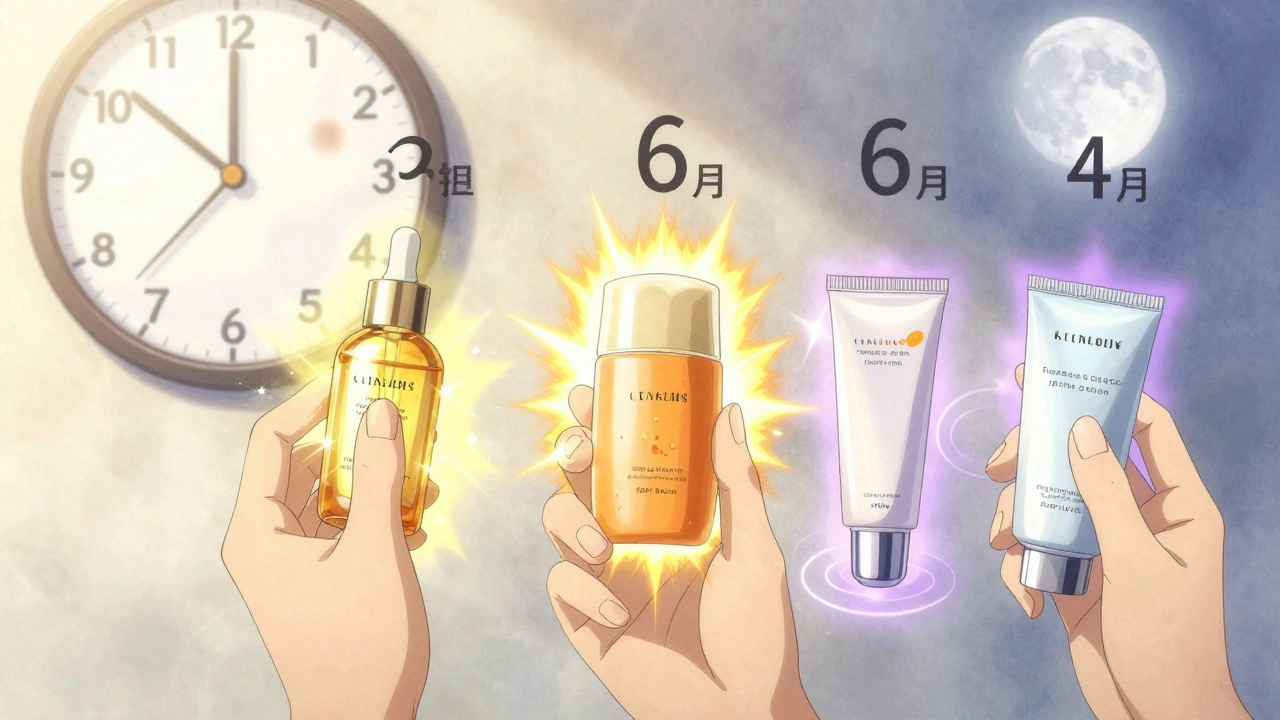
Here’s what works for most people, based on clinical protocols:- Morning: Cleanse → Vitamin C serum (15% L-ascorbic acid) → Mineral sunscreen with zinc oxide and iron oxide (SPF 50+)
- Evening (Mon/Wed/Fri): Cleanse → Hydroquinone 4% (apply only to dark patches)
- Evening (Tue/Thu/Sat): Cleanse → Tretinoin 0.05%
- Sunday: Rest day-only moisturizer and sunscreen if you’re going out
Start slow. Use tretinoin every third night for the first two weeks. If your skin stings or peels, cut back. Don’t push through irritation. Build tolerance over 4-6 weeks.
Keep a journal. Note when your skin flares up. Did you forget sunscreen? Did you get too hot in the sauna? Did you start a new birth control pill? Tracking helps you spot triggers.
What’s Next for Hyperpigmentation Treatment?
The field is evolving fast. The FDA is considering letting hydroquinone be sold over the counter-but with strict labeling and monitoring. That could make it more accessible, but also risk misuse.New agents like tranexamic acid and cysteamine are becoming mainstream. Some dermatologists are already using them as first-line treatments, especially for patients who can’t tolerate hydroquinone.
Looking ahead, personalized treatment is coming. Dr. Pearl Grimes predicts genetic testing will soon guide which cream works best for your skin type and hormone profile. Imagine a simple blood test telling you whether you’re more likely to respond to tranexamic acid or niacinamide.
For now, the best advice hasn’t changed: protect your skin like your life depends on it-and be patient. Melasma isn’t a flaw. It’s a signal. Your body is reacting to light, heat, and hormones. Treat it with respect, not frustration.
When to See a Dermatologist
If you’ve tried over-the-counter brightening creams for 3 months with no change, it’s time. If your dark patches are symmetrical, on your face, and getting worse-especially if you’re on hormones-you likely have melasma. A dermatologist can confirm it and prescribe the right combination.Don’t wait for it to spread. The earlier you start treatment, the better your chances. And remember: you’re not alone. Melasma affects millions. It’s not your fault. But with the right approach, it can be managed.
Can melasma go away on its own?
Sometimes, yes-but only if the trigger is removed. Melasma that starts during pregnancy often fades after delivery. If it’s caused by birth control pills, switching medications may help. But for most people, it doesn’t disappear without treatment. Even when it does, it can come back with sun exposure or hormonal changes.
Is hydroquinone safe to use long-term?
No. Hydroquinone should be limited to 3 months at a time due to the risk of ochronosis-a rare but permanent darkening of the skin. Dermatologists use it in cycles: 3 months on, 1-2 months off. Alternating with other agents like tranexamic acid or niacinamide helps avoid side effects while maintaining results.
Can I use vitamin C and tretinoin together?
Yes-but not at the same time. Use vitamin C in the morning (it’s an antioxidant and boosts sunscreen). Use tretinoin at night. They work well together but can irritate the skin if applied together. Always wait 30 minutes between products if layering.
Why does my melasma get worse in summer?
Sunlight, especially UV and visible light, activates melanocytes-the cells that make pigment. Heat also plays a role. Even indoor lighting and screens emit some visible light. That’s why melasma flares in summer and improves in winter. Strict sun protection year-round is non-negotiable.
Are natural remedies like lemon juice or aloe vera effective?
No. Lemon juice is highly acidic and can burn your skin, leading to even darker pigmentation (post-inflammatory hyperpigmentation). Aloe vera soothes irritation but doesn’t reduce melanin. Stick to clinically proven ingredients: hydroquinone, tretinoin, vitamin C, tranexamic acid, and iron oxide sunscreens.
If you’re tired of trying creams that don’t work, you’re not alone. The key isn’t finding the next miracle product-it’s building a smart, consistent routine and protecting your skin from every kind of light. Melasma doesn’t vanish overnight. But with the right plan, it can fade-and stay faded.
Stephanie Fiero
December 6 2025I’ve been dealing with melasma for 5 years and this is the first time someone actually explained why my sunscreen wasn’t working. I switched to a zinc + iron oxide SPF 50 and my cheeks stopped darkening in July. I’m not cured, but I’m not losing hope anymore. 💪
Michael Dioso
December 8 2025Hydroquinone is the gold standard? Lol. You’re telling people to use a chemical that’s banned in Europe because it turns skin black? And you call this medicine? This is just Big Derm pushing toxic products while pretending they care. Try quitting sugar and reducing stress-your skin will thank you more than any prescription cream.
Laura Saye
December 8 2025There’s something deeply human about how skin reflects our internal state-hormones, stress, light exposure. Melasma isn’t just a cosmetic issue; it’s a dialogue between biology and environment. The frustration isn’t from the spots themselves, but from the illusion that we can control it with enough effort. Maybe the real treatment isn’t the cream, but learning to coexist with the pattern your body has chosen. It’s not a flaw-it’s a signature.
Krishan Patel
December 10 2025You claim to be scientific, yet you recommend hydroquinone without mentioning its carcinogenic potential? This is why Western medicine is broken. In Ayurveda, we use turmeric, sandalwood paste, and neem-natural, holistic, and safe. Your obsession with chemicals ignores the root: inflammation from processed foods and chronic cortisol. Your skin is screaming. Are you listening?
sean whitfield
December 10 2025So let me get this straight. You want me to slap on 5 products every day, reapply sunscreen every 2 hours, avoid windows, and wait 6 months… just so I can look like a normal person? Meanwhile, the sun is still shining, the government is still spying through my phone, and my boss still thinks I look tired. I’m just gonna wear a hat and call it a day.
Chris Brown
December 11 2025It’s irresponsible to promote hydroquinone as a first-line treatment. The risk of ochronosis is not rare-it’s underreported. Dermatologists are complicit in normalizing toxic regimens. Patients deserve transparency, not marketing disguised as science. This article reads like a pharmaceutical white paper disguised as patient advice. Shameful.
Stephanie Bodde
December 11 2025Y’all are overcomplicating this. I used vitamin C + sunscreen every single morning for 4 months. No hydroquinone. No tretinoin. Just consistency. My melasma faded by 70%. Don’t let the noise scare you. Start small. Be gentle. You got this. 🌞💖
Jennifer Patrician
December 12 2025Iron oxide in sunscreen? That’s a cover-up for the fact that the FDA is in bed with sunscreen companies. They don’t want you to know that UV is only 10% of the problem-EMFs from your phone and Wi-Fi are what’s really activating melanocytes. They’re hiding the truth. Wear a silver face mask. Block the radiation. Not the sun.
Mellissa Landrum
December 13 2025So you're telling me I have to spend $200 on cream and wear sunscreen indoors just because my skin decided to get dark? Meanwhile my cousin in India uses turmeric paste and her face looks like a porcelain doll. This is capitalism. They sell you fear so you’ll buy their $80 serums. I'm going back to lemon juice. At least it's cheap.
Carole Nkosi
December 14 2025Everyone’s chasing quick fixes. But the truth? Melasma is your body’s protest. It’s not about the cream. It’s about your sleep, your hormones, your trauma, your silence. You think sunscreen will fix it? Try therapy. Try fasting. Try not being afraid of your own skin. The pigment isn’t the enemy-it’s the messenger.