
What Is Aspirin-Exacerbated Respiratory Disease?
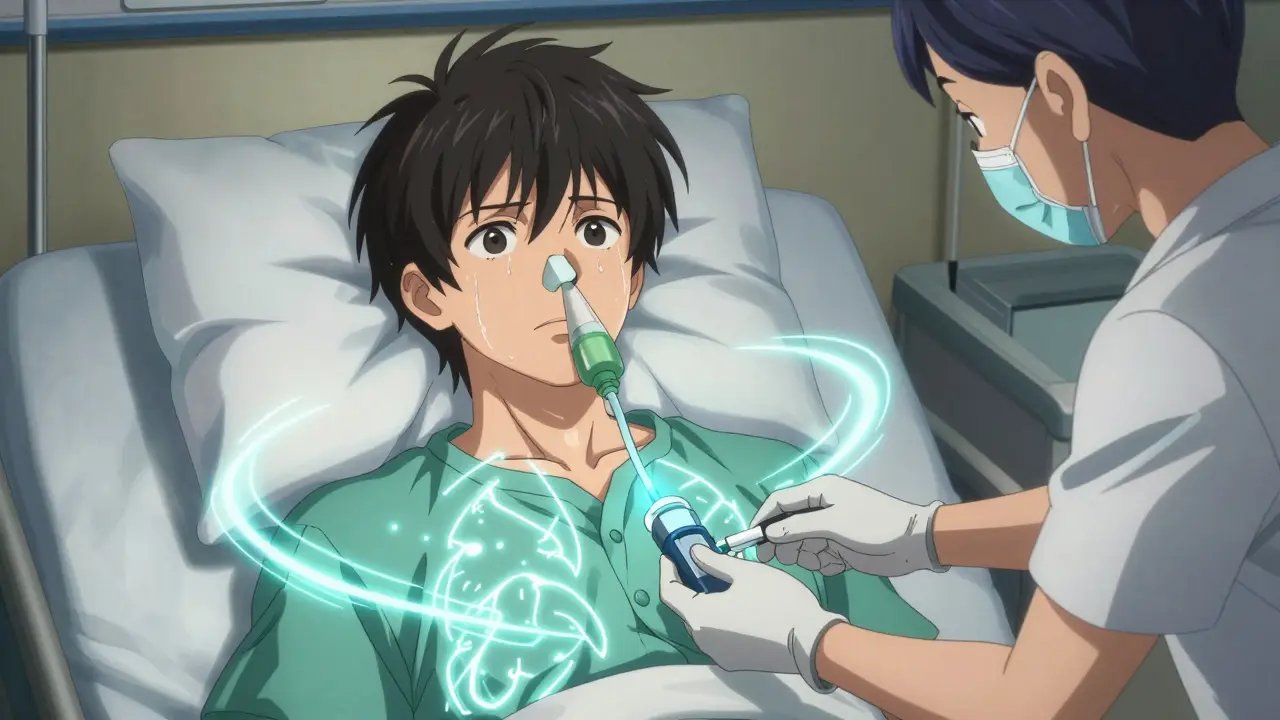
Aspirin-Exacerbated Respiratory Disease, or AERD, is not just a bad reaction to painkillers. It’s a chronic condition that hits adults between 20 and 50, often starting with stuffy sinuses and asthma that gets worse over time. If you’ve had recurring nasal polyps, constant congestion, and sudden breathing trouble after taking aspirin or ibuprofen, you might have AERD - also called Samter’s Triad. This isn’t a simple allergy. It’s a breakdown in how your body handles inflammation, turning normal pain relievers into triggers for serious respiratory flare-ups.
People with AERD produce too much of certain inflammatory chemicals called cysteinyl leukotrienes. These chemicals swell the lining of your nose and lungs, cause mucus to thicken, and make polyps grow. The result? Blocked sinuses, lost sense of smell, wheezing, and sometimes life-threatening asthma attacks. About 7% of all adult asthmatics have it. Among those with nasal polyps, the number jumps to 14%. Women are slightly more affected than men.
How Is AERD Diagnosed?
There’s no single blood test or scan that confirms AERD. Diagnosis comes from piecing together three things: asthma, nasal polyps, and a clear history of breathing problems after taking aspirin or other NSAIDs like ibuprofen or naproxen. If you’ve ever had trouble breathing after taking Advil or Aleve, that’s a huge red flag.
When the history isn’t clear - maybe you’ve avoided NSAIDs for years and can’t remember reactions - doctors use a supervised aspirin challenge. This isn’t something you do at home. It’s done in a clinic with emergency equipment ready. You start with a tiny dose of aspirin - 20 to 30 milligrams - and get gradually higher doses every 90 to 120 minutes. The whole process takes 5 to 6 hours. If your airways tighten up, your oxygen drops, or you start wheezing, they stop and treat it immediately. About 90% of people with AERD react during this test.
Lab tests help support the diagnosis. Blood eosinophils (a type of white blood cell) are often above 500 cells per microliter in AERD patients. Urinary leukotriene E4 levels are elevated in nearly 9 out of 10 people during active disease. These aren’t diagnostic on their own, but when combined with symptoms, they strengthen the case.
Why Avoiding NSAIDs Isn’t Enough
Many patients think avoiding aspirin and ibuprofen will fix their problems. It doesn’t. AERD keeps progressing even if you never take another NSAID. The inflammation doesn’t stop - polyps grow back, asthma worsens, and your sense of smell fades. Avoiding NSAIDs helps prevent sudden attacks, but it doesn’t touch the root cause.
That’s why treatment has to go beyond avoidance. The goal is to calm the inflammation driving the disease, not just block one trigger.
First-Line Treatments: Nasal Rinses and Asthma Control
Most patients start with daily nasal rinses using high-dose steroid solutions - 50 to 100 milligrams of budesonide mixed in saline. Used twice a day, these rinses shrink polyps by 30 to 40% in just eight weeks. Over-the-counter saline rinses won’t cut it. You need prescription-strength steroid rinses.
Alongside rinses, intranasal steroid sprays like fluticasone (two sprays per nostril, twice daily) help reduce congestion. Studies show they improve nasal symptom scores by 35% after 12 weeks.
For asthma, the standard is a combination inhaler - usually fluticasone and salmeterol (250/50 mcg), two puffs twice a day. This combo improves lung function (FEV1) by 15 to 20% in most patients. If your asthma is still flaring, your doctor might add a leukotriene modifier like montelukast. But don’t expect miracles: only 15% of AERD patients report "extreme effectiveness" with montelukast.
Second-Line Options: Leukotriene Blockers and Biologics
If steroids and inhalers aren’t enough, the next step is targeting leukotrienes directly. Zileuton blocks the enzyme that makes them. At 600 mg four times a day, it cuts urinary leukotriene E4 by 75% in two weeks. About 28% of patients say it’s "extremely effective." But it requires monthly liver checks because it can affect liver enzymes.
For severe cases, biologics are changing the game. Dupilumab, given as a shot every two weeks, reduces nasal polyp size by 55% and improves quality-of-life scores by 40% in 16 weeks. Mepolizumab, given monthly, drops eosinophil counts by 85% and cuts the need for repeat sinus surgery by more than half over a year.
These drugs are expensive. Many patients with incomes under $50,000 a year struggle to afford them. Insurance often requires trying multiple other treatments first. But for those who qualify, the difference is life-changing - especially regaining the ability to smell.
Aspirin Desensitization: The Game-Changer
Here’s the most powerful tool in AERD treatment: aspirin desensitization. You read that right - you’re given aspirin on purpose to train your body to tolerate it.
The process starts after sinus surgery. You’re given small, increasing doses of aspirin over two days, just like in the diagnostic challenge. But now, the goal is to reach 325 mg daily. Once you’re desensitized, you take 650 mg of aspirin every day - split into two doses. This isn’t just about pain relief. It’s therapy.
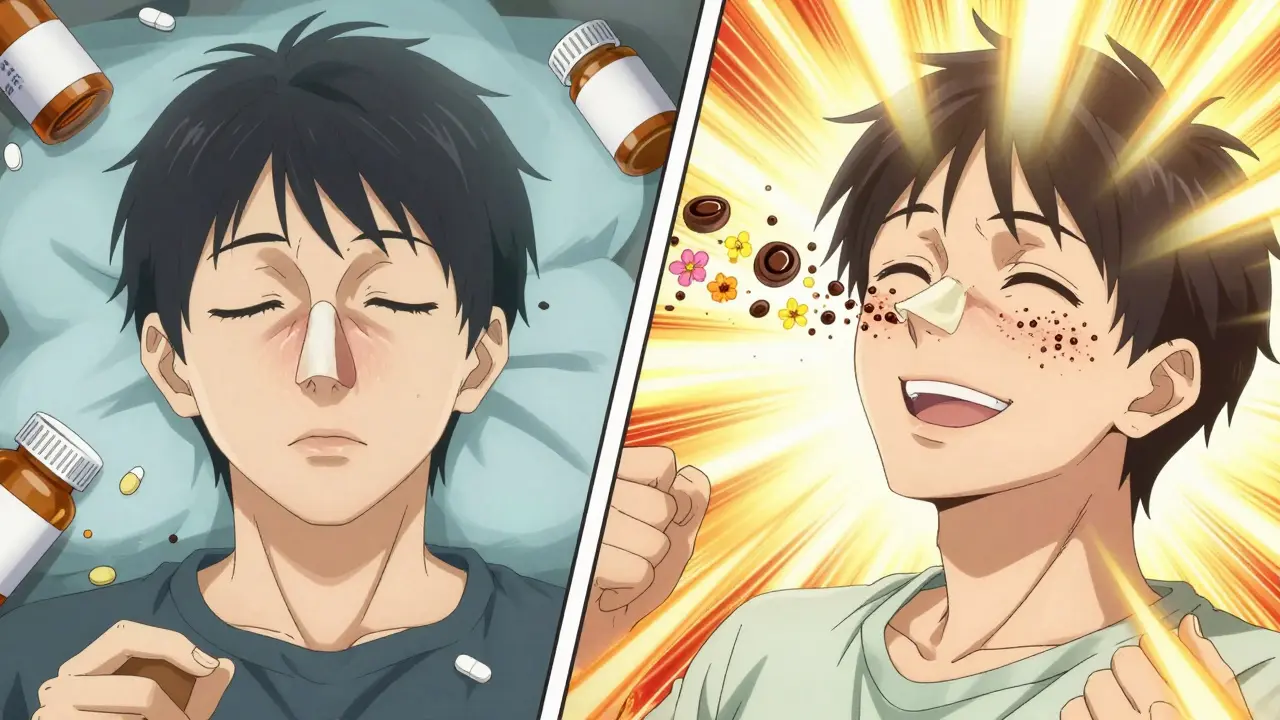
Long-term studies show this approach cuts the need for oral steroid bursts from over four per year to just one. It reduces polyp recurrence after surgery from 85% to 35% within two years. People who stick with it report better breathing, fewer sinus infections, and most importantly - their sense of smell returns. One study showed smell test scores jumped from 12.4 to 23.7 out of 40 after desensitization.
It’s not perfect. Missing two or three days of aspirin means you have to go through the whole desensitization process again. About 68% of people who miss doses lose their tolerance. And 22% develop stomach issues - heartburn, ulcers - that require dose adjustments or protective medications like proton pump inhibitors.
Why Surgery Alone Isn’t Enough
Functional endoscopic sinus surgery (FESS) clears blocked sinuses and removes polyps. Most patients feel better right after - clearer breathing, less pressure, improved smell. But without aspirin desensitization, polyps come back in 60 to 70% of cases within 18 months.
Combine FESS with daily aspirin therapy, and recurrence drops to 25 to 30% at the two-year mark. That’s a 65% reduction in polyp regrowth compared to surgery alone. Experts at Brigham and Women’s Hospital call this combination the gold standard. Dr. Tanya Laidlaw, who leads their AERD program, says it’s the only treatment that truly changes the disease’s long-term path.

Who Shouldn’t Try Desensitization?
Not everyone is a candidate. If you have unstable heart disease, active peptic ulcers, or a history of severe gastrointestinal bleeding, aspirin is too risky. If you can’t commit to taking it every single day - no skipping, no "I’ll just take it tomorrow" - then desensitization isn’t safe for you.
About 15% of people who might benefit are ruled out because of these factors. Some patients also can’t tolerate the daily aspirin side effects, even with stomach protection. In those cases, biologics like dupilumab become the primary long-term option.
Access and Real-World Challenges
Only 35 centers in the U.S. specialize in AERD desensitization. Most are at major academic hospitals. If you live in a rural area, you might need to drive over 100 miles for care. Telemedicine has helped - 35% more patients accessed specialists since 2020 - but it can’t replace in-person challenges or surgery.
Even among allergists, only 18% feel confident managing AERD. That means many patients go undiagnosed or get mismanaged for years. If your doctor says "just avoid NSAIDs" and doesn’t mention desensitization or biologics, you might need a second opinion.
What Patients Say: Real Stories
On patient forums like AERD Warriors and Reddit’s r/SamtersTriad, people share what works. Many describe crying the first time they smelled coffee again after years of anosmia. Others talk about finally sleeping through the night without needing extra pillows.
But there are frustrations too. The aspirin challenge can be terrifying - 32% of patients say it felt like they were going to die. The cost of biologics is a constant worry. And hidden NSAIDs in cold medicines? A big trap. One patient lost her desensitization after taking a "non-drowsy" cold pill that had ibuprofen in it.
Practical tips from the community: always take aspirin with food to protect your stomach. Use saline rinses with a drop of tea tree oil to fight fungal buildup. Check every OTC medicine label - even aspirin-free doesn’t mean NSAID-free.
The Future of AERD Treatment
New drugs are on the horizon. MN-001 (tipelukast), a dual-action inhibitor, showed a 60% drop in leukotrienes in early trials. Combining dupilumab with aspirin therapy gives even better results than either alone. Regulatory agencies are now standardizing desensitization protocols, which should make it safer and more widely available.
Health economists estimate that full AERD management - surgery, aspirin, and biologics - could save $87,000 per patient over their lifetime by cutting hospital visits and repeat surgeries. But access remains unequal. Only 22% of rural patients can reach a specialist within 100 miles.
The message is clear: AERD is manageable - but only if you get the right care at the right time. Don’t settle for temporary fixes. Ask about desensitization. Push for biologics if you’re not improving. Your breathing - and your sense of smell - are worth fighting for.
Ian Long
January 9 2026Finally someone broke this down without the medical jargon soup. I’ve had polyps for 8 years and was told to ‘avoid NSAIDs’ like it was a diet. Turns out I needed a whole damn strategy. This post saved me years of guessing.
Diana Stoyanova
January 9 2026OMG I cried reading this. I lost my sense of smell for 11 years-couldn’t smell coffee, my kid’s shampoo, rain on pavement… then I did the desensitization at Johns Hopkins. First time I smelled my own perfume again? I screamed in the parking lot. This isn’t just treatment-it’s resurrection. 🥹✨
Heather Wilson
January 9 2026Let’s be real-this is just pharmaceutical industry propaganda dressed as medicine. Aspirin is a poison. The body doesn’t need to be ‘desensitized’ to toxins-it needs to be healed. You’re conditioning people to accept chronic inflammation as normal. This is not science. It’s compliance.
Micheal Murdoch
January 10 2026Heather, I hear you-but you’re conflating intervention with coercion. Desensitization isn’t about accepting inflammation-it’s about retraining the immune system’s overreaction. Think of it like physical therapy for your airways. You wouldn’t tell someone with a torn ACL to just avoid walking. You’d help them heal. This is the same principle.
Darren McGuff
January 10 2026UK has had a national AERD pathway since 2019. We’ve cut surgery recurrence rates by 50% in three years just by standardizing aspirin therapy post-op. The science is solid. If your doc hasn’t mentioned this, they’re operating on 2008 knowledge. Push harder.
Jenci Spradlin
January 11 2026Just a heads up-some OTC cold meds say ‘aspirin-free’ but still have naproxen or celecoxib. I missed my dose once after taking one of those and lost my desensitization. Took 6 months to get back on track. READ THE LABELS. Even ‘natural’ stuff can hide NSAIDs.
Alicia Hasö
January 12 2026If you’re reading this and you’ve been told ‘just avoid ibuprofen’-you’re being failed. AERD isn’t an allergy. It’s a systemic inflammatory disorder. You need a specialist. Don’t take ‘no’ from your PCP. Find an allergist who does desensitization. Your nose and lungs are worth fighting for. You’re not crazy. You’re just undiagnosed.
tali murah
January 13 2026Of course the rich can afford dupilumab. $30,000 a year? That’s not healthcare-it’s a luxury subscription. Meanwhile, I’m choosing between my asthma inhaler and my kid’s school supplies. This whole system is a joke. They sell you hope and then charge you for the hope.
Catherine Scutt
January 14 2026Wow. Another ‘miracle cure’ post. Next they’ll tell us to drink celery juice for asthma. This reads like a pharma ad. Where’s the long-term data? 2-year studies? What about 10-year outcomes? Where’s the control group? This isn’t medicine-it’s marketing.
Gregory Clayton
January 16 2026Y’all are overcomplicating this. I took aspirin daily after surgery. Polyps didn’t come back. Smell came back. Done. Stop talking. Start taking the damn pill. Also, tea tree oil in saline? That’s a myth. Just use salt water. Stop listening to Reddit gurus.
Aron Veldhuizen
January 17 2026Let me ask you this: if the body produces excess leukotrienes, why do we assume suppressing them with drugs is better than addressing the root cause? Why not look at gut microbiome dysbiosis? Or chronic mold exposure? Or vitamin D deficiency? We’re treating symptoms like a broken faucet while ignoring the pipe that’s rusted shut. This is reductionist medicine at its finest.
And don’t get me started on aspirin desensitization. You’re literally poisoning yourself to ‘train’ your body? That’s not healing. That’s Stockholm syndrome with a prescription pad. What happens when you get sick and can’t take aspirin for 3 days? You’re back to square one. That’s not a cure. That’s a dependency.
And yet nobody asks why this condition exploded in the last 30 years. Coincidence? Or did we poison our environment, our food, our air? We’re treating the symptom, not the source. We’re medicating the symptoms of a broken world.
Maybe we need less drugs and more clean air. Less pills and more soil. Less suppression and more restoration. But that’s not profitable. So we sell you aspirin. And hope.
I’m not saying desensitization doesn’t work. I’m saying we’ve stopped asking why it’s needed in the first place.
Maggie Noe
January 18 2026My mom did the aspirin challenge and cried the whole time. She said it felt like her lungs were being crushed by a truck. But now? She smells her garden again. 🌷 She’s 68. I told her it was worth it. She said, ‘I’d do it again if I had to.’ That’s the real story. Not the stats. Not the cost. The smell of lilacs after 20 years. 💙
Patty Walters
January 18 2026Just wanted to say-saline rinse with budesonide? Make sure you use a neti pot with distilled water. I got a rare brain infection from tap water once. Don’t be like me. 🙏
Phil Kemling
January 18 2026It’s fascinating how we’ve pathologized inflammation. We treat it like an enemy to be eradicated. But inflammation is just the body’s language. Maybe AERD isn’t a malfunction-it’s a miscommunication. What if we listened instead of silenced? What if we asked: why now? Why here? Why this body?
Desensitization works. But maybe it’s not because we’re retraining the immune system. Maybe it’s because we’re giving it a voice. Aspirin doesn’t cure AERD. It gives the body a chance to speak again.
Alicia Hasö
January 19 2026Phil, that’s the most beautiful way I’ve ever heard it put. We don’t need to silence the body. We need to translate it. That’s what aspirin therapy does-it gives the immune system a chance to relearn the language. Not suppress. Not destroy. Translate.