
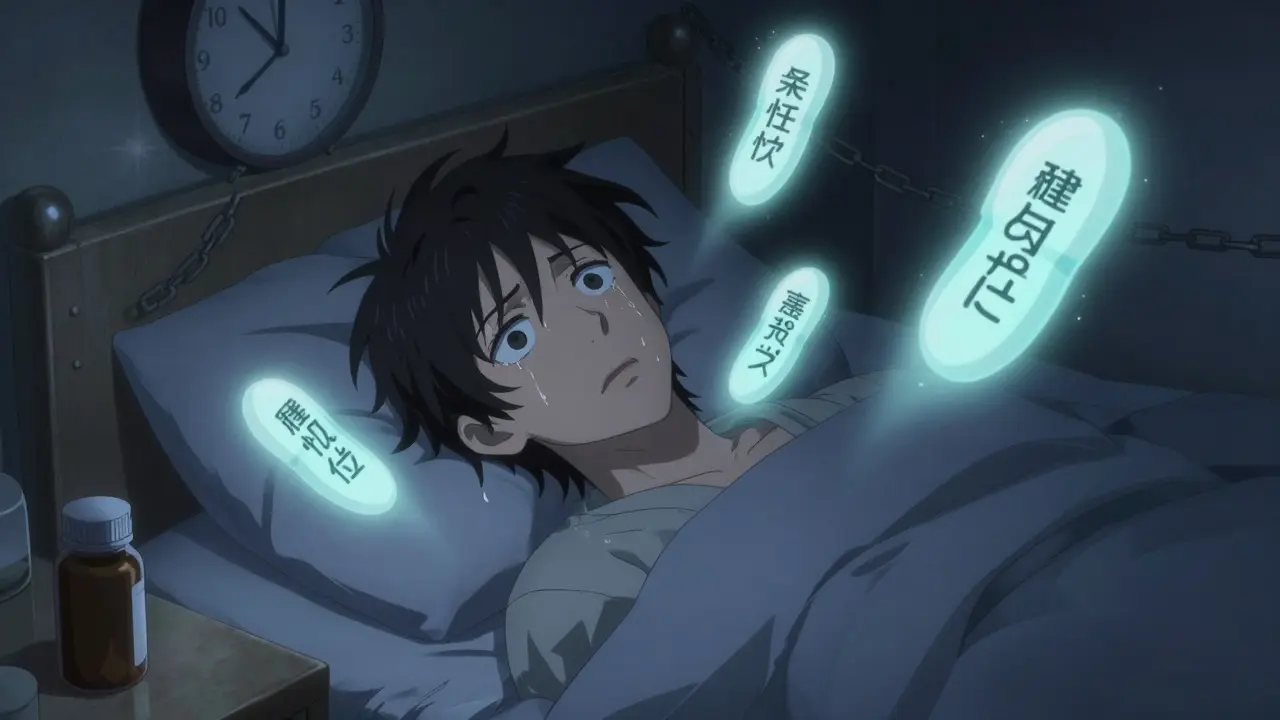
Everyone’s had that night - lying awake, heart racing, mind spinning. You reach for the bottle of pills in the bathroom cabinet. It’s just a little help, you tell yourself. Just this once. But what happens when "just this once" becomes a habit? OTC sleep aids are everywhere: on pharmacy shelves, in online carts, in grandma’s medicine cabinet. They promise rest. But do they deliver - and at what cost?
What’s Actually in These Pills?
Most over-the-counter sleep aids fall into two groups: antihistamines and supplements. The big names you see - Benadryl, Sominex, Nytol, Unisom - all contain either diphenhydramine or doxylamine. These aren’t sleep drugs. They’re allergy pills that make you drowsy as a side effect. They work by blocking histamine, a brain chemical that keeps you alert. It’s like putting a blanket over your wakefulness.
The other group? Melatonin, valerian root, chamomile. These are sold as supplements, not drugs. That means they don’t go through the same strict testing as prescription or OTC medications. A 2017 study found that melatonin pills contained anywhere from 83% less to 478% more melatonin than what was printed on the label. One pill might have 0.5mg. Another, even if it says the same thing, could have 5mg. You’re guessing what you’re taking.
How Much Do They Actually Help?
Let’s be honest - the benefits are small. According to clinical trials reviewed by Harvard Medical School, OTC sleep aids reduce the time it takes to fall asleep by just 3 to 13 minutes. Total sleep time increases by 20 to 60 minutes. That’s less than an episode of your favorite show. For most people, that’s not worth the next-day fog.
And here’s the kicker: they don’t improve sleep quality. You might fall asleep faster, but you’re not getting deeper, restorative sleep. Your brain doesn’t cycle properly through REM and slow-wave stages. That’s why you wake up feeling like you didn’t sleep at all - even if you were out for eight hours.
People on Reddit swear by diphenhydramine for jet lag or stress-induced insomnia. One user said it helped them fall asleep in 20 minutes when they were overwhelmed. That’s real. But another user said after six months of nightly melatonin, they couldn’t sleep without it - and when they stopped, their insomnia came back worse. That’s rebound insomnia, and it affects about 30% of people who use these aids for more than two weeks straight.
The Hidden Risks - It’s Not Just Drowsiness
Antihistamine-based sleep aids like diphenhydramine and doxylamine are in a class of drugs called anticholinergics. That’s a fancy word for “things that mess with your nervous system.” And long-term use? It’s linked to higher dementia risk. A 2015 study tracking over 3,400 people for more than seven years found that those who took anticholinergic meds regularly had a 54% higher chance of developing dementia.
Side effects aren’t rare. In fact, they’re common:
- Dry mouth (32% of users)
- Blurred vision (18%)
- Constipation (24%)
- Urinary trouble - especially dangerous for men with enlarged prostates
- Confusion and memory lapses - scary common in older adults
And if you’re over 65? The American Geriatrics Society says these drugs are “potentially inappropriate.” Why? Because they increase your risk of falling by 50%. One stumble, one hip fracture - and your life changes forever.
Melatonin isn’t harmless either. People report vivid dreams, nightmares, and even hallucinations. A 2022 review found 68% of users had strange dreams. Daytime drowsiness? That’s 45%. Nausea? 19%. Dizziness? 28%. And yes - bedwetting in kids. That’s not a myth. It’s documented.
The NHS warns that melatonin can cause pain in your arms or legs. If it doesn’t go away in a few days? Stop taking it. No one tells you that on the bottle.

Who Should Avoid These Completely?
If you have sleep apnea, don’t touch these. OTC sleep aids relax your throat muscles - and that makes breathing interruptions worse. You could be putting yourself at risk for serious complications.
Pregnant women? The FDA says diphenhydramine is Category B - no proven harm, but not enough data. Melatonin? Almost no safety data in pregnancy. Better to skip it.
People on other medications? Big red flag. Antihistamines can interact with antidepressants, blood pressure meds, and even some heart drugs. Melatonin can interfere with blood thinners and diabetes meds. Always check with a pharmacist before combining anything.
How Long Is “Safe” to Use Them?
The label says: “Do not use for more than two weeks.” That’s not a suggestion. That’s a warning. Yet a 2022 survey found that 38% of users go past that limit. Nearly 20% use them for over a month.
Why does it matter? Because your body adapts. After 10 days of daily use, about 25% of people start needing more to get the same effect. That’s tolerance. Then comes dependence. Then comes rebound insomnia - where your sleep gets worse than before you started.
For melatonin, the European Food Safety Authority says 1mg is enough for most adults. Higher doses don’t help - they just increase side effects. Yet most bottles sell 3mg, 5mg, even 10mg. You’re not helping yourself. You’re overdosing.
The Cleveland Clinic says this clearly: if you still can’t sleep after two weeks, talk to a doctor. Don’t keep doubling up. Don’t switch brands. Don’t mix with alcohol. You’re not fixing the problem. You’re masking it.
What Should You Do Instead?
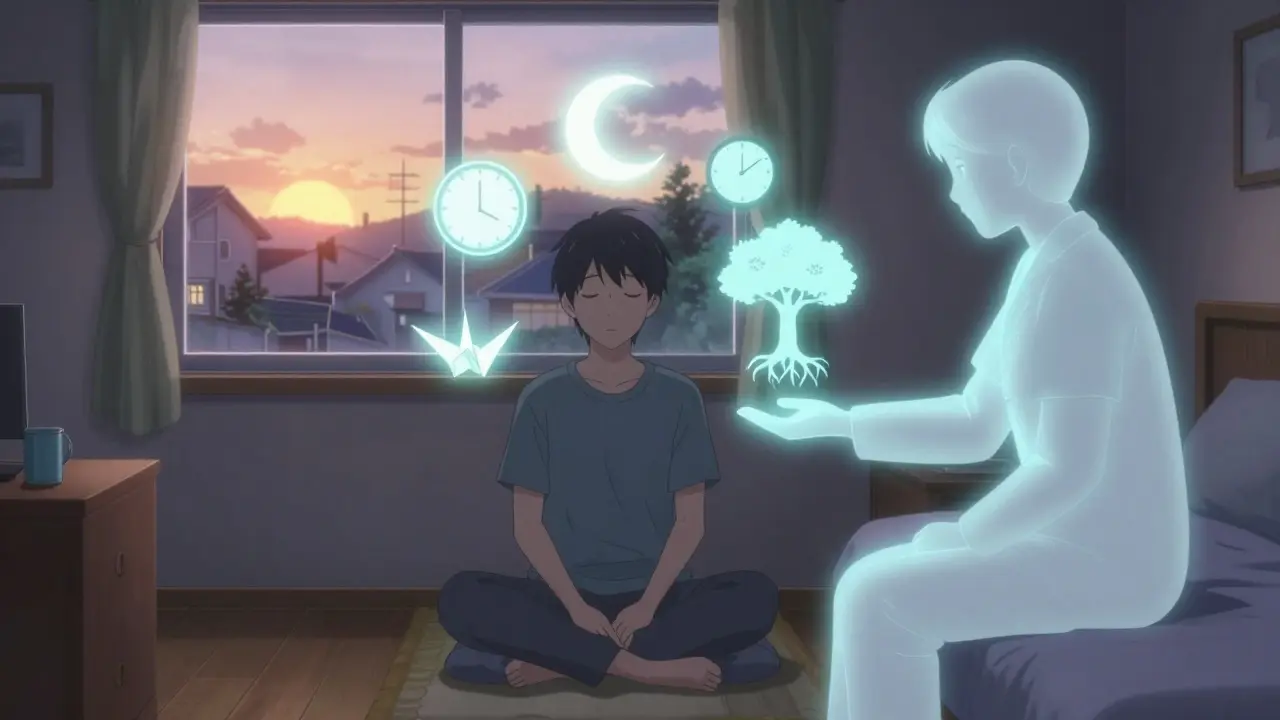
The best treatment for chronic insomnia isn’t a pill. It’s CBT-I - Cognitive Behavioral Therapy for Insomnia. It’s not magic. It’s work. But it works. Studies show 70-80% of people who stick with it see lasting improvement. No side effects. No dependence. No next-day grogginess.
What does CBT-I involve? Restricting time in bed to match actual sleep. Fixing your sleep schedule. Learning to quiet your mind. Changing habits that sabotage rest - like scrolling in bed or drinking coffee after 2pm. It’s not quick. But it lasts.
And before you say, “I don’t have time for therapy” - many programs are online. Some are even covered by insurance. The National Institutes of Health is now funding research to find biomarkers that predict who responds to what treatment. The future of sleep isn’t pills. It’s personalization.
Bottom Line: Use Only When You Must
OTC sleep aids aren’t evil. Sometimes, they help - for a night or two. Jet lag. A stressful week. A change in schedule. Fine. Use them sparingly. Stick to the lowest dose. Never take them nightly. And never use them longer than two weeks.
But if you’ve been relying on them for months? You’re not sleeping better. You’re masking a deeper problem. Anxiety. Poor sleep habits. Undiagnosed sleep apnea. A medical condition. A pill won’t fix that.
Next time you reach for the bottle, ask yourself: Am I trying to fix sleep - or just escape the night?
Can I take OTC sleep aids every night?
No. Medical guidelines say OTC sleep aids should not be used for more than 7 to 10 consecutive days, and never longer than two weeks without consulting a doctor. Using them nightly increases the risk of tolerance, dependence, rebound insomnia, and serious side effects like confusion, falls, and long-term cognitive decline.
Is melatonin safer than antihistamines like diphenhydramine?
Melatonin doesn’t carry the same dementia or fall risk as antihistamines, but it’s not risk-free. It can cause vivid dreams, daytime drowsiness, headaches, nausea, and even bedwetting in children. Plus, because it’s sold as a supplement, dosing is unreliable - many products contain far more or less than labeled. For most adults, 0.5mg to 1mg is enough. Higher doses offer no extra benefit and increase side effects.
Why do I feel groggy all day after taking OTC sleep aids?
Antihistamines like diphenhydramine and doxylamine have long half-lives - meaning they stay in your system for hours. Even if you sleep 8 hours, the drug is still active in your bloodstream the next morning. This causes daytime drowsiness, brain fog, and reduced reaction time. Studies show 42% of users report moderate to severe next-day grogginess. It’s not just you - it’s the medicine.
Can OTC sleep aids make insomnia worse?
Yes. If you use them for more than two weeks, your body may develop tolerance - needing more to get the same effect. When you stop, rebound insomnia can occur, where sleep problems return worse than before. About 30% of long-term users experience this. It’s not a coincidence. It’s a known effect of disrupting your natural sleep rhythm with medication.
What’s the best alternative to OTC sleep aids?
Cognitive Behavioral Therapy for Insomnia (CBT-I) is the gold standard. It’s recommended by the American Academy of Sleep Medicine as the first-line treatment. Studies show 70-80% of people improve with CBT-I, and the results last - unlike with pills. Many online programs are available, some covered by insurance. Simple changes like fixing your sleep schedule, avoiding screens before bed, and only using the bed for sleep can make a huge difference.
Are OTC sleep aids safe for older adults?
No. The American Geriatrics Society’s Beers Criteria lists first-generation antihistamines like diphenhydramine as “potentially inappropriate” for people over 65. They increase the risk of falls by 50%, confusion by 60%, and are linked to long-term cognitive decline. Even melatonin can cause dizziness and disorientation in older adults. Non-drug approaches like CBT-I are safer and more effective.
Final Thought: Sleep Isn’t a Problem to Fix - It’s a Habit to Restore
You don’t need a pill to sleep. You need consistency. Quiet. Routine. Safety. The best sleep aid you own isn’t in the medicine cabinet. It’s your bedroom - dark, cool, screen-free, and reserved only for rest. Start there. Then, if you still struggle, talk to someone who understands sleep - not just pills. Your brain will thank you.
Janette Martens
December 29 2025i cant believe people still buy this crap. my grandma takes benadryl every night and now she forgets her own name. the pharmacy just sells it like candy. no one cares about the long term damage.
canada should ban this shit.
Marie-Pierre Gonzalez
December 30 2025Thank you for this thorough and deeply important post. I have been advocating for non-pharmacological sleep solutions for years, and it is heartbreaking to see so many vulnerable individuals relying on OTC medications without understanding the risks.
May I respectfully suggest that readers explore the Sleepio program? It is evidence-based, accessible, and has transformed lives without a single pill. Your brain deserves better than chemical sedation.
Louis Paré
December 30 2025So let me get this straight - you’re telling me the entire pharmaceutical industry is just scamming old people with allergy pills labeled as sleep aids? Wow. Groundbreaking.
Meanwhile, the real issue is that modern life has turned us into anxious, screen-addicted zombies who can’t sit still for five minutes without needing a chemical crutch. The problem isn’t the pill. It’s the culture that made the pill necessary.
Samantha Hobbs
January 1 2026i took melatonin for 6 months and now i cant sleep without it. i feel like a zombie. also my dreams were so weird i started talking in my sleep. my bf recorded me saying "the moon is made of cheese" and i had no idea. lol
Nicole Beasley
January 2 2026This is so important 😭 I had no idea melatonin doses were so unreliable. I’ve been taking 5mg thinking "more must be better"... no wonder I wake up with nightmares and a headache. Going to switch to 0.5mg tomorrow 🙏💤
sonam gupta
January 3 2026india has better sleep culture than usa you people are addicted to pills because you dont meditate dont walk dont breathe
Julius Hader
January 4 2026I’m not saying you’re wrong, but if you’re taking OTC sleep aids because you’re stressed, maybe the real solution isn’t a pill - it’s therapy, or a change in lifestyle. I used to pop Unisom every night until I started journaling before bed. It’s not magic, but it works. And no, I don’t need a prescription to feel better.
Vu L
January 4 2026Cognitive Behavioral Therapy? Yeah right. That’s what you say when you’re too lazy to just take a pill and get some damn sleep. I’ve tried all that mindfulness crap. Still wide awake at 3am. Give me the diphenhydramine any day.
James Hilton
January 6 2026Americans: We invented the internet, the smartphone, and now we’ve perfected the art of medicating normal human exhaustion.
Meanwhile, the rest of the world is like: "Wait… you sleep with your phone? In bed? And you’re surprised you’re tired?"
Mimi Bos
January 6 2026i read this and i just cried. i didnt even know melatonin wasnt regulated. i thought it was like vitamins. my mom takes it every night and shes 72. i need to talk to her. thanks for this
Kelsey Youmans
January 7 2026The data presented here is both compelling and alarming. I would urge all readers to consult with a certified sleep specialist before continuing any long-term use of over-the-counter pharmacological agents. Sleep architecture is a complex physiological process, and its disruption carries profound implications for neurocognitive health.
Sydney Lee
January 8 2026It’s not just the pills - it’s the entire medical-industrial complex that has normalized chemical sedation as a solution to modern stress. The fact that we’ve turned insomnia into a consumer product is a moral failure.
And yet, the FDA allows melatonin to be sold with no dosage control? This isn’t healthcare. It’s corporate negligence dressed up as wellness.
oluwarotimi w alaka
January 9 2026this is all a distraction. the real reason people cant sleep is because the government is poisoning the water with fluoride and 5g towers are messing with our brain waves. they dont want you to sleep well so you stay docile. check the research. its all connected.
Debra Cagwin
January 10 2026To anyone reading this and feeling overwhelmed - you’re not broken. You’re not lazy. You’re just exhausted by a world that never lets you rest.
Start small. Turn off your phone an hour before bed. Drink chamomile tea. Sit in silence. You don’t need a pill to deserve peace. You just need to give yourself permission to try.
Hakim Bachiri
January 11 2026I’ve been using diphenhydramine for 18 months. I know it’s "not recommended," but I’ve tried CBT-I, yoga, meditation, weighted blankets, white noise, lavender oil, and even hypnosis. Nothing worked. I’m not going to lie awake because some "expert" says I should "restore my sleep habits." My brain is fried. Let me have my 10mg and my 7 hours of numbness. I’ll take the dementia later.