

You take a deep breath. It feels shallow. You try to walk up the stairs, but your chest tightens, and you have to stop. If this sounds familiar, it might not be just "getting older" or being out of shape. It could be Interstitial Lung Disease, also known as ILD. This is a broad term for over 200 conditions that cause inflammation and progressive scarring in your lungs.
Most people don’t know about ILD until they are already struggling to breathe. The damage happens in the interstitium-the delicate tissue surrounding the air sacs (alveoli) where oxygen enters your blood. When this tissue scars, it gets thick and stiff. Imagine trying to inflate a balloon made of rubber versus one made of thick leather. That’s what happens to your lungs with ILD. They lose their elasticity, making every breath a fight.
What Is Interstitial Lung Disease and Why Does It Happen?
Think of your lungs as a complex sponge. In a healthy lung, the walls between the air sacs are thin-less than 0.1mm. This allows oxygen to pass easily into your bloodstream. In ILD, these walls thicken due to fibrosis (scarring). In advanced cases, this tissue can become 1-2mm thick or more. This physical change restricts how much your lungs can expand and slows down gas exchange.
There isn’t just one cause. Doctors group these disorders based on what triggers the scarring:
- Idiopathic: We don’t know the cause. This includes Idiopathic Pulmonary Fibrosis (IPF), which accounts for 20-30% of all ILD cases.
- Autoimmune: Conditions like rheumatoid arthritis or lupus can attack lung tissue.
- Environmental/Occupational: Breathing in asbestos, silica dust, or bird droppings over time can lead to scarring. This represents 15-20% of cases globally.
- Drug-induced: Certain chemotherapy drugs or heart medications can trigger lung inflammation.
The scary part? The scarring is usually irreversible. Once the tissue turns to scar, it doesn’t heal back to normal sponge-like tissue. However, knowing the specific type matters immensely because some forms progress slowly, while others move fast.
Spotting the Symptoms: Beyond Just Shortness of Breath
ILD often creeps up on you. It doesn’t announce itself with sudden pain. Instead, you notice small changes that get worse over months or years. The most common symptom is dyspnea-shortness of breath. At first, it only happens when you exercise. Later, it happens when you’re just sitting still.
Look out for these specific signs:
- Persistent Dry Cough: About 78% of patients report a nagging cough that doesn’t produce mucus. It’s different from a cold; it won’t go away.
- Fatigue: Your body is working overtime to get oxygen, so you feel exhausted even after sleeping well.
- Chest Discomfort: A vague ache or tightness in the chest area.
- Fingertip Clubbing: In about 35-50% of IPF cases, the fingertips widen and the nails curve downward. This is a strong visual clue for doctors.
- Weight Loss: Losing more than 5% of your body weight without trying is common in advanced stages.
If you ignore these signs, thinking it’s just asthma or aging, you risk losing precious time. Early detection is the single biggest factor in slowing progression.
How Do Doctors Diagnose ILD?
Getting a correct diagnosis can be frustrating. Studies show that 25-30% of ILD cases are misdiagnosed initially. Many people are told they have asthma or COPD before the truth comes out. The average time from first symptom to correct diagnosis is over 11 months.
Here is the standard diagnostic path:
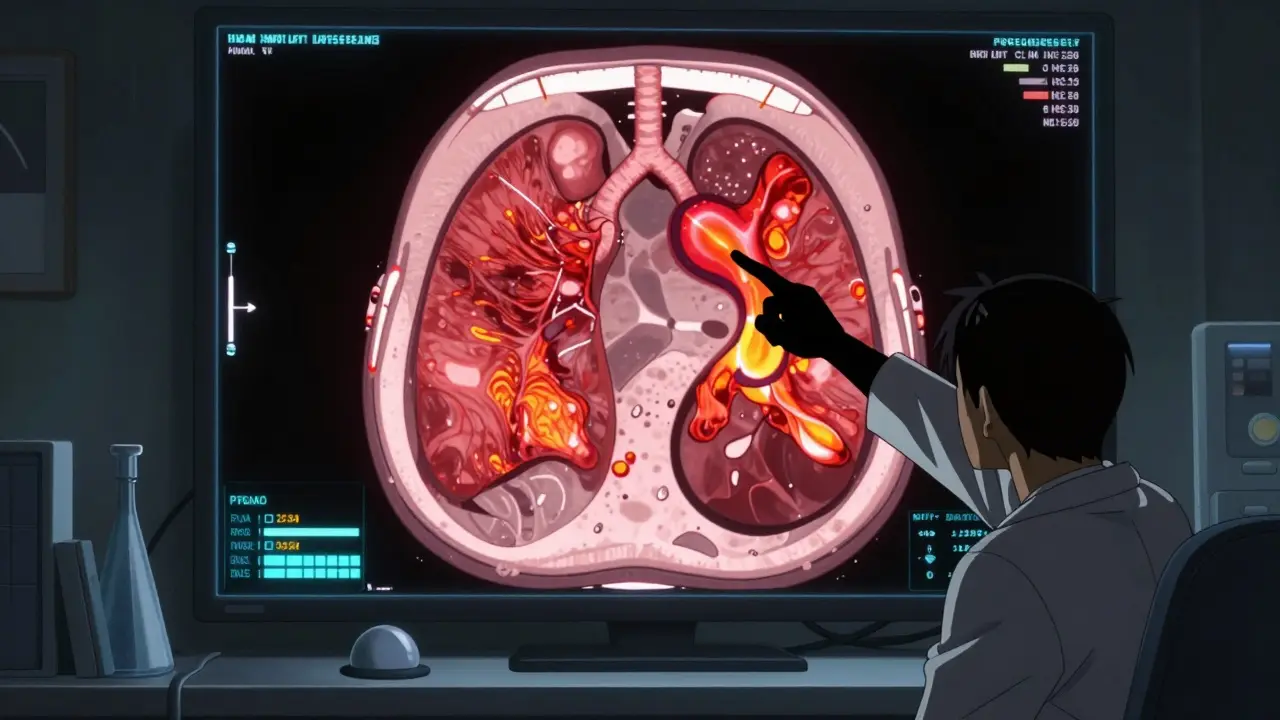
- High-Resolution CT Scan (HRCT): This is the gold standard. Unlike a regular X-ray, an HRCT uses 1mm slices to see the fine details of lung tissue. It can spot subtle patterns of scarring that other scans miss.
- Pulmonary Function Tests (PFTs): You blow into a machine to measure how much air your lungs hold and how well oxygen moves into your blood. In ILD, tests usually show a "restrictive pattern"-meaning your lung capacity is reduced.
- Multidisciplinary Discussion: Because ILD is complex, a team of pulmonologists, radiologists, and pathologists reviews your case together. This reduces error rates significantly.
New technology is helping here too. AI-assisted analysis of CT scans is now showing 92% accuracy in distinguishing ILD subtypes, compared to 78% for expert radiologists alone. Blood biomarker testing, such as checking for the MUC5B gene variant, is also becoming a key tool for predicting how fast the disease might progress.
Treatment Options: Slowing the Scarring
While we can’t reverse existing scars, we can slow down new ones. The goal of treatment is to preserve lung function and keep you active. Treatment depends heavily on the specific type of ILD you have.
| Treatment Type | Best For | Key Benefit | Common Side Effects |
|---|---|---|---|
| Antifibrotic Drugs (Nintedanib/Pirfenidone) | Idiopathic Pulmonary Fibrosis (IPF) | Slows FVC decline by ~50% | Nausea, diarrhea, photosensitivity |
| Corticosteroids/Immunosuppressants | Inflammatory ILD (e.g., Sarcoidosis, Autoimmune) | Reduces inflammation rapidly | Weight gain, bone thinning, infection risk |
| Oxygen Therapy | All types with low saturation (<88%) | Improves energy, protects heart | Nasal dryness, dependency anxiety |
| Pulmonary Rehabilitation | All stable ILD patients | Increases walking distance by 45-60m | Initial muscle soreness |
Medications
For IPF, two main drugs are used: Nintedanib (Ofev) and Pirfenidone (Esbriet). These are antifibrotics-they target the biological processes that cause scarring. Clinical trials show they can cut the rate of lung function decline in half over a year. However, they come with side effects. About 65% of Pirfenidone users experience sensitivity to sunlight, and nearly 60% deal with stomach issues. Managing these side effects is part of the daily routine.
For inflammatory types of ILD (like those linked to rheumatoid arthritis), steroids and immunosuppressants are the first line of defense. These calm the immune system’s attack on the lungs. But they aren’t effective for pure fibrosis like IPF, which is why getting the right subtype diagnosis is critical.
Oxygen and Rehabilitation
If your blood oxygen levels drop below 88%, you’ll need supplemental oxygen. This isn’t a sign of failure; it’s a tool to keep your heart and brain healthy. About 55% of IPF patients need oxygen within two years of diagnosis.
Equally important is pulmonary rehabilitation. This isn’t just "exercise." It’s a structured program of 24-36 sessions over 8-12 weeks. It teaches you breathing techniques, energy conservation, and strength training. Data shows participants improve their 6-minute walk distance by an average of 45-60 meters. That extra distance means you can carry groceries or play with your grandkids longer.
Living with ILD: Practical Tips for Daily Life
Diagnosis brings fear, but it also brings clarity. Here is how to manage life with ILD:
- Conserve Energy: Learn to pace yourself. Sit down while showering or cooking. Use a rolling cart for shopping. Small adjustments save big bursts of oxygen later.
- Manage Side Effects: If you’re on Pirfenidone, wear hats and sunscreen. Eat smaller, frequent meals if nausea is an issue. Talk to your doctor about adjusting doses rather than stopping meds.
- Vaccinations: Protect your lungs from infections. Get flu shots and pneumonia vaccines annually. An infection can trigger an acute exacerbation-a sudden worsening of symptoms that can be dangerous.
- Mental Health: Anxiety is common. 68% of patients report significant worry about breathlessness. Joining a support group or seeing a therapist who understands chronic illness can help you cope with the uncertainty.
Don’t isolate yourself. Social engagement drops for many patients due to oxygen tanks or fatigue, but staying connected improves overall quality of life. Modern portable oxygen concentrators are lighter and quieter, making it easier to leave the house.

The Future of ILD Care
Research is moving faster than ever. In 2023, the FDA approved Zampilodib, a new drug with a different mechanism of action, offering hope for patients who didn’t respond to older treatments. Scientists are also looking at stem cell therapies and genetic profiling to create personalized treatment plans.
Early detection is the next frontier. Pilot studies suggest that screening high-risk groups (smokers, people with autoimmune diseases) using blood biomarkers and targeted CT scans could cut diagnosis time by 40%. If you have risk factors, ask your doctor about screening. Don’t wait for symptoms to become severe.
Frequently Asked Questions
Is Interstitial Lung Disease curable?
In most cases, no. The scarring (fibrosis) in the lungs is generally irreversible. However, many forms of ILD can be managed effectively. Medications can slow progression, and treatments like oxygen therapy and pulmonary rehab can maintain quality of life. Some specific types, like certain drug-induced ILDs, may improve if the cause is removed early.
What is the life expectancy with Idiopathic Pulmonary Fibrosis (IPF)?
Without treatment, the median survival for IPF is often cited as 3-5 years from diagnosis. However, this number is changing. With newer antifibrotic drugs and better supportive care, many patients live longer. Survival varies greatly depending on age, lung function at diagnosis, and response to medication. Always discuss your specific prognosis with your specialist.
Can smoking cause Interstitial Lung Disease?
Yes. Smoking is a major risk factor for several types of ILD, including IPF and respiratory bronchiolitis-associated interstitial lung disease. If you smoke, quitting is the most important step you can take to prevent further damage. Even if you’ve smoked for years, stopping helps reduce inflammation and slows disease progression.
What are the side effects of Nintedanib and Pirfenidone?
Both drugs are effective but come with side effects. Nintedanib commonly causes diarrhea, nausea, and liver enzyme changes. Pirfenidone often leads to photosensitivity (sunburn easily), nausea, loss of appetite, and rash. Most side effects can be managed with dose adjustments or supportive medications. Never stop taking them without consulting your doctor.
When should I use supplemental oxygen?
You typically need oxygen when your resting blood oxygen saturation (SpO2) drops below 88%, or if it drops significantly during activity. Using oxygen when needed reduces strain on your heart and improves energy levels. Your doctor will determine the right flow rate through pulse oximetry tests. Portable units allow you to stay active outside the home.
Does pulmonary rehabilitation really help?
Yes, extensively. Pulmonary rehab is considered a cornerstone of ILD management. It combines exercise training, education, and behavioral changes. Studies show it improves exercise tolerance, reduces breathlessness perception, and enhances mental well-being. It’s not a cure, but it gives you more control over your daily activities.