
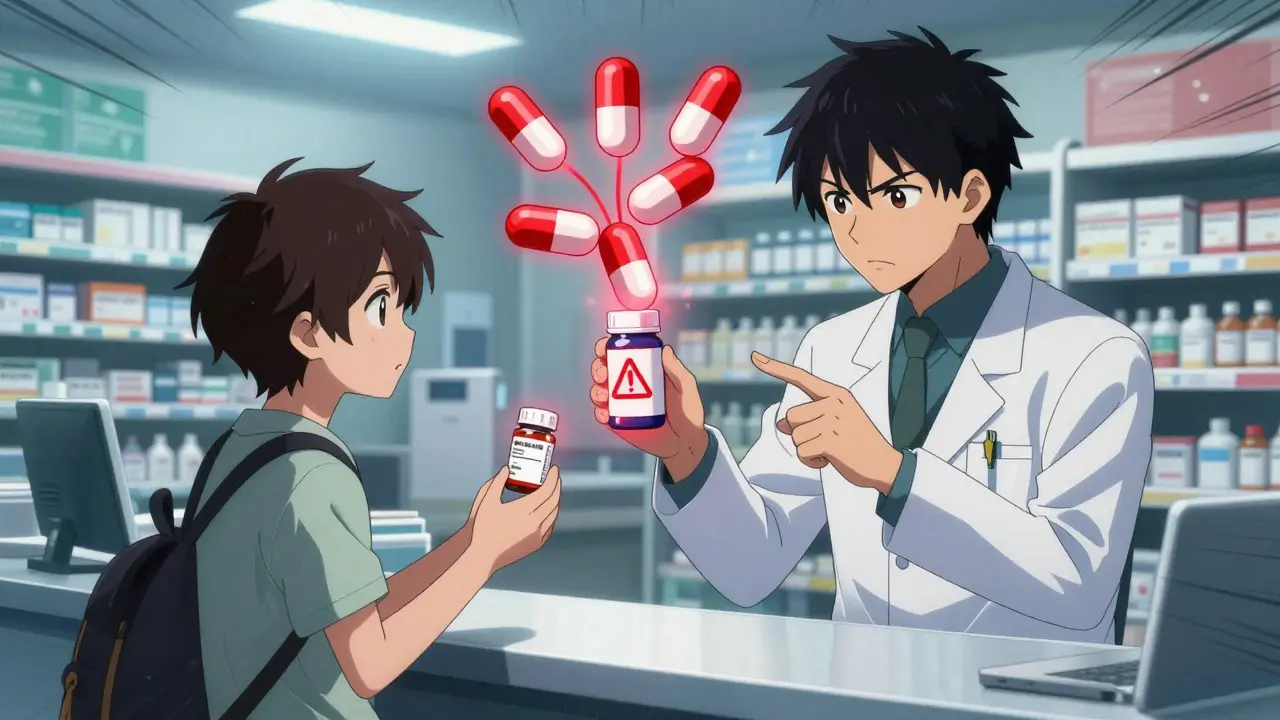
You’re standing at the pharmacy counter, holding a prescription for a statin. The pharmacist pauses, frowning slightly at the label. Is this a warning about all statins, or just the specific one you’ve been prescribed? It’s a question that keeps popping up in clinics and living rooms alike. With over 22 million adverse event reports sitting in the FDA’s Adverse Event Reporting System (FAERS) as of 2023, distinguishing between risks that apply to an entire family of drugs versus those unique to a single agent is no longer just academic-it’s critical for patient safety.
If you get this wrong, you might abandon a safe medication because of a scare caused by its chemical cousin, or worse, ignore a serious risk because you assumed it was isolated to a discontinued brand. Understanding how regulators draw these lines helps you navigate the noise of pharmaceutical news without falling into alert fatigue.
The Core Difference: Mechanism vs. Molecule
At its heart, the distinction comes down to why the side effect happens. A class-wide alert signals a risk inherent to the drug’s mechanism of action-the way it interacts with your body’s biology. If every drug in the class hits the same biological target, they likely share the same risk profile. Think of ACE inhibitors used for blood pressure. They all block the angiotensin-converting enzyme. Consequently, they all carry a known risk for angioedema, a swelling of the deeper layers of the skin. This isn’t a defect in one pill; it’s a feature of the mechanism.
In contrast, a drug-specific alert points to a problem tied to a particular molecule’s unique chemistry or metabolism. Remember cerivastatin? It was pulled from the market in 2001 due to rhabdomyolysis (severe muscle breakdown). While other statins like atorvastatin or simvastatin remained available, cerivastatin had a specific metabolic pathway that made it prone to interacting dangerously with gemfibrozil. The risk wasn’t shared by the whole class; it was a flaw in that specific drug’s design. Recognizing this difference prevents you from throwing the baby out with the bathwater when one bad apple spoils the bunch.
How Regulators Decide: The Evidence Threshold
The FDA doesn’t just guess. They use rigorous statistical thresholds and mechanistic plausibility checks. When the Office of Surveillance and Epidemiology spots a signal, they look for consistency across multiple sources. For a class-wide warning, they typically need evidence from three or more agents within the same therapeutic group showing similar adverse events. They also rely on the Anatomical Therapeutic Chemical (ATC) classification system, which groups drugs by their anatomical site, therapeutic purpose, and chemical structure.
A prime example occurred in 2023 with testosterone products. Initially, concerns arose from premarket studies on two specific products. However, after requiring postmarket studies on all marketed testosterone therapies, the FDA found consistent blood pressure increases across all 12 products. That uniformity confirmed a class effect. Conversely, if only one drug shows a high Proportional Reporting Ratio (PRR > 2.0) while its peers show flat rates, the alert remains drug-specific. It’s a numbers game, but one heavily weighted by biological logic.

Real-World Impact: Prescribing Patterns and Market Shifts
The scope of a warning changes behavior drastically. Class-wide warnings tend to reduce utilization of the entire therapeutic category by 15-25% within two years, according to industry data from Evaluate Pharma. When the FDA issued a 2018 communication about disabling side effects associated with fluoroquinolone antibiotics, overall class usage dropped by 17%. Doctors stopped prescribing ciprofloxacin, levofloxacin, and others almost indiscriminately, even though many patients needed them for complex infections where alternatives were poor.
Drug-specific warnings hit harder on the individual product but spare the class. When valdecoxib (Bextra) was withdrawn in 2004 due to cardiovascular and skin risks, celecoxib (Celebrex) stayed on the market. Sales for Bextra vanished, but Celebrex continued to serve millions. This precision allows healthcare providers to switch to safer alternatives within the same class rather than abandoning the treatment strategy entirely. However, inconsistency breeds confusion. A 2011 analysis showed that 33% of therapeutic classes with black box warnings had some members excluded from the warning, creating a patchwork of risk perceptions that frustrates both prescribers and patients.
Practical Identification: A Checklist for Patients and Providers
So, how do you spot the difference in real time? You don’t need a PhD in pharmacology, but you do need to know where to look. Here is a practical approach to decoding safety alerts:
- Check the Labeling Scope: Look at the Drug Safety Communication from the FDA. Does it list specific generic names, or does it refer to "all [class name] products"? Explicit naming usually means drug-specific; broad categorization implies class-wide.
- Look for Mechanistic Explanations: If the warning explains how the drug works causing the issue (e.g., "QT prolongation via potassium channel blockade"), check if other drugs in your list work the same way. If yes, assume class risk until proven otherwise.
- Consult DailyMed: The National Library of Medicine’s DailyMed database color-codes warnings. It’s a free resource that can help you see if the boxed warning is attached to your specific NDC code or the broader ATC code.
- Ask About Pharmacokinetics: Sometimes, differences in how a drug is metabolized protect certain agents. If your doctor says, "This drug is processed differently," ask for specifics. Did they verify this against recent literature?
| Feature | Class-Wide Alert | Drug-Specific Alert |
|---|---|---|
| Cause | Mechanism of Action | Unique Chemical Structure/Metabolism |
| Evidence Requirement | Consistent signal across ≥3 agents | Isolated signal in single agent |
| Market Impact | Reduces class utilization (15-25%) | Reduces specific product sales (40-60%) |
| Clinical Response | Switch to different therapeutic class | Switch to alternative within same class |
| Example | ACE Inhibitors & Angioedema | Cerivastatin & Rhabdomyolysis |

The Human Factor: Why Confusion Persists
Even with clear guidelines, humans struggle with nuance. A 2022 survey of 1,200 U.S. physicians found that 68% reported confusion about whether warnings applied class-wide or to specific agents. Primary care doctors, who juggle hundreds of medications, were more affected (73%) than specialists (58%). This isn’t incompetence; it’s cognitive load. When a new alert drops, the path of least resistance is often to avoid the entire category. Dr. Sarah Chen, an internist, noted that she initially stopped prescribing all quinolones after the 2018 class warning, potentially harming patients with complicated UTIs who had no good alternatives. She later realized a blanket ban was too blunt an instrument.
Pharmacists feel this burden too. Walgreens internal data from 2022 showed a 22% increase in pharmacist intervention time following class-wide warnings compared to just 8% for drug-specific ones. Verifying that a substitute is truly safe requires cross-checking multiple databases and sometimes calling the prescriber. This friction slows down care and increases the chance of error, especially when dealing with high-alert medications like insulin, where 29.8% of incidents involve confusion between similar agents.
Navigating the Gray Areas
Not everything fits neatly into boxes. Some drugs have "borderline" profiles. Take the antidepressant class: citalopram received a QT prolongation warning in 2011, but escitalopram did not, despite being closely related. Later research suggested the risk might be class-related, but the labeling remained inconsistent. This ambiguity forces clinicians to use frameworks like the STEPS model (Safety, Tolerability, Effectiveness, Price, Simplicity) to weigh risks individually.
Furthermore, regulatory bodies are evolving. The FDA’s 2024 strategic plan aims to use real-world evidence from networks covering 100 million patients to determine warning scope more precisely. AI tools are now analyzing molecular structures to predict class effects before human signals emerge. But until we have perfect data, incomplete post-marketing surveillance for 72% of drug classes will continue to create uncertainty. Your job is to stay informed, ask questions, and recognize that a warning label is a snapshot of current knowledge, not an eternal truth.
What is a black box warning?
A black box warning is the most serious type of warning required by the FDA on a drug's label. Introduced in 1979, it highlights risks that may lead to death or serious disability. These warnings can be either class-wide, affecting all drugs in a therapeutic group, or drug-specific, targeting a single agent.
Why do some drugs in the same class have different warnings?
Differences arise due to unique pharmacokinetic properties, such as how a drug is absorbed, distributed, metabolized, or excreted. Even if drugs share a mechanism of action, variations in chemical structure can make one agent more susceptible to specific side effects or drug interactions than its peers.
How does alert fatigue affect patient care?
Alert fatigue occurs when healthcare providers become desensitized to frequent safety warnings, leading them to ignore critical alerts. This phenomenon reduces the effectiveness of safety communications and can result in missed opportunities to prevent adverse events, particularly when class-wide warnings are perceived as overly broad or unhelpful.
Can I find out if a warning applies to my specific medication?
Yes. You can check the FDA's Drug Safety Communications archive or use the National Library of Medicine's DailyMed database. These resources specify whether a warning applies to the entire therapeutic class or only to specific generic names. Always consult your pharmacist or physician for interpretation relevant to your health history.
Do class-wide warnings always mean the drug is unsafe?
No. A class-wide warning indicates a known risk shared by the mechanism of action, not necessarily that the drug is unsafe for everyone. It serves as a signal for careful monitoring and patient selection. Many patients tolerate these medications well, provided their specific risk factors are managed appropriately.
joyce Hogewoning
August 31 2026omg i literally just sat in the pharmacy waiting room for like an hour because the pharmacist was trying to figure out if my new blood pressure med had the same scary warning as that one drug that got pulled off shelves years ago and it was such a mess!! 😩
like why cant they just make it simple?? i have enough stress dealing with my life without having to decode pharmaceutical jargon about "mechanism of action" vs "molecule specific flaws" lol. its so frustrating when you feel like every pill is going to kill you but then you realize half the warnings are just because some other cousin drug did something weird.
i mean don't get me wrong safety is good but alert fatigue is REAL and i am tired of being scared by headlines that dont actually apply to what im taking. 🙄
Thhomas Fox
August 31 2026This is a fantastic breakdown, truly! 🌟 It’s so important to empower patients with this knowledge so we can all navigate our health journeys with confidence rather than fear. You’ve highlighted exactly how clarity leads to better outcomes for everyone involved.
Owen John
September 2 2026The FDA's reliance on post-market surveillance is a joke. They wait until people are dead or maimed before admitting a class effect exists. It's not science; it's bureaucracy designed to protect pharma profits until the PR disaster becomes unavoidable. We are all guinea pigs in their little experiment.
Maneesh kv
September 3 2026Bro this is so true!!! 🤯 I always thought all meds in a group were the same but nahhh each molecule has its own personality 💀 The part about Cerivastatin really hit home. My uncle had to switch meds because of rhabdo fears but he was fine on others. Knowledge is power fam! 👊🔥 Don't let them scare you into bad choices!
John Park
September 3 2026The entire concept of "safety alerts" is a construct of late-stage capitalism where liability outweighs efficacy. If we actually analyzed the data without regulatory capture, we'd see that most "class effects" are statistical noise amplified by media hysteria. The real toxicity is the system itself.
Kathleen McGrath
September 5 2026I love how clear this is! It makes me feel much more confident talking to my doctor next time. Thank you for explaining the difference between the whole family of drugs and just one specific pill. That distinction is so helpful! 😊
Lemuel Gomez
September 6 2026Yes... yes... exactly this...
The point about pharmacists spending more time verifying substitutions after class-wide warnings is crucial... I've seen it happen...
It creates friction... unnecessary friction...
We need better tools... simpler interfaces...
Thank you for sharing...
Emmanuel Umana
September 7 2026In many developing nations, this distinction is less academic and more survival-based. Access to diverse alternatives within a class is limited, so a class-wide warning often means no treatment at all. Context matters heavily here.
Lilian Binda
September 8 2026Finally someone says it plain and simple! Americans always overreact to these warnings while ignoring basic hygiene and diet which cause 90% of our health issues anyway. But hey thanks for the info i guess 🙄
Fabian Saldana
September 10 2026Excellent analysis! This level of detail is precisely what is needed to elevate public health literacy. By understanding the mechanistic basis of side effects, patients become active participants in their care rather than passive recipients. Let us continue to educate and inform ourselves rigorously.
Colin Finch
September 11 2026Oh, absolutely brilliant! I was just chatting with a colleague about how confusing the fluoroquinolone warnings were, and this article perfectly captures that dilemma. It’s so refreshing to see a balanced view that doesn’t just dismiss the risks nor panic unnecessarily. Well done!
Betty Childers
September 13 2026My mom stopped taking her ACE inhibitors for weeks because she read a headline about angioedema and didn't know if it applied to her specific brand. She ended up needing urgent care for high BP. This article would have saved her so much anxiety and money. Really useful stuff.
Amy Zalkin
September 14 2026honestly tho the dailymed tip is a game changer i never knew that existed til now super cool resource for nerds like me who wanna deep dive into their meds without getting a headache from the pdf labels lol 📚✨
Alex Brown
September 15 2026The philosophical implication here is fascinating: we are attempting to categorize biological complexity into binary legal frameworks. Class-wide versus drug-specific is a false dichotomy in nature, but a necessary heuristic for law. We must remain humble about the limits of our classification systems while striving for precision.
Kaylyn Mello
September 17 2026this helped a lot thank you