
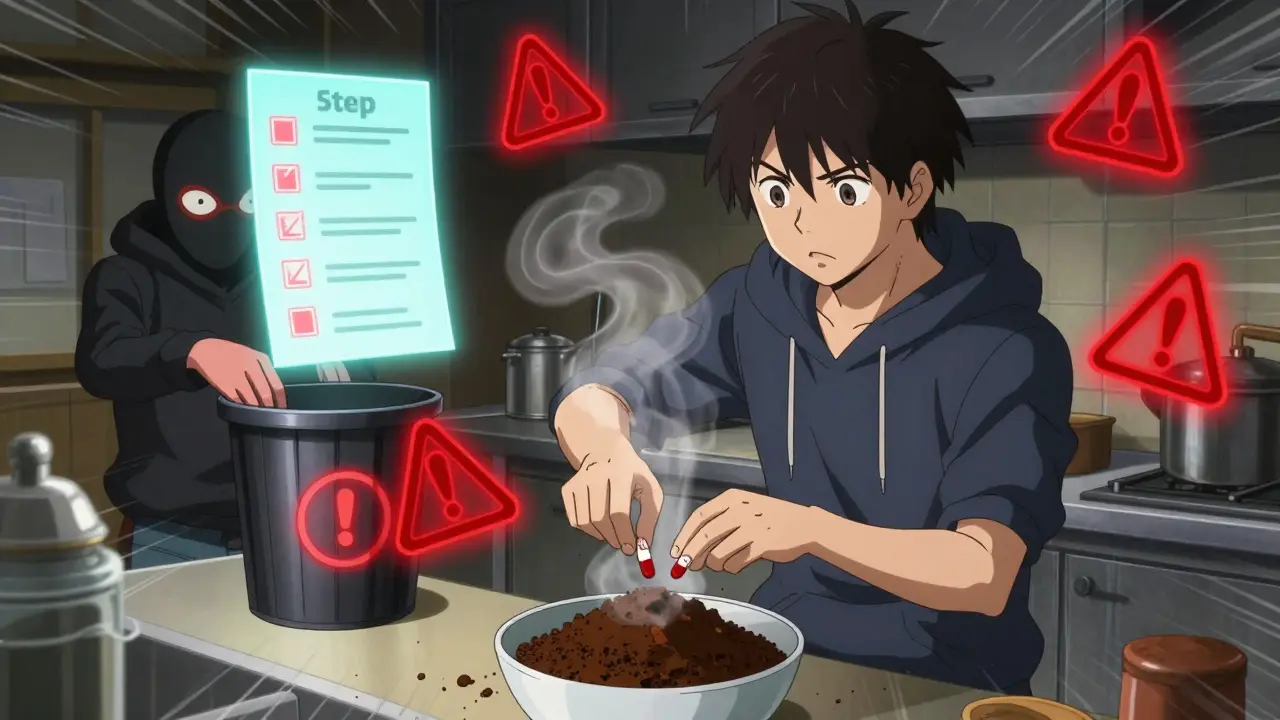
Keeping unused or expired medications in your medicine cabinet isn’t just messy-it’s dangerous. Every year, thousands of children accidentally swallow pills they find at home. Over 70,000 people die from prescription drug misuse in the U.S. alone. And when pills go down the drain or get tossed in the trash without proper handling, they end up polluting our water and soil. The good news? You can safely dispose of most medications in your household trash-if you follow the right steps.
Why You Can’t Just Throw Pills in the Trash
You might think, "It’s just a pill. It’ll break down." But that’s not how it works. Medications don’t vanish in landfills. They can leak into groundwater, especially if they’re in their original bottles. Someone-maybe a child, a pet, or even a stranger-could find an open bottle and take it. That’s how accidental overdoses happen. The Food and Drug Administration (FDA) is clear: keeping unused drugs at home increases the risk of misuse, poisoning, and environmental harm.The FDA says the safest option is a drug take-back program. But not everyone lives near one. In rural areas, take-back locations are rare. That’s why the FDA allows household trash disposal as a backup-only if done correctly.
The 5-Step Method for Safe Household Disposal
If you can’t get to a take-back site, here’s exactly how to dispose of medications in your trash. This method is backed by the FDA and Environmental Protection Agency (EPA) and follows federal guidelines updated in 2022.- Check if your medication is on the FDA Flush List - A small number of drugs (only 15 as of November 2023) are dangerous enough that flushing is actually the safest option. These include powerful opioids like fentanyl patches and certain sedatives. If your drug is on this list, flush it down the toilet. You can find the full list on the FDA’s website. If it’s not, move to step two.
- Remove pills from their original bottles - Don’t toss the whole bottle. Take out the pills, capsules, or liquids. The original container has your name, address, and prescription number. Leaving that info visible violates HIPAA privacy rules and makes it easy for someone to misuse your meds.
- Mix meds with something unappealing - This is the most important step. Pour the medications into a small bowl and mix them with an unattractive substance. Use used coffee grounds, cat litter, dirt, or even peanut butter. The goal is to make it look and smell disgusting. The FDA recommends a 1:1 ratio-so if you have a teaspoon of pills, add at least a teaspoon of coffee grounds. Do not crush pills. Crushing can release dangerous fumes or make it easier for someone to fish them out.
- Seal it in a leak-proof container - Put the mixture into a sealable plastic bag, an empty jar with a tight lid, or a used margarine tub. Make sure it won’t leak. Then, put that container into another bag or box. This extra layer stops pets or curious kids from digging it out of the trash.
- Scratch off or cover all personal info - Take the empty pill bottle and use a permanent marker to black out your name, address, and prescription number. Or cover it with duct tape. Then, toss the bottle in the recycling-if your local facility accepts #5 plastic. Most don’t. So if you’re unsure, just throw the bottle in the trash too.
What Not to Do
Many people make mistakes that put others at risk. Here are the most common errors:- Don’t flush unless it’s on the FDA list - Flushing most drugs contaminates water. The U.S. Geological Survey (USGS) found pharmaceuticals in 80% of U.S. waterways. Only 15 drugs are safe to flush.
- Don’t just dump pills in the trash - A 2021 study found 19% of people do this. It’s the #1 reason for accidental poisonings.
- Don’t use water to dissolve pills - Mixing with water can make liquids leak or create a sludge that’s hard to contain.
- Don’t assume recycling bins are safe - Most curbside programs reject prescription bottles because they’re not recyclable. Only 13% of U.S. municipalities accept #5 plastic containers.
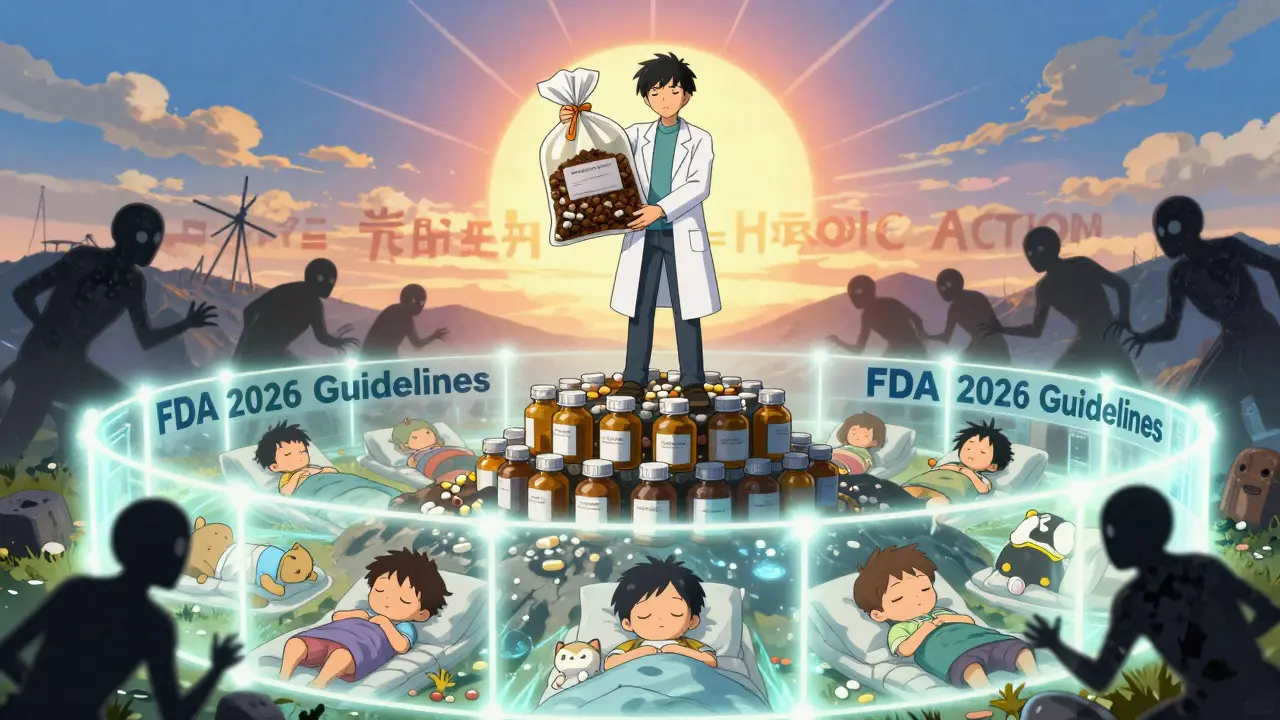
Take-Back Programs Are Still Better
Even if you follow all the steps above, take-back programs are still the gold standard. They’re run by pharmacies, hospitals, or local governments. In 2023, there were over 14,600 authorized collection sites across the U.S. Walgreens, CVS, and Target all have drop-off kiosks in most stores. You can find the nearest one using the DEA’s online locator or by calling 1-800-882-9539.Some states are making this easier. In California, since January 2024, all pharmacies with four or more locations must offer free disposal kiosks. That covers 98% of the state’s population. In places like Los Angeles and Orange County, these programs collect over 200,000 pounds of medication every year.
But if you live in a rural area, you might not have access. That’s why the household trash method exists. It’s not perfect-but it’s better than doing nothing.
What About Liquid Medicines?
Liquid medications-like cough syrup or insulin-need special handling. Don’t pour them down the sink. Instead:- Remove the cap and mix the liquid with cat litter or coffee grounds in a jar.
- Seal it tightly with duct tape.
- Place it in a sealed plastic bag before putting it in the trash.
- Remove the label and obscure your info just like with pills.
The EPA confirms that these household materials work just as well as commercial disposal kits. You don’t need to buy special products.
What If I’m Not Sure?
If you’re confused about what to do with a specific medication, check the package insert. It sometimes has disposal instructions. If not, call your pharmacist. They’re trained to help. You can also visit the FDA’s website or call 1-888-INFO-FDA.And remember: if you’re unsure, it’s safer to mix it with coffee grounds and seal it in a bag than to risk leaving it out in the open.
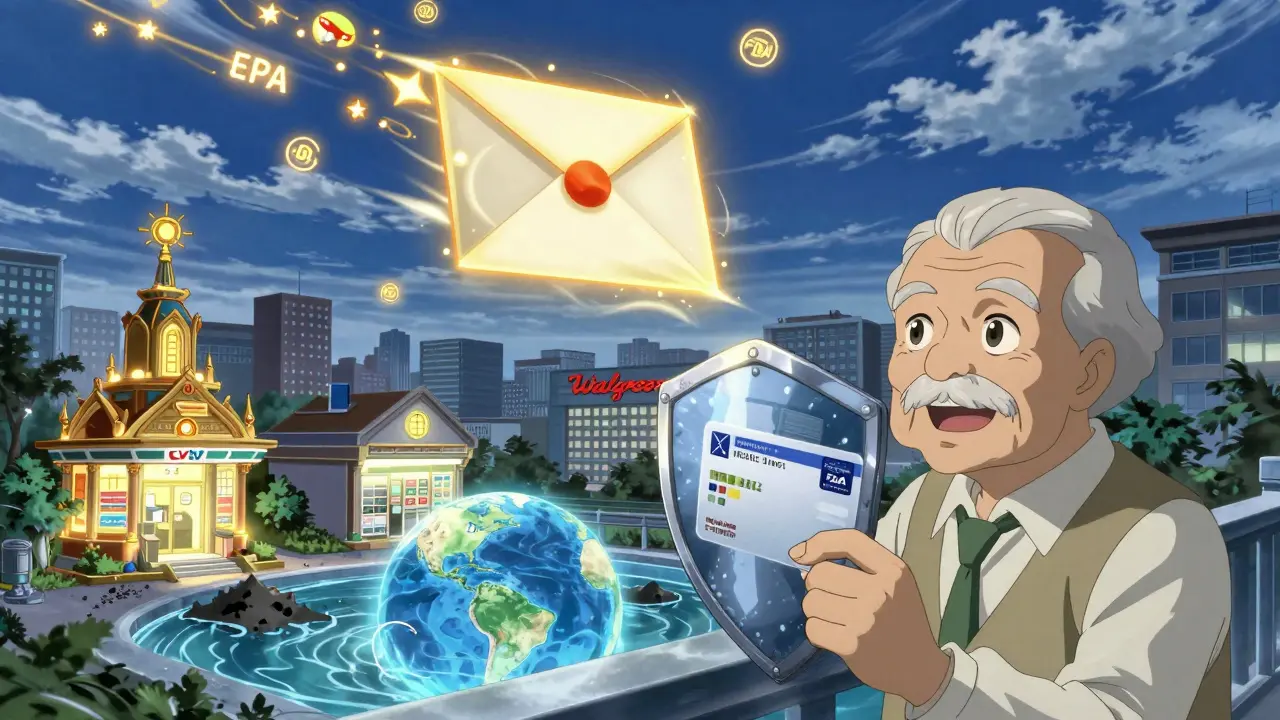
Why This Matters Beyond Your Home
Improper disposal isn’t just a personal mistake-it’s a public health issue. A 2023 study in the Journal of Environmental Quality found that 12-18% of pharmaceutical compounds still leak from landfills into groundwater. That means even properly disposed meds can end up in drinking water.But here’s the good part: when people follow the 5-step method, they reduce environmental contamination by about 75% compared to tossing pills in the trash without mixing them. That’s a huge improvement.
And it saves lives. The FDA estimates that proper disposal cuts accidental poisonings in children under six by 90%. That’s tens of thousands of ER visits prevented every year.
What’s Changing in 2026?
New developments are making disposal easier. Since 2023, the FDA has been testing curbside pickup for medications in 12 pilot communities. Early results show 94% user satisfaction. The EPA is also working on a national standard for household disposal, expected in mid-2024.And mail-back envelopes are becoming more common. Thanks to the 2022 Inflation Reduction Act, Medicare Part D now covers disposal envelopes for seniors. Over 65 million people can now request free mailers to send old pills back to pharmacies.
Eventually, we may see water-soluble packaging that dissolves safely when flushed. Three manufacturers are already in final testing. But until then, the 5-step method is your best tool.
Final Checklist
Before you toss your meds, run through this quick list:- Is it on the FDA Flush List? → If yes, flush it.
- Did you remove pills from the bottle? → Yes or no?
- Did you mix them with coffee grounds, cat litter, or dirt? → At least a 1:1 ratio?
- Did you seal it in a leak-proof container? → Ziplock? Jar? Tupperware?
- Did you cover your name and prescription number? → With marker or tape?
- Did you put it in the trash, not the recycling? → Yes?
If you answered yes to all, you’ve done it right.
Can I throw expired medications in the trash without mixing them?
No. Throwing pills in the trash without mixing them is unsafe and against FDA guidelines. Even expired drugs can be misused or cause harm if found by children, pets, or others. Always mix them with an unappealing substance like coffee grounds or cat litter, seal them in a container, and obscure personal information on the bottle.
Why can’t I just flush all my old pills?
Flushing medications contaminates waterways. The U.S. Geological Survey found pharmaceuticals in 80% of U.S. water sources. Only 15 high-risk drugs-mostly powerful opioids and sedatives-are safe to flush because they’re extremely dangerous if misused. For everything else, the FDA recommends mixing with household materials and tossing in the trash.
What if I live in California? Are the rules different?
Yes. California’s Medical Waste Management Program prohibits flushing or trashing any medication. The state requires all unused drugs to be returned to pharmacies or taken to hazardous waste facilities. While federal guidelines allow household trash disposal, California law overrides this. If you live in California, always use a pharmacy drop-off or local collection event.
Can I recycle empty pill bottles?
Most cannot. The #5 amber plastic used in prescription bottles is not accepted by 87% of U.S. recycling programs. Even if your local facility takes it, you must first remove the label and obscure all personal info. If you’re unsure, it’s safer to throw the bottle in the trash after removing the label.
Are there free ways to dispose of meds without leaving home?
Yes. Since 2022, Medicare Part D covers free mail-back disposal envelopes for seniors. Many pharmacies and hospitals also offer free take-back bags you can request by mail. Check with your pharmacy or visit the DEA’s website to find a mail-in option near you.
Prateek Nalwaya
February 17 2026Okay, I’ve been doing this wrong for years-just tossing pills in the trash like they’re coffee grounds. 😅 But mixing with cat litter? Genius. My cat’s gonna be mad I’m using her stuff as a drug trap, but hey, safer than my nephew finding my old painkillers. Thanks for the clarity. Also, coffee grounds? That’s just a bonus-now my trash smells like a hipster brunch. Win-win.
Dennis Santarinala
February 17 2026Wow, this is so well put together… Seriously, like, thank you. I’ve been nervous about this for years. I’ve got my mom’s old blood pressure pills just sitting there… and now I know exactly what to do. Mix with coffee grounds, seal in a bag, cover the label… I’ll do it this weekend. And yes, I’m totally using duct tape. Because why not? 😊
Tony Shuman
February 17 2026Let me get this straight-you’re telling me the FDA, EPA, and a bunch of bureaucrats want us to mix our meds with cat litter? That’s not safety, that’s a joke. I’ve got a 12-year-old and a Golden Retriever. They’re smarter than this. Why not just hand them out to the homeless? At least someone’s getting use out of them. And don’t even get me started on California’s overreach. We’re turning into a nanny state with ziplock bags.
Haley DeWitt
February 18 2026OMG I’m so glad I read this!! I literally just threw away my grandma’s old anxiety meds last week… no mixing, no sealing… I’m horrified 😭 I’m going back to the trash right now to fix it!! Also-cat litter? Why didn’t I think of that?? 🙌 Thanks for saving my conscience!!
John Haberstroh
February 18 2026There’s something oddly poetic about using coffee grounds to neutralize pharmaceuticals. It’s like the universe’s way of balancing the caffeine-fueled chaos of modern life with a little earthy redemption. Also, I’ve been using peanut butter since 2021-no one’s ever dug through my trash, but I’ve got a dog who’ll eat anything. So maybe it’s the smell that does the trick. Either way, this works.
Logan Hawker
February 18 2026Let’s be real: this entire guide is performative compliance. You’re not ‘saving lives’-you’re performing environmental virtue signaling. The EPA’s 80% water contamination stat? That’s from trace amounts of metabolites. You think a few pills in a landfill are the reason fish are mutating? The real issue is overprescribing. And yet, no one’s calling out Big Pharma. Instead, we’re making middle-class folks mix pills with cat litter like it’s some kind of ritual. Pathetic.
James Lloyd
February 20 2026Minor correction: The FDA does not recommend a 1:1 ratio. They recommend ‘an adequate amount’ to render the medication unappealing. A teaspoon of pills mixed with a tablespoon of grounds or litter is sufficient. Also, crushing pills is not inherently dangerous-some formulations (like extended-release) can release toxic doses if crushed, but many generics don’t have that issue. The key is obscuring identity and preventing access, not chemistry. Also: yes, #5 plastic is rarely recyclable. But some cities like Portland and Boulder do accept it. Always check local rules.
Digital Raju Yadav
February 21 2026USA wants us to mix pills with cat litter? In India, we just burn them. Properly. In controlled incinerators. No one’s dumping toxic sludge into landfills. You Americans turn everything into a DIY project. Why not just let the government handle it? We don’t need coffee grounds. We need infrastructure. This is not safety. This is humiliation dressed as advice.
Steph Carr
February 23 2026So… we’re turning medicine disposal into a performance art piece? Mix with dirt? Seal in duct tape? Scratch off labels like we’re hiding a crime scene? I love how we’ve made the most basic public health task into a 5-step ritual that feels like a cult initiation. Meanwhile, in Sweden, they have automated vending machines that take back meds and incinerate them on-site. We’re overcomplicating this because we’re terrified of authority… and also, we like DIY. I’m not mad. I’m just… fascinated.
Linda Franchock
February 25 2026My grandma used to say, ‘If you don’t need it, flush it.’ I thought she was just being dramatic. Now I know she was just… wrong. But also? I’m 62 and I’ve been doing this wrong for 40 years. So I’m gonna do it right now. Coffee grounds, duct tape, the whole nine yards. And I’m telling my whole book club. They’re gonna be shocked. But also? I’m proud. We can change. Even late.
Agnes Miller
February 26 2026just did this today! mixed my expired tylenol with coffee grounds and put it in a tupperware then put it in a bag. i think i forgot to cover the label though oops. also i used a yogurt container?? is that okay? or should i have used a jar? idk. i’m tired. i’m just glad i did something.