Rotator Cuff Tear: Causes, Symptoms, and What You Can Do
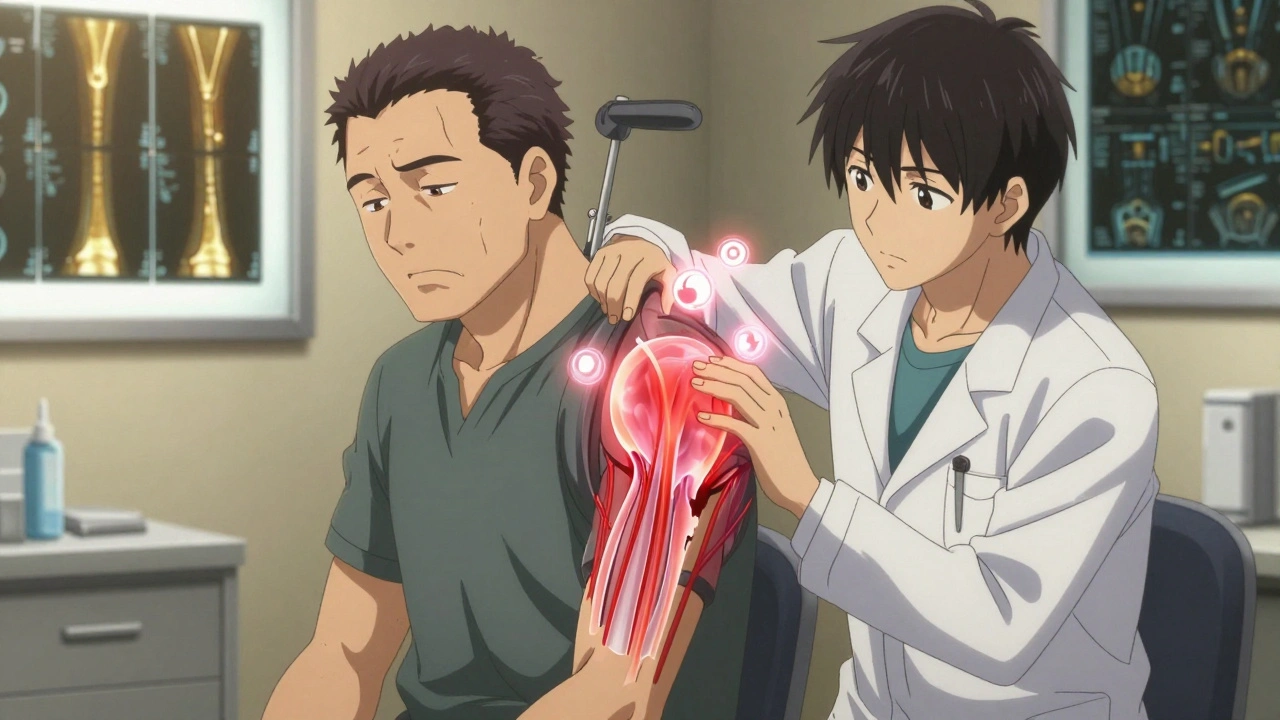
When you hear the term rotator cuff tear, a common shoulder injury involving the tendons that stabilize the shoulder joint. Also known as shoulder tendon tear, it’s one of the most frequent reasons adults over 40 start avoiding lifting, reaching, or even sleeping on their side. This isn’t just a sports injury—it happens from simple actions like reaching for a high shelf or lifting a heavy bag. The rotator cuff is made up of four tendons that connect shoulder muscles to the upper arm bone. When one or more of them fray or snap, pain and weakness follow.
Most people don’t realize a rotator cuff tear can develop slowly over years, not just from a single accident. Repetitive overhead motions—like painting, swimming, or even typing with poor posture—wear down the tissue. Aging plays a big role too. By age 60, more than half of people have some degree of tear, even if they never felt pain. And here’s the catch: you can have a full-thickness tear and still move your arm fine. That’s why many ignore it until the pain gets bad or the weakness spreads. If you’ve noticed trouble raising your arm, pain at night, or a popping sound when you move your shoulder, it’s not just "getting old." It could be a tear.
What happens next depends on how bad it is. For mild cases, physical therapy, a structured program to rebuild shoulder strength and mobility. Also known as shoulder rehab, it’s often the first and best step. Many people avoid surgery and get back to normal with just exercises, posture correction, and anti-inflammatories. But if the tear is large, sudden, or doesn’t improve after a few months, doctors may recommend tendon repair, a surgical procedure to reattach the torn tendon to the bone. Recovery takes time—weeks to months—but the goal is simple: restore function without long-term pain.
What you’ll find in the posts below isn’t just medical jargon. It’s real advice from people who’ve been there. You’ll see how medications, lifestyle changes, and even sleep habits affect shoulder recovery. Some posts talk about how painkillers help—or don’t. Others explain why certain exercises make things worse. There’s nothing generic here. Just clear, practical info on what works, what doesn’t, and what you need to ask your doctor before you sign off on any treatment.
Rotator cuff tears are common, especially after 40. Learn how imaging like MRI and ultrasound diagnose tears, why rehab often works better than surgery, and what to expect if you need an operation.