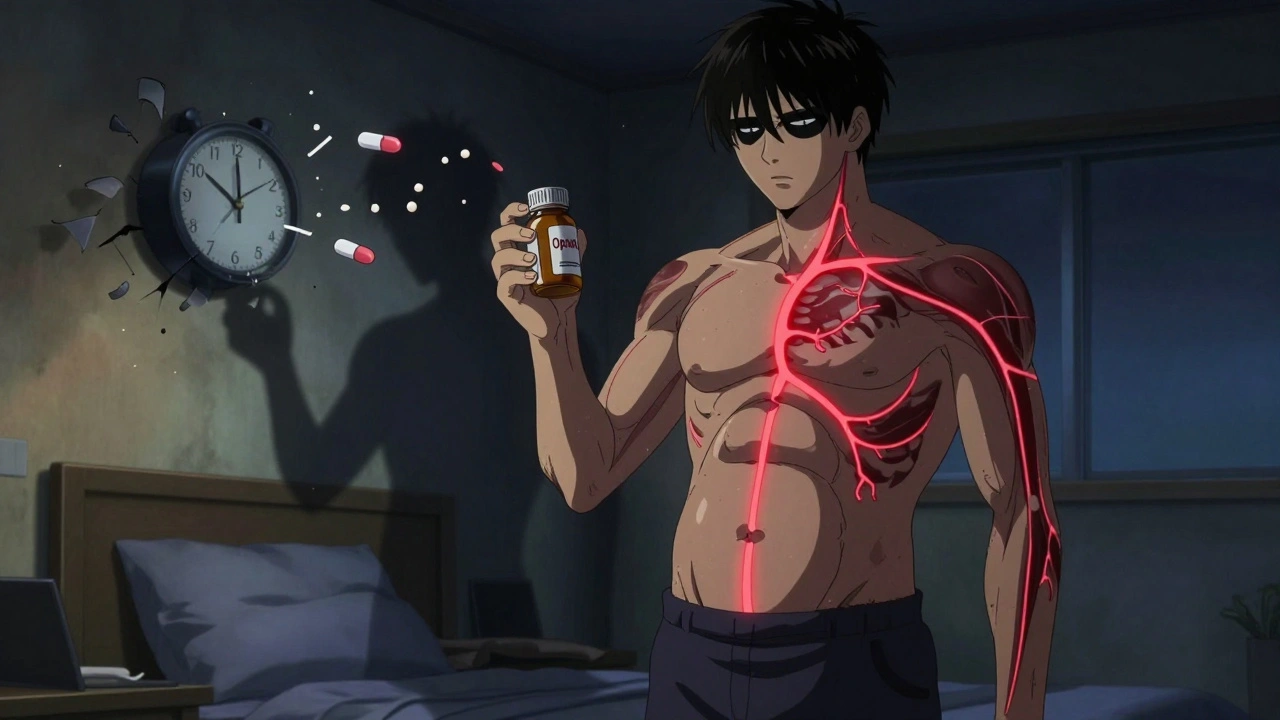
Opioids and Low Testosterone: How Pain Medications Affect Hormones
When you take opioids, a class of powerful pain-relieving drugs that include oxycodone, hydrocodone, and morphine. Also known as narcotics, they work by binding to receptors in your brain and spinal cord to block pain signals. But behind the pain relief, there’s a quiet side effect many don’t talk about: low testosterone, a condition where the body doesn’t produce enough of the primary male sex hormone. This isn’t rare. Studies show up to half of men on long-term opioid therapy develop low testosterone levels—sometimes without any symptoms at first.
How does this happen? Opioids mess with your brain’s signaling system. They suppress the hypothalamus and pituitary gland, which normally tell your testicles to make testosterone. Less signaling means less hormone production. Over time, this leads to fatigue, weight gain, muscle loss, depression, and a drop in sex drive. It’s not just about sex—it affects your energy, mood, and even bone strength. And because these symptoms look like aging or stress, they’re often missed. Men might think they’re just getting older, not realizing their pain meds are the real culprit. This isn’t just a men’s health issue either. While testosterone is often called a male hormone, women produce it too, and opioids can disrupt their hormonal balance as well.
What’s worse? Many people don’t get tested. Doctors focus on pain control, not hormones. If you’ve been on opioids for more than a few months and feel off—tired all the time, not interested in sex, gaining weight despite eating the same—you should ask for a blood test. It’s simple. And if your levels are low, there are options: adjusting your pain meds, switching to non-opioid treatments, or in some cases, hormone replacement under medical supervision. You don’t have to live with these side effects. The posts below dive into how opioids interact with your body’s systems, what warning signs to watch for, how other medications can make this worse, and what real people have done to get their energy and health back. You’ll find practical advice, not just theory.
Long-term opioid use can suppress testosterone, causing fatigue, low libido, and muscle loss. Learn the symptoms, how to test for it, and effective treatment options including testosterone replacement therapy and lifestyle changes.