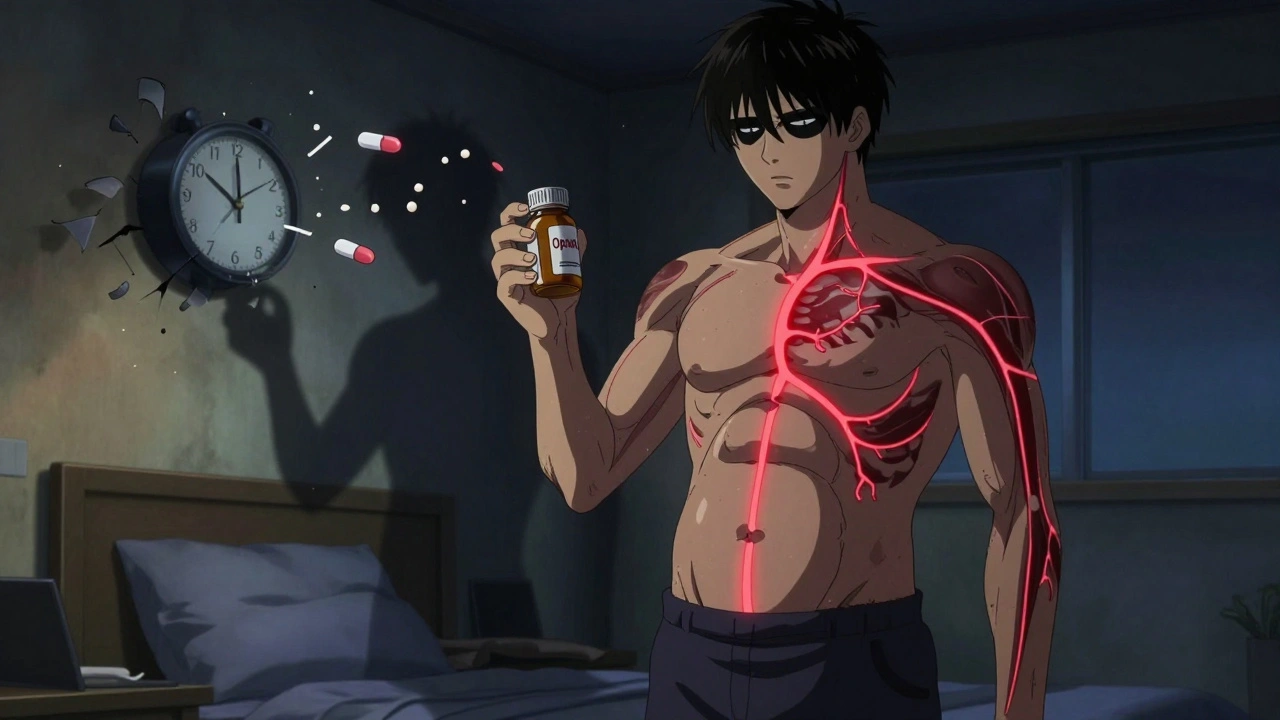
Opioid Side Effects: What You Need to Know About Risks and Signs
When you take opioids, a class of powerful pain-relieving drugs that include prescription pills like oxycodone and hydrocodone, as well as illegal drugs like heroin. Also known as narcotics, they work by binding to receptors in your brain and spinal cord to block pain signals. But they also affect areas that control breathing, mood, and reward — which is why even short-term use can lead to serious side effects.
The most common opioid side effects are drowsiness, nausea, constipation, and dizziness. These often show up within days of starting the medication. But the real danger lies in what happens when these effects get worse — like slowed or shallow breathing, a condition called respiratory depression, a life-threatening drop in breathing rate that can lead to oxygen loss, brain damage, or death. This is why mixing opioids with alcohol, benzodiazepines, or sleep aids is so dangerous. The combination doesn’t just add up — it multiplies the risk. Studies show that over half of opioid overdose deaths involve another sedative. You don’t need to take a huge dose to be at risk. Even prescribed amounts can become deadly if combined with other depressants.
Over time, your body adapts to opioids, leading to opioid dependence, a physical state where you need the drug to avoid withdrawal symptoms like sweating, shaking, nausea, and intense anxiety. Dependence isn’t the same as addiction, but it often leads to it. Addiction means you keep using despite harm — missing work, straining relationships, or ignoring health problems. Many people start with a prescription after surgery or injury and never intend to misuse, but tolerance builds fast. A dose that once helped now barely touches the pain, so they take more. And then it’s harder to stop.
Knowing the warning signs of an overdose can save a life. Look for: blue or gray lips and fingernails, unresponsiveness, slow or erratic breathing, or no breathing at all. If someone’s like this, call 911 immediately. If you have naloxone, a medication that can reverse an opioid overdose in minutes, use it right away. It’s not a cure, but it buys time. Many pharmacies now offer naloxone without a prescription. Keep it on hand if you or someone you care about uses opioids.
The posts below cover everything from how opioids interact with other meds to what happens when you mix them with alcohol, why sedating drugs are especially risky together, and how to spot the early signs of trouble before it turns deadly. You’ll find real advice on staying safe, recognizing danger, and understanding what your body is telling you — not just from doctors, but from people who’ve been there.
Long-term opioid use can suppress testosterone, causing fatigue, low libido, and muscle loss. Learn the symptoms, how to test for it, and effective treatment options including testosterone replacement therapy and lifestyle changes.