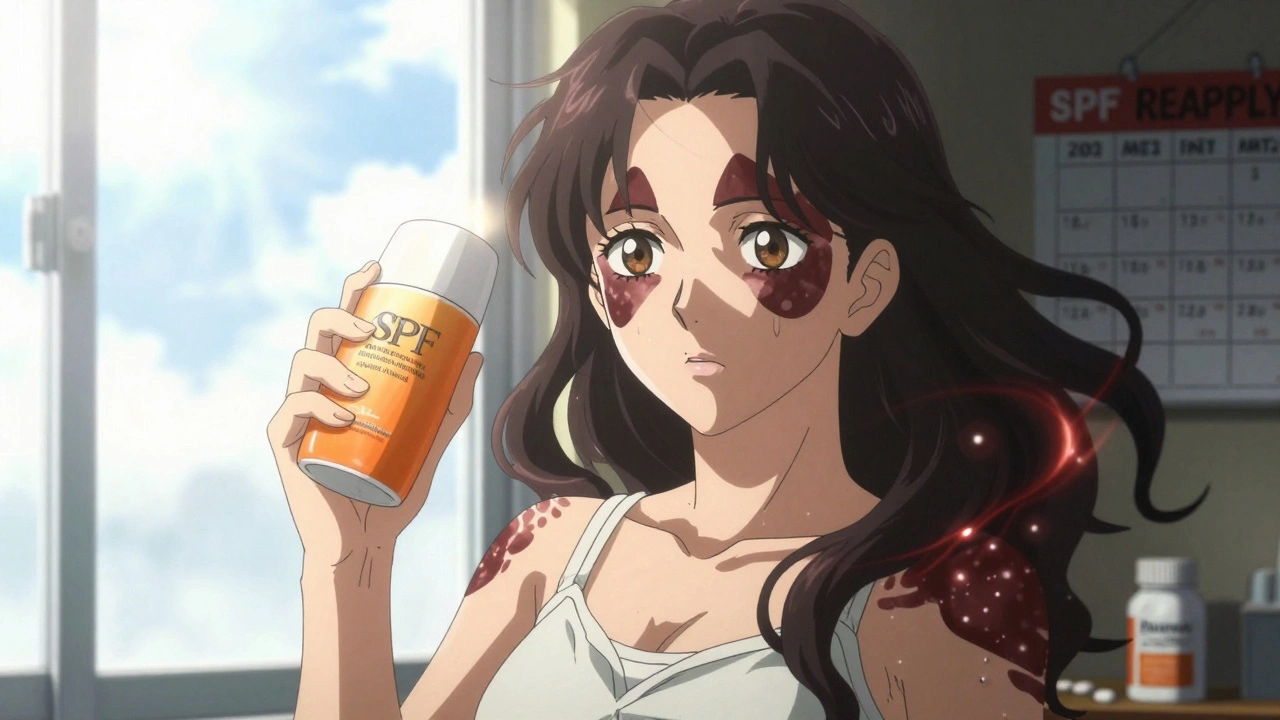
Sun Damage: How UV Exposure Affects Skin, Medications, and Long-Term Health
When we talk about sun damage, the harmful effects of ultraviolet radiation on skin and bodily systems. Also known as UV damage, it’s not just about tans or freckles—it’s a silent, cumulative threat that changes how your body responds to medications and increases long-term disease risk. Every minute you spend in the sun without protection adds up. Even on cloudy days, up to 80% of UV rays still reach your skin. And it’s not just your skin that’s at risk—your whole system can be affected, especially if you’re taking common drugs.
Phototoxicity, a severe skin reaction triggered when certain drugs react with UV light is one of the most dangerous but overlooked side effects. Medications like antibiotics (tetracycline, doxycycline), diuretics, and even some antidepressants can turn your skin into a sunburn magnet. You might not feel anything until hours after being outside, when your skin turns red, blisters, or peels like it’s been burned by fire. This isn’t an allergy—it’s a chemical reaction between the drug and sunlight. And it doesn’t just happen once. Once your skin has been sensitized, future sun exposure can trigger it again, even at lower doses.
Then there’s skin cancer, the most common type of cancer in the U.S., largely caused by repeated UV exposure. Melanoma, basal cell, and squamous cell carcinomas don’t appear overnight. They develop over years from small, ignored changes—a mole that grows, a spot that won’t heal, a patch of skin that flakes and itches. The risk doesn’t stop at your skin. UV radiation can suppress your immune system’s ability to detect and destroy early cancer cells. People on long-term immunosuppressants, like those for autoimmune diseases, face even higher risks. And here’s the catch: some medications meant to help you—like corticosteroids or certain blood pressure drugs—can make your skin more sensitive to the sun without you realizing it.
It’s not just about sunscreen. Sun damage affects how your body absorbs, breaks down, and responds to drugs. Heat and UV exposure can change blood flow, alter liver enzyme activity, and even affect how well your pills work. Someone taking medication for high blood pressure or diabetes might find their levels shifting after a day at the beach—not because they missed a dose, but because the sun changed how their body processed it.
And it’s not just older adults. Teens and young adults who use tanning beds or spend hours in the sun without protection are setting themselves up for problems decades later. The damage is invisible until it’s too late. You won’t see the DNA mutations building up in your skin cells. You won’t feel your immune system weakening. But your doctor can spot the signs—unusual rashes, persistent sores, sudden changes in how your meds work.
What you’ll find in the posts below are real stories, real risks, and real science about how sun damage connects to medications you’re already taking. From how antibiotics react with sunlight to why your skin breaks out after a summer vacation, these articles cut through the noise. No fluff. No myths. Just what you need to know to protect yourself—before the damage becomes permanent.
Learn the difference between melasma and sun damage, why most treatments fail, and the proven topical agents that actually work-including hydroquinone, tretinoin, and vitamin C-with expert-backed routines and sun protection tips.