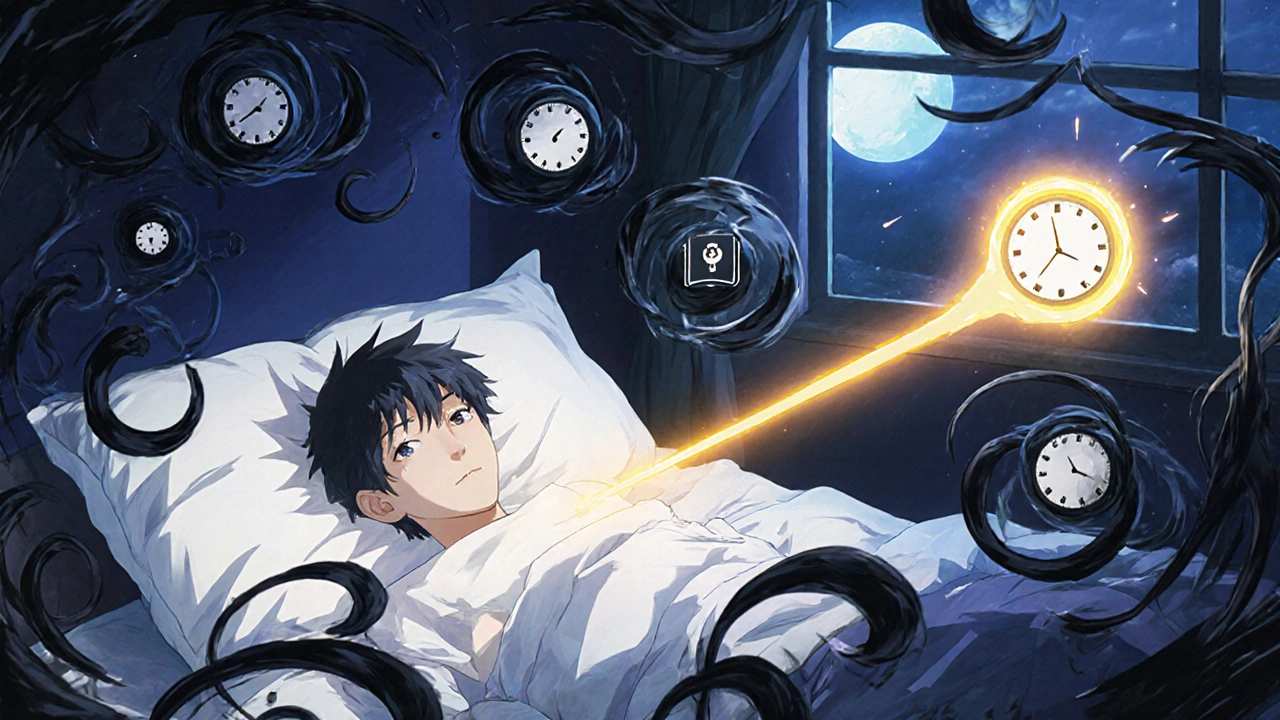
Sleep Therapy for Mental Health: How Rest Heals Anxiety, Depression, and Stress
When you hear sleep therapy for mental health, a structured approach to improving sleep patterns to treat conditions like anxiety, depression, and PTSD. Also known as cognitive behavioral therapy for insomnia, it’s not just about counting sheep—it’s about rewiring how your brain and body connect to rest. Too many people think sleep is just a side effect of mental health issues. But research shows the opposite: poor sleep doesn’t just come with depression or anxiety—it fuels it.
Circadian rhythm, your body’s internal 24-hour clock that controls sleep, hormone release, and metabolism is the silent driver behind most sleep problems. When your rhythm gets thrown off—by late screens, irregular schedules, or stress—your brain doesn’t reset properly. That’s why people with chronic anxiety often wake up at 3 a.m. even when they’re exhausted. Sleep therapy fixes this by syncing your body with natural light cycles, not by adding more pills.
It’s not magic. It’s mechanics. Insomnia treatment, a targeted set of behavioral and environmental changes to restore healthy sleep works because it stops the cycle: you’re anxious → you can’t sleep → you’re more anxious. By controlling when you get light, when you’re active, and when you’re in bed, your brain learns to trust rest again. People who stick with it report fewer panic attacks, less rumination, and better focus—even without changing their meds.
You won’t find one-size-fits-all fixes here. Some people need strict bedtime routines. Others need to adjust their morning light exposure. A few need to stop checking their phones the second they wake up. The posts below cover real cases: how sleep deprivation leads to weight gain, how antidepressants interact with your sleep cycle, why iron and folic acid help reduce nighttime anxiety, and how medications like doxycycline or metformin can accidentally mess with your rest. You’ll see what works for someone with PTSD, someone with hyperthyroidism, someone on long-term steroids—and why none of those solutions are the same.
This isn’t about sleeping more. It’s about sleeping right. And the fixes aren’t hidden in expensive apps or miracle supplements. They’re in your daily habits, your light exposure, your timing—and the science behind why it all matters. What you’ll find below aren’t generic tips. They’re real, tested connections between how you sleep and how you feel—backed by data, not guesswork.
Treating insomnia with CBT-I isn't just about better sleep-it's a proven way to reduce depression and anxiety symptoms. Learn how this evidence-based therapy works and why it's more effective than pills.