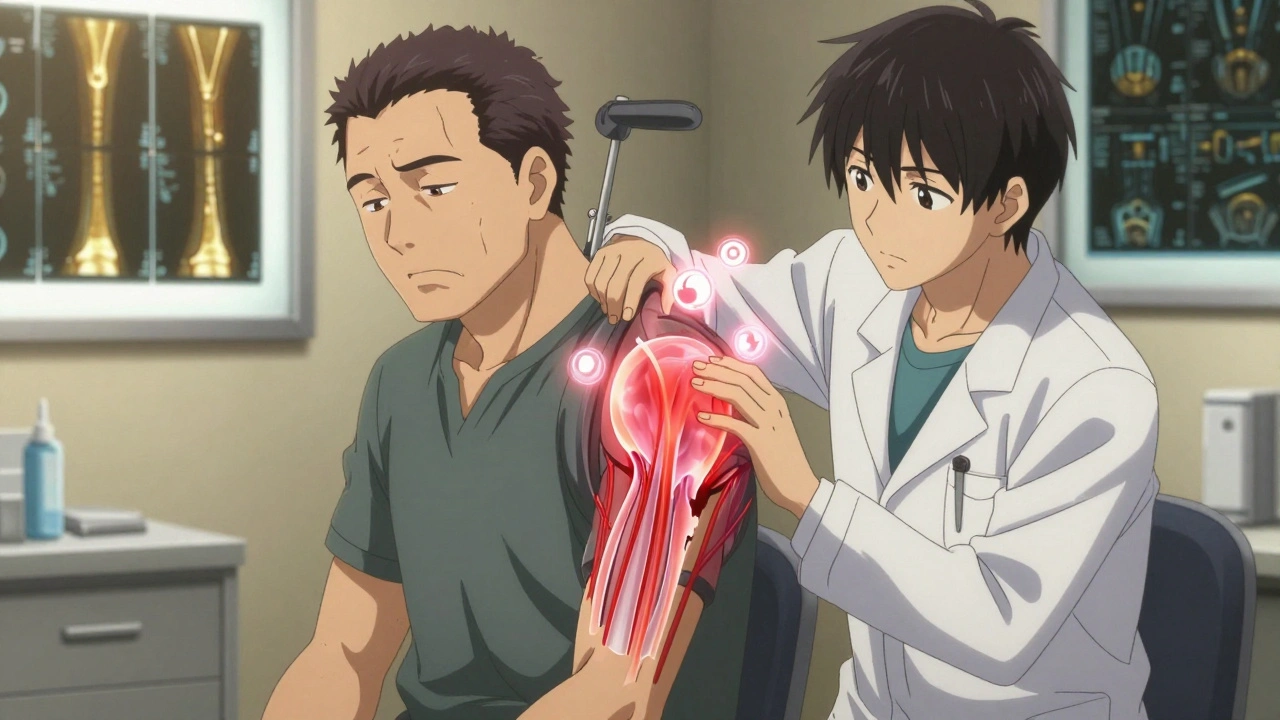
Shoulder Tendon Tear: Causes, Recovery, and What Medications Can Help
When you tear a tendon in your shoulder, you’re not just dealing with pain—you’re facing a breakdown in how your body moves. A shoulder tendon tear, a rupture in the tissue connecting muscle to bone in the shoulder joint often happens from overuse, sudden force, or age-related wear. It’s not just athletes who get this—anyone who lifts, reaches, or even sleeps awkwardly can damage these tendons. The rotator cuff, a group of four tendons that stabilize the shoulder, is the most common site. Without proper care, even a small tear can lead to chronic weakness or full loss of motion.
Recovery depends on how bad the tear is. Minor tears might heal with rest and physical therapy, a structured program to rebuild strength and range of motion after injury. But larger tears often need medical help. Pain management is part of the process, and that’s where pain management, the use of medications and therapies to reduce discomfort and improve function comes in. Anti-inflammatories like ibuprofen can reduce swelling, but they won’t fix the tear. Steroid injections may offer short-term relief, though repeated use can weaken tissue further. Some people turn to supplements like collagen or omega-3s, but evidence is mixed. What actually moves the needle? Time, movement, and sometimes surgery.
There’s no magic pill for a torn shoulder tendon. But there are smart ways to support healing. Avoiding activities that strain the shoulder, doing prescribed exercises daily, and following up with a physical therapist make a bigger difference than any drug. And if you’re on other meds—like blood thinners or antidepressants—you need to know how they might affect healing. Some medication interactions, when drugs affect each other’s effectiveness or safety can slow recovery or increase bleeding risk during recovery. Your doctor should check your full list of medications before recommending anything.
What you’ll find here are real stories and science-backed advice from people who’ve been through this. From how to tell if your shoulder pain is a tear versus something else, to what drugs actually help without causing more harm, to what exercises work when you’re stuck at home. You’ll see what works for rotator cuff injuries, what doesn’t, and why some treatments fail even when they seem right on paper. No fluff. No guesswork. Just what matters when your shoulder won’t move like it used to.
Rotator cuff tears are common, especially after 40. Learn how imaging like MRI and ultrasound diagnose tears, why rehab often works better than surgery, and what to expect if you need an operation.