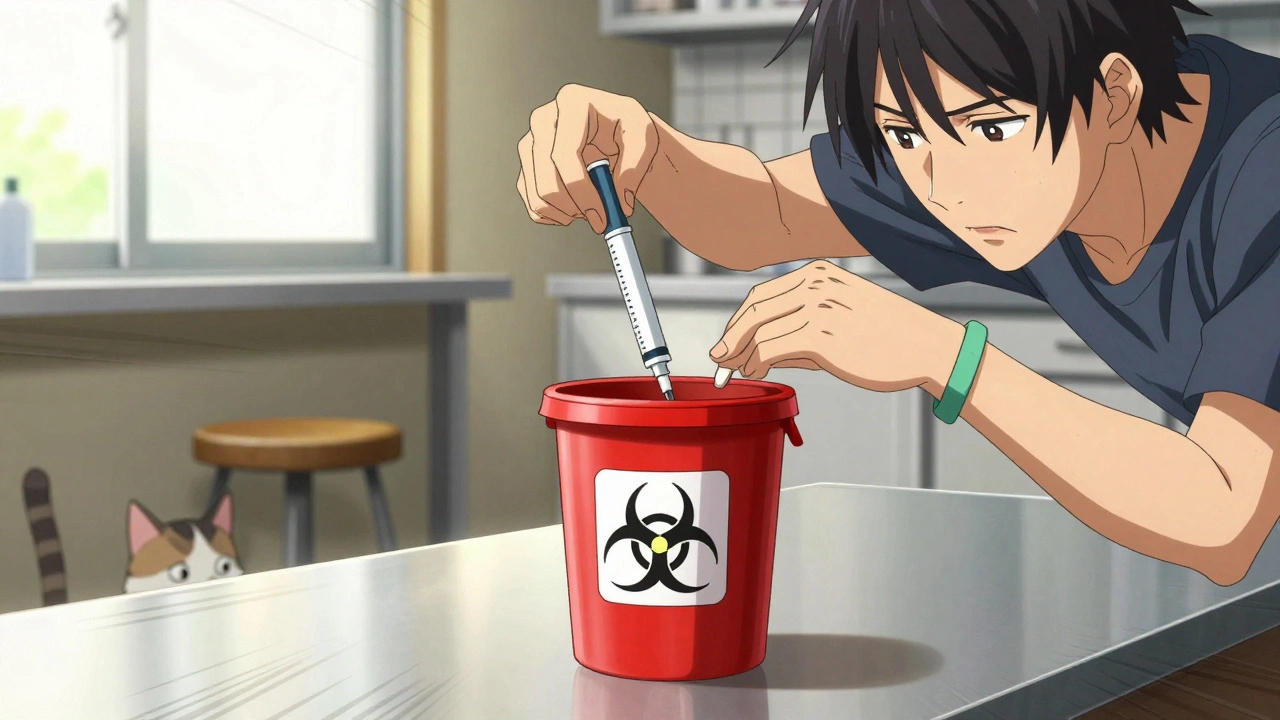
Sharps Disposal: Safe Ways to Handle Needles and Medical Waste
When you use needles, syringes, or other sharps disposal, the safe handling and disposal of medical devices with sharp points or edges that can puncture skin. Also known as needle safety, it's not just about avoiding a poke—it's about stopping the spread of infection and keeping your home, community, and environment safe. Every year, thousands of people get injured by improperly thrown away sharps, from family members to sanitation workers. This isn’t a rare issue. It’s a daily risk if you or someone you care for uses insulin pens, injectable medications, or any device that pierces the skin.
Proper sharps container, a puncture-resistant, leak-proof container designed specifically for collecting used needles and medical sharps is the first line of defense. These aren’t just plastic bottles or soda cans—they’re built to hold sharp objects without breaking or leaking. You can buy them at pharmacies, get them free from your doctor or pharmacy, or sometimes even get them mailed to you through your medication provider. Once full, you seal it and take it to a designated drop-off site: a hospital, pharmacy, fire station, or community collection event. Some areas even offer mail-back programs. Don’t just toss it in the trash. That’s how someone ends up getting stuck at the curb or in a recycling truck.
There are also biohazard waste, any material contaminated with blood or other potentially infectious substances, including used sharps and dressings that need special handling. Even if you think the needle looks clean, it’s still a risk. Blood can hide viruses like hepatitis or HIV, and it doesn’t take much to cause harm. That’s why you never recap needles, bend them, or break them off. You never flush them. You never put them in a regular trash bin—even if it’s covered. These rules exist because someone once got hurt because they didn’t know better.
People with diabetes, those on injectable treatments for arthritis or autoimmune conditions, and caregivers helping loved ones at home are the ones most likely to deal with sharps every day. But the rules apply to everyone. If you’re giving injections, you’re responsible for what happens to that needle after use. And if you’re cleaning up after someone else, you’re still at risk if they didn’t dispose of it right. The good news? It’s simple. Get the right container. Fill it only to the line. Seal it tight. Drop it off. Repeat. No fancy tools. No expensive apps. Just common sense.
There’s a reason your pharmacist asks if you need a sharps container every time you pick up insulin. They’ve seen the consequences of skipping this step. And they want you to stay safe. The system is set up to help you—free drop-offs, clear labels, even instructions printed right on the container. You don’t need to be an expert. You just need to follow the steps. Because one careless moment can change someone’s life. Or end it.
Below, you’ll find real advice from people who’ve been there—how to handle sharps at home, what to do if you accidentally get stuck, where to find disposal sites near you, and how to talk to your doctor about getting supplies without paying extra. These aren’t theoretical guidelines. These are the things that actually work in real life, for real people managing real health needs every day.
Learn how to safely dispose of needles and sharps from injected medications to prevent injury and infection. Find out where to get free containers and drop-off points in the UK.