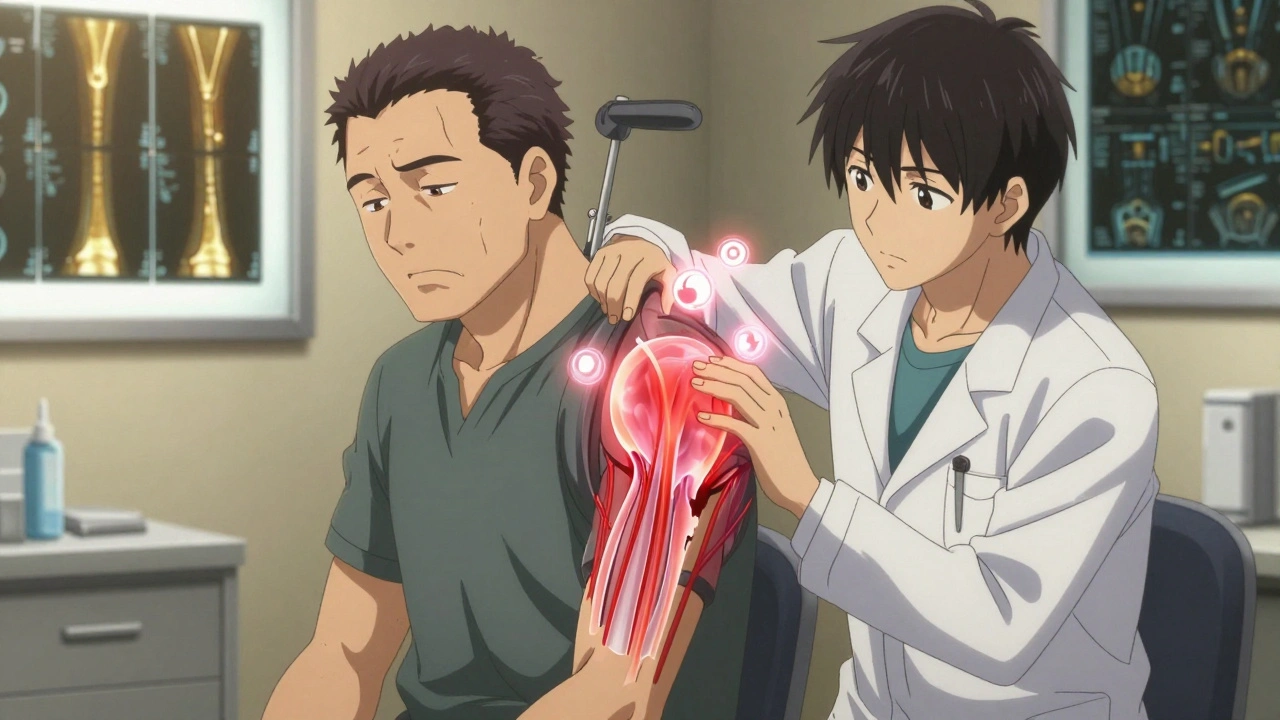
Rotator Cuff Rehab: Exercises, Recovery, and What Actually Works
When your rotator cuff, a group of four muscles and tendons that stabilize the shoulder joint. Also known as shoulder stabilizers, it enables lifting, reaching, and rotating your arm. gets injured, it doesn’t just hurt—it makes simple tasks like reaching for a glass or brushing your hair feel impossible. Most people think rest is the answer, but that’s often the worst thing you can do. Without the right rehab, scar tissue builds up, strength fades, and you risk a full tear. Rotator cuff rehab isn’t a quick fix. It’s a step-by-step process that rebuilds movement, restores strength, and teaches your body to move safely again.
What you do during rehab makes all the difference. Physical therapy, a structured program guided by a licensed therapist to restore function after injury. is the backbone of recovery. Studies show that 80% of people with mild to moderate rotator cuff injuries avoid surgery by sticking to a consistent rehab plan. But not all exercises are equal. Too many people jump into heavy weights or overhead presses too soon, making things worse. The real work starts with gentle mobility drills—like pendulum swings and wall walks—that get your shoulder moving without strain. Then comes strengthening: external rotations with resistance bands, scapular squeezes, and isometric holds. These aren’t flashy, but they rebuild the tiny muscles that keep your shoulder joint centered. And don’t ignore your scapula, the shoulder blade, which acts as the foundation for all shoulder movement.. If it doesn’t move right, your rotator cuff is overworked from day one.
Recovery isn’t just about what you do in therapy—it’s about what you avoid. Sleeping on the injured side, lifting groceries with one arm, or ignoring pain during workouts can undo weeks of progress. Most people quit too early because they feel better after a few weeks. But tendons heal slowly. Full recovery takes 3 to 6 months, sometimes longer. You’ll know you’re on track when you can lift your arm overhead without pain, hold a light weight for 10 seconds, and sleep through the night. And if you’ve had surgery? Rehab is even more critical. The first 6 weeks are about protection. The next 6 are about rebuilding. Skipping steps or rushing leads to re-injury.
Below, you’ll find real-world advice from people who’ve been through it—what exercises helped, what didn’t, and how to tell if you’re pushing too hard. No fluff. No guesswork. Just what works.
Rotator cuff tears are common, especially after 40. Learn how imaging like MRI and ultrasound diagnose tears, why rehab often works better than surgery, and what to expect if you need an operation.