MRI for Rotator Cuff: What It Shows and Why It Matters
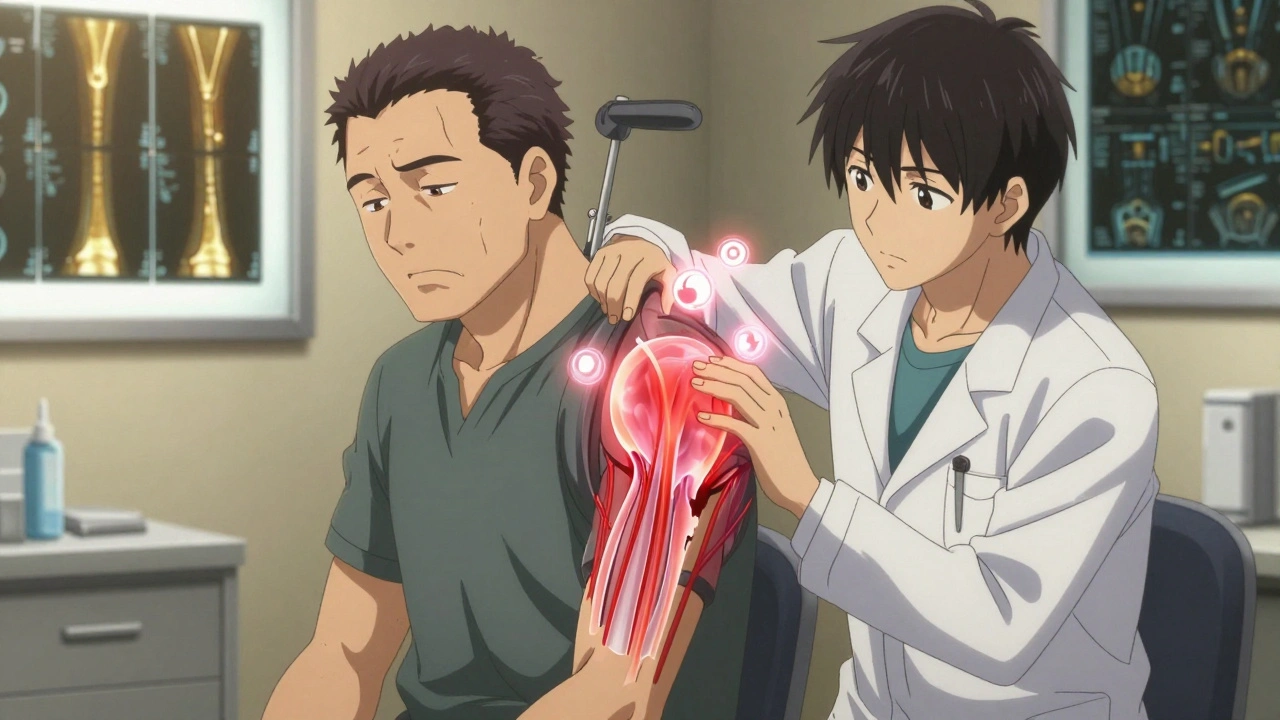
When your shoulder hurts and doesn’t get better with rest or physical therapy, an MRI for rotator cuff, a detailed imaging test that uses magnetic fields and radio waves to create pictures of soft tissues in the shoulder. Also known as magnetic resonance imaging of the shoulder, it’s often the clearest way to see if the tendons or muscles around your shoulder joint are torn, worn down, or inflamed. Unlike X-rays that only show bones, an MRI captures the soft tissues — the rotator cuff muscles, tendons, bursa, and even cartilage — so doctors can spot exactly where the problem lies.
Rotator cuff injuries are common, especially in people over 40, athletes, or anyone who lifts, reach overhead, or repeats arm motions. A rotator cuff tear, a rip in one or more of the four tendons that stabilize the shoulder. Also known as shoulder tendon tear, it can happen suddenly from a fall or slowly from wear and tear. Many people assume a tear means surgery, but that’s not always true. An MRI helps figure out if it’s a small partial tear, a full-thickness tear, or just tendonitis. It also shows if there’s fluid buildup, bone spurs pressing on tendons, or muscle atrophy — all things that change how you treat it. Without an MRI, you might be treating the wrong thing: physical therapy for a tear that needs surgery, or steroids for an injury that’s already healed.
Doctors usually order an MRI after a physical exam and maybe an ultrasound. If you’ve had pain for more than a few weeks, or if your arm feels weak when lifting or reaching behind you, an MRI can confirm whether it’s a structural issue or something else. It’s also critical before surgery — surgeons need to know the size, location, and retraction of the tear to plan the repair. Even if you’re not having surgery, the scan helps track progress over time. For example, if you’re doing rehab and your pain improves but your strength doesn’t, an MRI might show the tendon hasn’t healed properly.
What you won’t see in an MRI is a perfect picture of your daily pain. The scan might show a tear that doesn’t hurt at all, or a perfectly normal-looking tendon that’s causing sharp pain. That’s why results must be read by someone who knows shoulder anatomy and your symptoms. A radiologist spots the tear, but your doctor connects it to your life — your job, your sports, your sleep position. That’s the real value of the test.
Below, you’ll find real-world stories and expert breakdowns about how MRIs for rotator cuff injuries are used, misused, and misunderstood. From what the images actually show to how they affect treatment choices, these posts cut through the noise and give you what matters: clear, practical info to help you understand your own shoulder — or someone else’s — and make smarter decisions with your doctor.
Rotator cuff tears are common, especially after 40. Learn how imaging like MRI and ultrasound diagnose tears, why rehab often works better than surgery, and what to expect if you need an operation.