Drug Overdose Warning Signs: What to Watch For and When to Act
When someone is experiencing a drug overdose, a dangerous or life-threatening reaction to taking too much of a substance, whether prescription, illegal, or herbal. Also known as toxic overdose, it can happen quickly — and often without warning. It’s not always about street drugs. Even prescribed painkillers, sleep aids, or anxiety meds can push someone over the edge when mixed, doubled up, or taken too long. The biggest danger? Many people don’t recognize the signs until it’s too late.
Respiratory depression, a dangerous slowdown or stoppage of breathing caused by drugs like opioids or benzodiazepines is the #1 killer in overdoses. You might notice slow, shallow breaths, or worse — long pauses between breaths. Lips or fingertips turning blue? That’s your body screaming for oxygen. Serotonin syndrome, a rare but deadly reaction from mixing certain antidepressants, pain meds, or even supplements like St. John’s wort shows up differently: high fever, muscle rigidity, confusion, and a racing heart. These aren’t side effects — they’re red flags. And sedating medications, including opioids, sleeping pills, and anti-anxiety drugs that slow down the central nervous system become exponentially more dangerous when combined. One pill might be fine. Two or three? That’s when things go wrong.
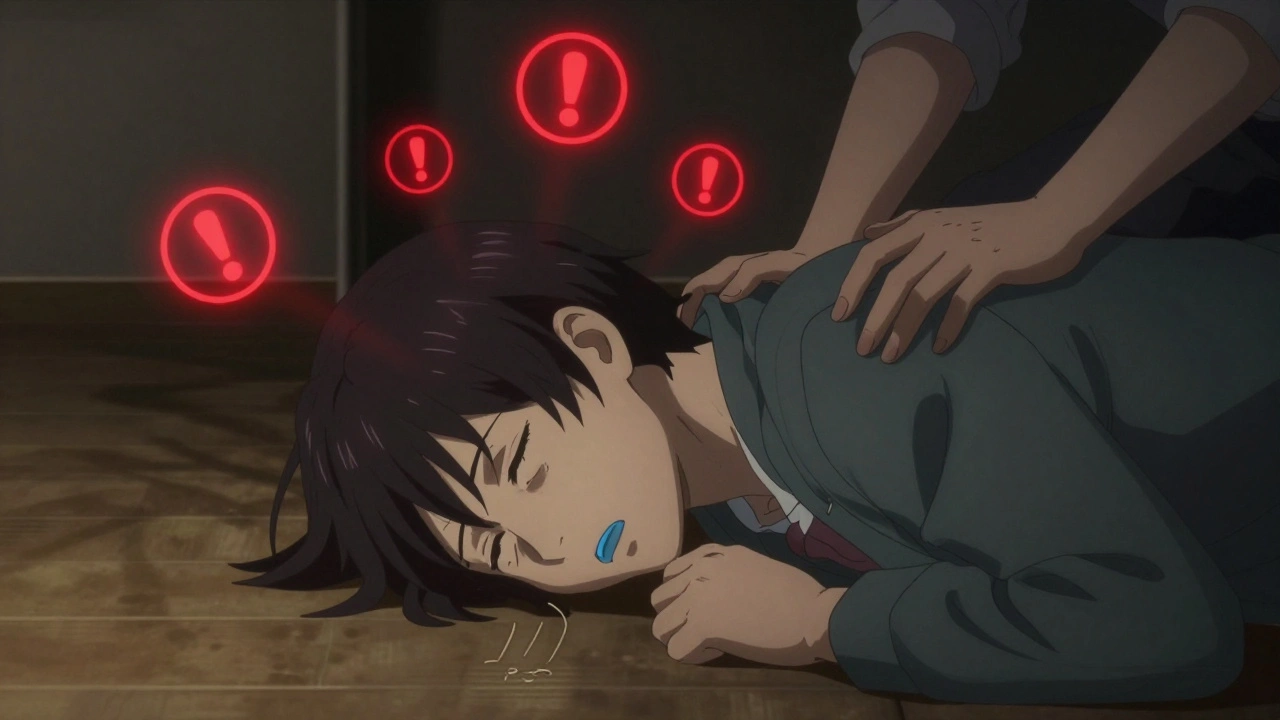
People often assume overdose means someone is unconscious or convulsing. But the truth? Many overdoses start quietly. A loved one becomes unusually drowsy. They can’t answer simple questions. Their voice sounds slurred, even if they didn’t drink. They’re hard to wake. These aren’t just "being tired" — they’re signs your body is shutting down. And if you wait for the dramatic collapse, you might wait too long.
Knowing the warning signs isn’t about fear — it’s about action. If you see someone struggling to breathe, unresponsive, or acting completely out of character after taking meds, don’t wait. Call emergency help immediately. Keep them awake. Keep them on their side. Don’t assume they’re just drunk or sleeping it off. Time is the one thing you can’t get back.
Below, you’ll find real stories and expert breakdowns of how overdoses happen — from dangerous drug mixes to silent risks in older adults. These aren’t theoretical warnings. They’re lessons from people who lived through it, or families who lost someone too soon. What you learn here could save a life — maybe even your own.
Learn the key signs of medication overdose - from opioid respiratory failure to stimulant heart attacks - and what to do immediately to save a life. Includes symptoms by drug type and how to use naloxone.